
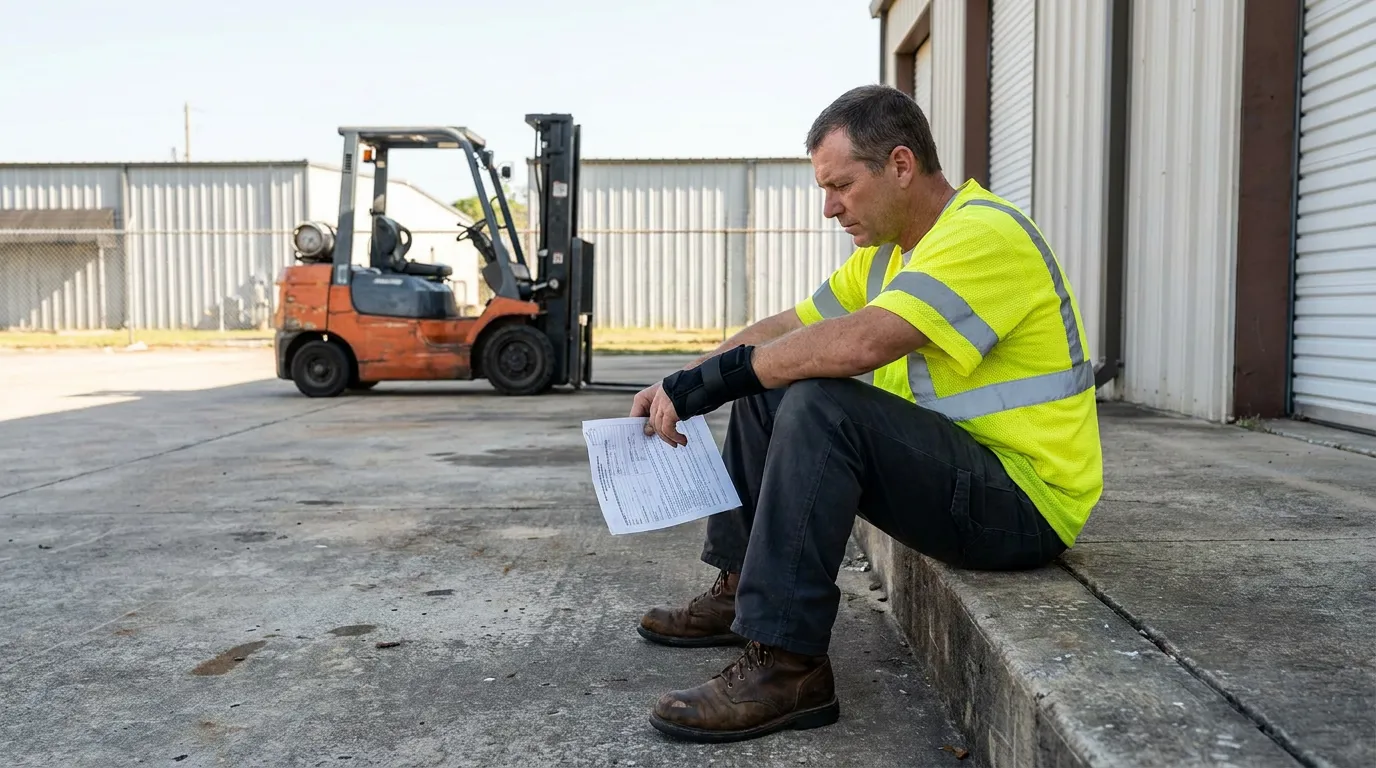
Getting Hurt on the Job in Pensacola: Your First Moves Matter
Key Takeaways: If you are injured at work in Pensacola, report the injury to your employer within Florida’s 30-day deadline, get prompt medical care, and document everything to protect your right to benefits. Florida’s workers’ compensation system is no-fault, meaning you generally don’t need to prove employer fault to receive medical and wage benefits. Report quickly, ideally in writing, to prevent insurers from arguing your injury didn’t happen at work. If a negligent third party caused your injury, you may pursue a separate liability claim. Because carriers, deadlines, and benefit calculations can be complex, consulting a Pensacola workers’ comp attorney early helps you avoid mistakes and protect filing deadlines.
If you were injured at work in Pensacola, report the injury to your employer quickly, get medical care, and protect your right to benefits. Florida law provides injured workers a clear path to medical treatment and wage benefits, but that path has deadlines and rules that trip people up every day. Your first steps can make the difference between a smooth claim and a denied one.
We are the Law Office of J.J. Talbott, a small Pensacola team where you talk directly to J.J., not a call center. With 26+ years working in the local courts, J.J. knows how these claims really play out. To talk through your situation, contact us now, call our office at (850) 437-9600, or learn more about the Law Office of J.J. Talbott.
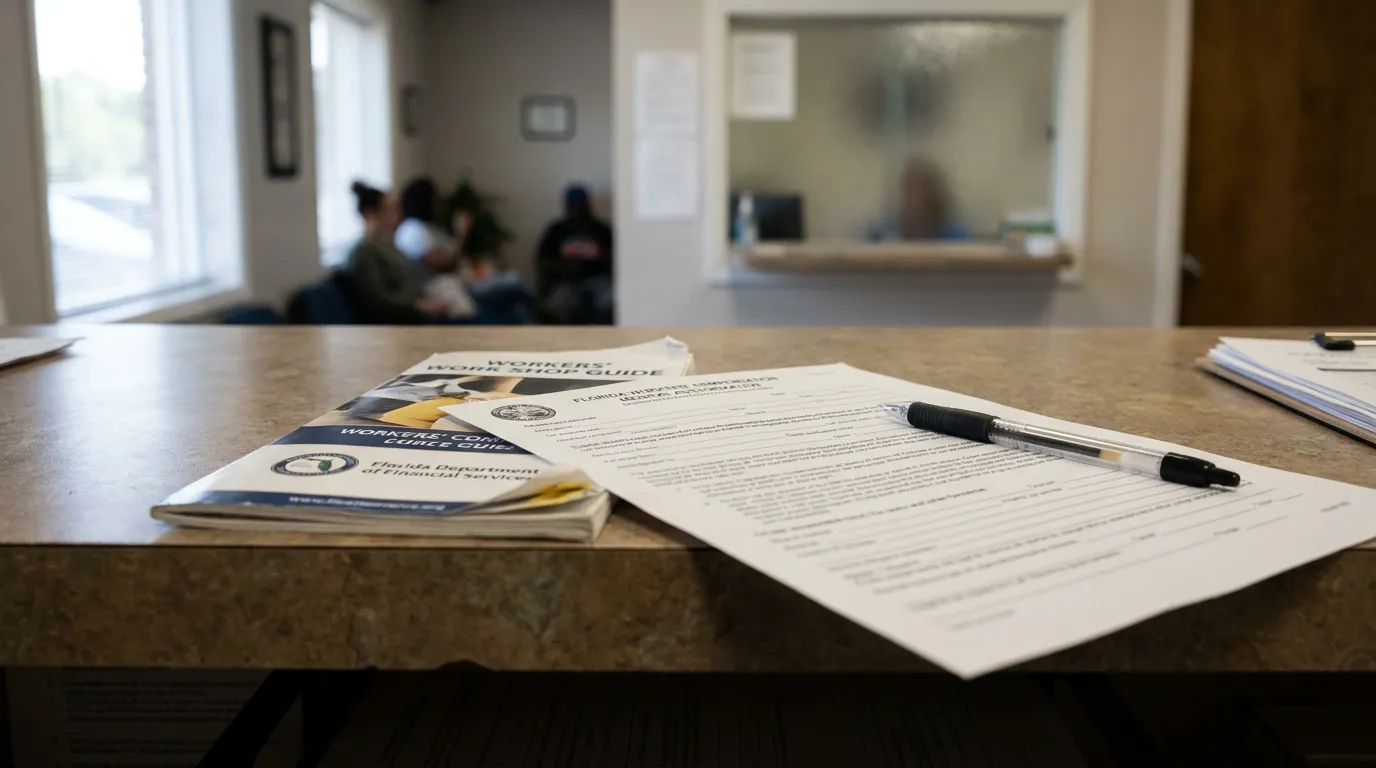
Why Reporting Your Injury Fast Is the First Step
Reporting your injury to your employer is the single most important early move you can make.
An employee who suffers an injury arising out of and in the course of employment shall advise his or her employer of the injury within 30 days after the date of or initial manifestation of the injury.
That 30-day rule comes from Fla. Stat. § 440.185(1), and missing it can put your entire claim at risk.
Don’t wait to see if the pain goes away. Insurance companies look for gaps between the injury and the report, using those gaps to argue the injury didn’t happen at work. Reporting right away, in writing when possible, creates a record that protects you.
💡 Pro Tip: Report your injury in writing, even a text or email to your supervisor, and keep a copy. A dated written report is far harder for an insurer to dispute than a verbal conversation.
What Happens After You Report
Once you notify your employer, the clock starts on their obligations too. Under Fla. Stat. § 440.185(2),
within 7 days after actual knowledge of injury or death, the employer shall report such injury or death to its carrier.
This triggers the claims process.
The carrier then owes you information about your rights. Under Fla. Stat. § 440.185(3), within 3 business days after the employer or the employee informs the carrier of an injury, the carrier must send an informational brochure explaining your rights, benefits, procedures, criminal penalties, and obligations under Florida Workers’ Compensation Law. Read this brochure carefully.
What If You Missed the 30-Day Deadline?
Missing the 30-day window is serious, but doesn’t automatically end every claim. Florida law recognizes limited exceptions under Fla. Stat. § 440.185(1), though courts interpret these narrowly.
Recognized exceptions may include situations where:
- The cause of the injury could not be identified without a medical opinion and the employee advised the employer within 30 days after obtaining that opinion
- The employer didn’t post required notice pursuant to s. 440.055
- Exceptional circumstances justify the failure
These exceptions are fact-dependent and not guaranteed. Some injuries like repetitive-motion conditions may not be obvious until a doctor connects them to your job. If you think you missed the deadline, consult a lawyer who handles these cases.
💡 Pro Tip: If your employer never posted the required workers’ compensation notice at your job site, tell your attorney. That failure can matter when the timing of your report is questioned.
How Workers’ Compensation Benefits Work in Florida
Workers’ compensation is a no-fault system, meaning you generally don’t have to prove your employer did anything wrong. According to the Florida Office of Insurance Regulation, most employers must carry coverage, and employees are compensated for occupationally incurred injuries regardless of fault. You can review the state’s overview of workers’ compensation coverage requirements to understand the basics.
In exchange for that no-fault protection, the law limits when you can sue your employer. That trade-off shapes your legal options after a job injury.
Here is a simple breakdown of common benefit types:
| Benefit Type | What It Generally Covers |
|---|---|
| Medical benefits | Authorized treatment, surgery, and prescriptions for the work injury |
| Temporary disability | Partial wage replacement while you cannot work or are limited |
| Impairment benefits | Compensation after you reach maximum medical improvement |
| Permanent benefits | Support when a lasting disability affects your ability to work |
Benefit amounts and eligibility depend on your wages, your medical status, and case details. Your actual entitlement varies based on classification, timing, and medical evidence. That’s why an honest case review matters more than one-size-fits-all promises.
When a Third Party Caused Your Work Injury
Sometimes the person who hurt you on the job isn’t your employer. When a negligent third party causes your injury, you may pursue a separate liability claim in addition to workers’ compensation benefits. Chapter 440 addresses
compensation for injuries when third persons are liable
under Fla. Stat. § 440.39.
This happens frequently on construction sites and industrial jobs. A subcontractor, equipment manufacturer, or driver who hits you while working could all be third parties. These claims are separate from the no-fault comp system and may allow additional recovery.
💡 Pro Tip: If a defective machine, another company’s employee, or a vehicle caused your injury, save everything. Photos, names, and equipment model numbers can support a third-party claim you might not know you have.
Talking to a Workers Compensation Attorney in Pensacola
A workers compensation attorney in Pensacola can help you avoid mistakes that sink otherwise strong claims. Insurance carriers handle these cases every day, and you probably don’t. In Florida’s large private market,
there are more than 250 insurers
handling workers’ comp claims, meaning most Pensacola employers’ claims are managed by private carriers with adjusters trained to control costs.
A good Pensacola workers comp lawyer does more than fill out forms. We help establish that your injury is work-related, push for medically necessary treatment, and fight to get your average weekly wage calculated correctly. When benefits are denied or delayed, Chapter 440 provides
procedure for resolving benefit disputes… alternate dispute resolution; claim arbitration
under Fla. Stat. §§ 440.192 and 440.1926.
There are also deadlines on the dispute side you cannot ignore. Chapter 440 sets
time bars to filing petitions for benefits
under Fla. Stat. § 440.19, and these limits are interpreted strictly. You can read the full text of Florida’s workers’ compensation law in the 2024 Chapter 440 statutes.
Not sure if your case qualifies? Call us, and we’ll tell you honestly. J.J. won’t tell you what you want to hear just to take your case. If your claim isn’t strong, he’ll say so, and if it is, he’ll fight for it. You can also read more practical guidance on our workers’ comp legal blog for related topics.
Steps to Take Right After a Pensacola Job Injury
Following a clear sequence of work injury steps in Pensacola helps protect both your health and your claim.
- Get medical attention immediately, and tell the provider your injury happened at work.
- Report the injury to your employer within the 30-day deadline, in writing if possible.
- Watch for the carrier’s informational brochure and read it.
- Keep records of treatment, missed work, and every conversation.
- If your claim is denied, delayed, or confusing, talk to an attorney before deadlines pass.
Common Mistakes That Hurt Florida Workers’ Comp Claims
The most common mistakes we see are avoidable ones that happen in the first few weeks. Injured workers often stay quiet hoping the pain fades, skip the doctor, or trust the adjuster to look out for them. None of those choices protect your injured worker rights in Florida.
Reporting obligations are legally enforced on the employer side too. Under Fla. Stat. § 440.185(8), an employer or carrier who fails to timely send a required form, report, or notice may face an administrative fine up to $500 for each failure.
The Division of Workers’ Compensation oversees the system in Florida. This division, housed within the Department of Financial Services, ensures employees receive proper benefits and serves as a resource for injured workers, though it doesn’t act as your personal advocate.
Frequently Asked Questions
1. How long do I have to report a work injury in Florida?
Generally, you have 30 days. Fla. Stat. § 440.185(1) requires you to advise your employer within 30 days after the date of the injury or its initial manifestation. Limited exceptions may apply, but courts read them narrowly.
2. Do I have to prove my employer was at fault?
No, in most cases you don’t. Florida workers’ compensation is a no-fault system, so you generally receive benefits regardless of who caused the injury. Fault usually only matters when a third party is involved.
3. What happens after I report my injury to my employer?
Your employer must notify its insurance carrier within 7 days under Fla. Stat. § 440.185(2), which starts the claims process and triggers the carrier’s obligation to send you an informational brochure.
4. Can I sue someone other than my employer?
Sometimes, yes. If a negligent third party caused your injury, Fla. Stat. § 440.39 recognizes claims for injuries when third persons are liable, which may allow recovery beyond your comp benefits.
5. What should I do if my claim is denied?
Don’t give up, and don’t wait. Chapter 440 provides a dispute-resolution process under Fla. Stat. §§ 440.192 and 440.1926, but Fla. Stat. § 440.19 sets time bars for filing petitions. Talk to an attorney quickly to protect those deadlines.
Protecting Your Rights After a Pensacola Work Injury
After a job injury in Florida, your best protection is acting quickly, documenting everything, and knowing your deadlines. Report to your employer within 30 days, get proper medical care, review the information the carrier sends, and watch for any third-party claim. These steps give your Florida workers’ comp claim its strongest footing.
When you feel overwhelmed, you don’t have to figure it out alone. We are big enough to do the job and small enough to care, and you’ll work directly with J.J. and our paralegal Kristie every step of the way. To get honest answers about your situation, reach out to our team now, call (850) 437-9600, or visit the Law Office of J.J. Talbott to learn how we help injured workers. Call us today, and let us tell you honestly where you stand.