
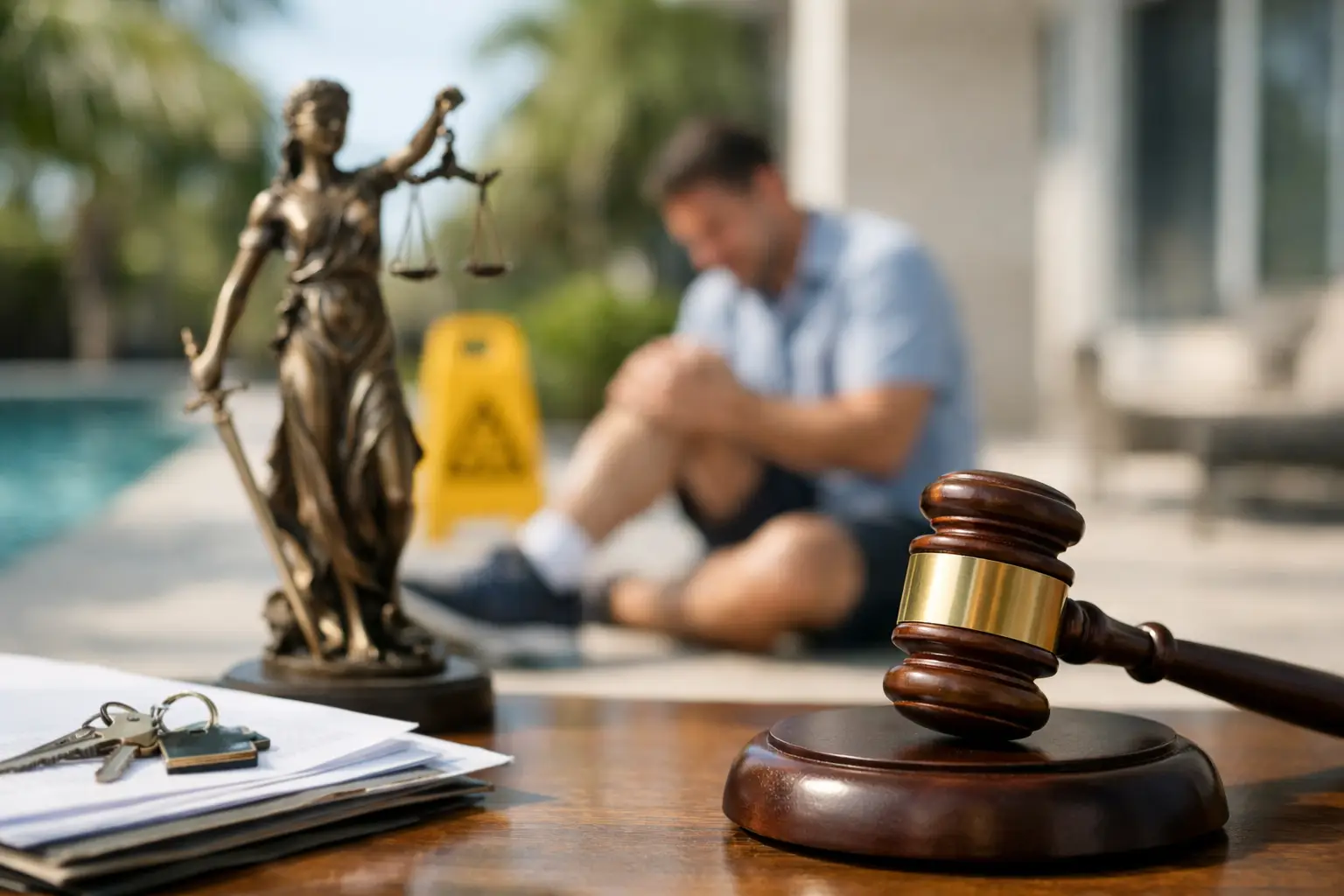
A wet grocery-store floor, a broken apartment stair, poor lighting in a parking lot, or loose flooring at a hotel can change your life in seconds. Premises liability is the area of law that may allow an injured person to hold a property owner, business, landlord, or other responsible party accountable when unsafe conditions cause harm.
After a serious fall or injury, people often blame themselves first. They may hear that they should have watched where they were going or been more careful. But property owners and businesses have responsibilities, too. When they ignore hazards, delay repairs, or fail to provide reasonable security, injured people deserve answers and may deserve compensation.
When Premises Liability May Apply
A premises liability claim is not limited to a typical slip-and-fall accident. It can arise whenever a dangerous condition on someone else’s property causes injury and the person or business responsible for the property failed to use reasonable care.
Common examples include a spill left on a store floor, uneven sidewalks, broken handrails, unsafe stairwells, falling merchandise, poorly maintained pools, inadequate lighting, exposed wiring, and unsafe conditions at rental properties. Negligent security claims may also fall under this area when a foreseeable criminal act causes harm at an apartment complex, hotel, bar, parking garage, or other property.
The central question is usually not simply whether you were hurt on someone else’s property. The question is whether a dangerous condition existed and whether the owner, operator, manager, or another responsible party knew or should have known about it and failed to address it.
That distinction matters. A business is not automatically responsible for every accident that happens inside its doors. At the same time, a business does not get a free pass simply because an employee says they did not personally see the hazard. Evidence may show that the danger existed long enough that it should have been discovered, or that it happened repeatedly because the business failed to follow safe inspection and cleaning practices.
Florida Premises Liability Cases Depend on Proof
Florida law recognizes that a person’s reason for being on the property can affect the duty owed. Customers, guests, tenants, delivery drivers, and social visitors may have different circumstances, but property owners generally must take reasonable steps to keep areas safe for people they expect to be there.
For injuries caused by a temporary substance in a business establishment, such as water, food, or another spill, proving notice can become a major battleground. The injured person may need to show the business had actual knowledge of the dangerous condition or constructive knowledge. Constructive knowledge can sometimes be shown when the condition existed long enough that it should have been discovered, or when the condition occurred regularly and was therefore foreseeable.
Insurers know these cases can be difficult to prove, and they move quickly to protect their side. A store may clean the area, repair the defect, or claim surveillance footage was unavailable. Employees may later say they inspected the area shortly before the incident. That is why early action can make a real difference.
An experienced injury lawyer can investigate before important evidence disappears. That may include requesting video footage, preserving incident reports, identifying witnesses, reviewing cleaning logs, examining maintenance records, and documenting the condition of the property. In a negligent security case, the investigation may also involve prior police calls, crime history, lighting conditions, security policies, cameras, gates, and staffing records.
The Property Owner Is Not Always the Only Responsible Party
The name on the building is not always the party with legal responsibility. A commercial property may involve a landlord, tenant business, property management company, maintenance contractor, security company, or franchise operator. A defective walkway could be the responsibility of one party, while a failure to clean a spill could rest with another.
Sorting this out is more than paperwork. Identifying every potentially responsible party helps ensure the claim is directed where it belongs and that an insurer cannot shift blame to an absent company. It also matters when serious injuries require significant financial recovery.
What to Do After an Injury on Someone Else’s Property
Your health comes first. Seek medical care as soon as possible, even if you believe the injury may improve. Falls can cause fractures, concussions, spinal injuries, torn ligaments, and internal damage that may not be obvious in the first few hours. Prompt treatment also creates medical documentation connecting your injuries to the incident.
If you can do so safely, report what happened to the manager, owner, landlord, or staff member. Ask that an incident report be created, but do not assume the report tells the full story or accurately assigns fault. Request a copy if one is available.
Take photographs and video of the exact hazard, the surrounding area, lighting, warning signs, footwear, and your visible injuries. If there was a spill, photograph its size, color, track marks, dirt, or other details that may indicate how long it had been there. Get names and contact information for witnesses. Their recollection can become critical if the property owner later disputes what happened.
Then be careful about what you say to an insurance adjuster. You may be contacted while you are still in pain, worried about missing work, and unsure how serious your injuries are. A quick statement or early settlement offer may be designed to limit the company’s exposure before you understand the full cost of your recovery.
You do not have to sign documents, give a recorded statement, or accept a check just because an insurer asks. Before making decisions that could affect your claim, speak with a lawyer who represents injured people, not the insurance company.
Compensation Should Reflect the Real Cost of the Injury
A premises injury can affect far more than the first emergency-room bill. Depending on the facts, a claim may seek compensation for medical expenses, future treatment, lost income, reduced earning ability, pain and suffering, disability, and the ways an injury has changed daily life. In a fatal case, surviving family members may have separate rights under Florida law.
The value of a claim depends on the evidence, the severity and permanence of the injuries, available insurance, who was at fault, and whether the injured person is alleged to share responsibility. Florida’s comparative negligence rules can reduce recovery when an injured person is found partially at fault. Insurers often lean hard on this argument, claiming someone ignored a warning sign, wore the wrong shoes, or failed to notice an obvious condition.
Those arguments are not the end of the case. A warning sign placed where no one can see it, a hazard in a dim stairwell, or a defect that a visitor had no reason to expect may tell a very different story. The facts matter, and a strong case requires more than accepting the insurance company’s version of events.
Do Not Wait for the Evidence to Vanish
Florida deadlines apply to injury claims, and the time available can depend on the circumstances. Waiting can also make a case harder even when a legal deadline has not passed. Video is overwritten. Witnesses forget details. Conditions are repaired. Records become harder to locate.
The Law Office of J.J. Talbott represents injured people across Northwest Florida with the urgency these cases demand. We investigate the property, confront insurance companies, and prepare cases with trial in mind when a fair settlement is not offered. You should be able to focus on healing while your legal team fights for the compensation and justice you deserve.
If you were hurt because a property was unsafe, trust the facts of what happened and get help before someone else’s negligence is rewritten as your fault.