
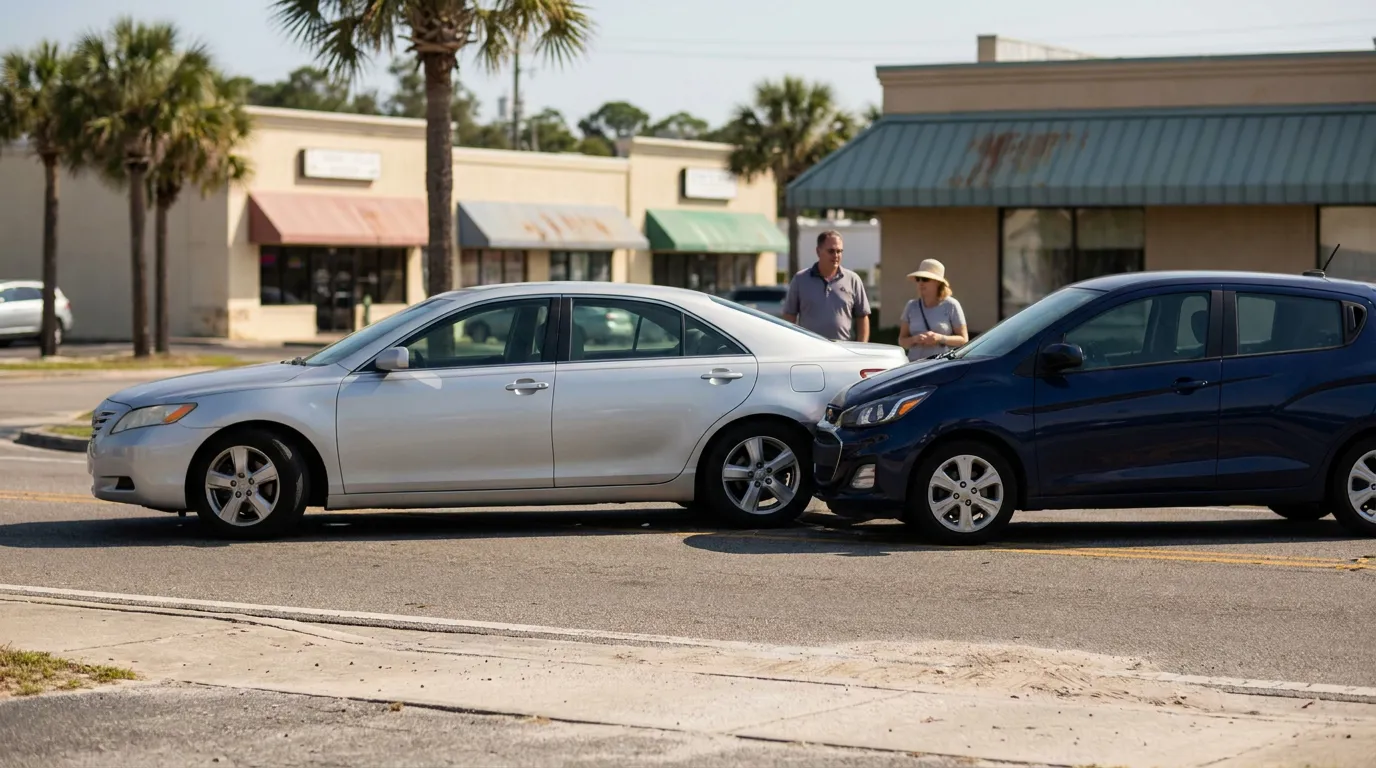
Rear-End Crashes on Northwest Florida Roads Are Rarely as Simple as They Look
Key Takeaways: If you are rear-ended in Fort Walton Beach, the back driver is often responsible, but Florida law does not automatically assign 100% of the blame. Fault is divided by percentage under the state’s comparative negligence system. The rear driver usually carries most of the fault due to the duty to keep a safe following distance, yet lead drivers who stop suddenly, reverse, or have broken lights can share the blame, as can third parties in chain-reaction crashes. To recover, you must prove duty, breach, causation, and damages, with your award reduced by your share of fault. Under the rule effective March 2023, anyone found more than 50% at fault cannot recover damages. Strict filing deadlines apply, so acting quickly is critical. Because insurers work to shift blame onto you, honest local guidance can make a real difference in what you recover.
If you were rear-ended in Fort Walton Beach, the driver who hit you is often responsible, but Florida law does not automatically put 100% of the blame on the back driver. Fault is measured by each person’s share of responsibility, meaning your claim turns on the facts, evidence, and how well those facts are proven.
We are the Law Office of JJ Talbott, a small, tight-knit team led by JJ himself with the help of his paralegal Kristie. When you call, you talk to JJ directly, not an intake center. If you are hurt and unsure of your rights, call us today at (850) 437-9600, reach out through our online contact page, or learn more about the team at the Law Office of JJ Talbott.
How Florida Assigns Blame After a Rear-End Collision
Florida is a comparative fault state, which means responsibility for a crash is divided by percentage rather than dumped entirely on one driver.
In a negligence action, the court shall enter judgment against each party liable on the basis of such party’s percentage of fault and not on the basis of the doctrine of joint and several liability.
This framework comes from Florida’s damage apportionment law, and you can read the full text of the comparative fault statute for yourself.
In practice, the rear driver often carries most of the fault because drivers are expected to keep a safe following distance. That expectation is not absolute. Courts may consider whether the lead driver stopped suddenly without reason, had broken brake lights, reversed unexpectedly, or cut in too closely.
Under Florida’s rule, a driver’s liability is tied to how much harm they actually caused. As legal commentators have explained,
under Florida’s comparative fault law, a negligent tortfeasor’s degree of liability is generally limited to his or her own degree of fault.
The principle is fairness, since
a negligent defendant should only be held responsible for the harm that he or she caused.
💡 Pro Tip: Take photos of both vehicles, the road, skid marks, and any traffic signals before you leave the scene. Damage patterns often tell the real story of who hit whom and how hard.
When More Than One Party Shares the Blame
Not every rear-end crash involves just two cars, and Florida law lets a defendant try to point the finger elsewhere. A defendant may argue that another driver, a vehicle defect, or some other party caused the crash. But they cannot simply say so.
A defendant must prove at trial, by a preponderance of the evidence, the fault of the nonparty in causing the plaintiff’s injuries.
This matters most in chain-reaction wrecks common on Okaloosa County roads and along Highway 98. In a pileup, the car directly behind you may not be the only one at fault. A third vehicle that started the chain can be pulled into the fault analysis.
Insurance companies know these rules and often use them to shift blame toward you. A car accident adjuster may argue you braked too hard or that your brake lights were out to reduce what they owe. That is why documenting the scene and getting honest guidance early can protect your negligence car accident claim.
Why a Motor Vehicle Accident Attorney in Fort Walton Beach Matters for Your Claim
Having a Motor Vehicle accident attorney in Fort Walton Beach on your side can make a real difference in how fault gets measured and how much you recover. Fault determination in Florida is fact-driven, and insurers rarely volunteer a fair split. Someone has to gather the evidence, interpret the statute, and push back when the numbers do not add up.
JJ has spent more than 26 years practicing personal injury law in the Pensacola and Northwest Florida area. He knows the local courts, the judges, and how regional insurance adjusters behave when a rear-end collision claim lands on their desk. That local knowledge is hard to replace.
We also believe in honest case assessment. If your claim is strong, we will tell you. If it has problems, we will tell you that too. To see how we handle these cases and read more about our approach to Personal Injury in Florida, take a look at our practice overview.
What You Have to Prove in a Rear-End Case
To recover, an injured driver generally must establish four things under Florida negligence law. Each one requires supporting evidence:
- Duty: The other driver owed you a duty to drive reasonably and safely.
- Breach: They broke that duty, for example by following too closely or driving distracted.
- Causation: Their breach actually caused the collision and your injuries.
- Damages: You suffered real, compensable harm such as medical bills, lost wages, or pain and suffering.
As legal writers have noted,
In the context of relatively simple cases, such as those arising from many typical automobile accidents, this is a straightforward inquiry into each party’s role in causing the plaintiff’s damages.
Straightforward does not mean easy, though, because insurers still fight over the percentages.
💡 Pro Tip: See a doctor within a few days of the crash even if you feel okay. Gaps in treatment give insurance companies an argument that you were not really hurt.
How Your Own Share of Fault Affects What You Recover
Being partly at fault does not shut you out of recovery under Florida’s comparative negligence system.
Contributory fault chargeable to the claimant diminishes proportionately the amount awarded as economic and noneconomic damages for an injury attributable to the claimant’s contributory fault, but does not bar recovery.
In plain terms, if you are found 20% at fault, your award is reduced by that 20%.
There is an important limit added in recent years, however. Under Florida’s modified comparative negligence rule that took effect in March 2023,
any party found to be greater than 50 percent at fault for his or her own harm may not recover any damages.
This 50% threshold can be the deciding factor in a hotly disputed liability car crash in Florida.
| Your Share of Fault | Effect on Recovery |
|---|---|
| 0% at fault | Full damages generally recoverable |
| 1% to 50% at fault | Damages reduced by your percentage |
| More than 50% at fault | Generally barred from recovering |
💡 Pro Tip: Be careful what you say to the other driver’s insurer. A casual "I’m sorry" or "I didn’t see them" can be twisted into an admission that pushes your fault percentage higher.
Do Not Let the Filing Deadline Slip Away
Florida sets strict time limits for filing injury lawsuits, and missing them can end your case before it starts. The deadline for most negligence claims lives in Florida’s statute of limitations for injury claims. Because these deadlines changed in recent years, confirming the correct one for your specific crash is critical.
In limited situations, a deadline may be affected, but courts interpret those exceptions narrowly. For a typical rear-end crash, the clock generally starts on the date of the collision. Recognized grounds for pausing it are narrow and statutory, such as a defendant’s concealment or absence from the state, a plaintiff’s status as a minor, or an adjudicated legal incapacity.
Keep in mind that these civil deadlines are separate from any insurance notice requirements or government claim rules. The safest move is to act quickly rather than gamble on an exception. Not sure if your case still qualifies? Call us and we will tell you honestly.
Frequently Asked Questions
1. Is the rear driver always at fault in a Florida rear-end collision?
Not always. While the back driver often carries most of the fault, Florida uses comparative negligence, so a lead driver who stopped suddenly, reversed, or had broken lights may share responsibility.
2. Can I still recover money if I was partly to blame?
In many cases, yes. Florida reduces your award by your percentage of fault, but a party found more than 50% responsible is generally barred from recovering under the current rule.
3. What if a third car caused the chain-reaction crash?
A defendant can try to shift blame to a nonparty, but they must plead and prove it. They carry the burden of showing that other party’s fault by a preponderance of the evidence.
4. How long do I have to file a claim after a car accident?
Florida law sets a firm filing window for negligence claims, with only narrow exceptions. Because deadlines can vary based on the facts, confirm your specific deadline early rather than wait.
5. Why hire a local attorney instead of a big out-of-town firm?
A local Fort Walton Beach injury lawyer knows the regional courts, judges, and adjusters. At our office, you work directly with JJ instead of being handed off to an inexperienced associate.
The Bottom Line on Rear-End Liability in Fort Walton Beach
Liability for a rear-end collision in Fort Walton Beach comes down to fault percentages, evidence, and Florida’s comparative negligence rules, not a one-size-fits-all assumption. The rear driver often bears significant responsibility, but lead drivers and even third parties can share the blame, and your own conduct can affect your recovery. Every case turns on its own facts, so honest, informed guidance matters. For more helpful reads on protecting your rights after an accident, browse our articles and consult a lawyer before you talk to any insurer.
You do not have to sort out fault, deadlines, and insurance tactics on your own. Contact the Law Office of JJ Talbott today by calling (850) 437-9600, sending us a message through our confidential contact form, or visiting the Law Office of JJ Talbott website to get started. We will give you an honest look at your case and help you understand your options.