
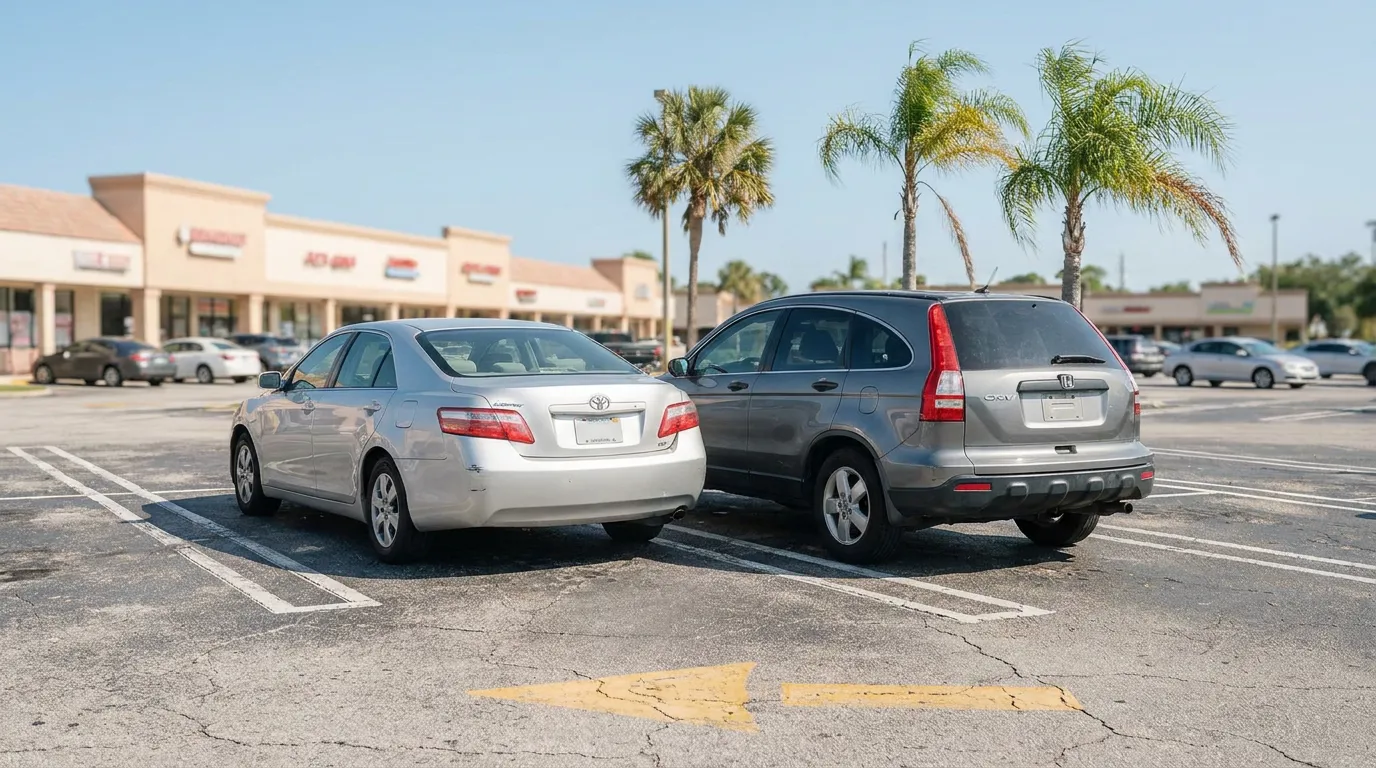
Two Cars, Two Reverse Lights, and One Big Question
Key Takeaways: When two cars back into each other in a Florida parking lot, fault is often shared, because Florida Statutes § 316.1985(1) puts the same duty on every driver to back up only when it is safe. The split isn’t always 50/50, since facts like who started backing first, whether one car had stopped, speed, distraction, and where the cars hit can shift the percentages. Under Florida’s modified comparative negligence rule, if you are found more than 50% at fault you generally can’t recover from the other driver, and if you are 50% or less at fault your damages are generally reduced by your share. Your own PIP coverage typically pays some medical bills and lost wages no matter who was at fault, but you generally have to get treatment within 14 days of the crash. To protect your claim, collect evidence like photos, witness names, and store video quickly, consider not apologizing or giving recorded statements to the other driver’s insurer, and act well before the filing deadline, which is generally two years for negligence claims arising after March 24, 2023.
When two cars back into each other in a Florida parking lot, fault is often shared between both drivers. Every driver who backs up has the same duty to make sure the move is safe. Insurers and courts generally look at what each driver did, how fast each car was moving, and who had the better chance to avoid the crash. Shared fault does not automatically mean you walk away with nothing. Florida uses a modified comparative negligence system, so your percentage of fault can affect whether you recover and how much. Insurance companies often try to shift more blame onto you.
If you were hurt in a backing crash and the other driver’s insurer is blaming you, you can talk it through with someone who has handled these disputes for a long time. At The Law Office of JJ Talbott, you speak directly with JJ, not a call center. Call us today for a free consultation at (850) 437-9600, or contact us now to tell us what happened.
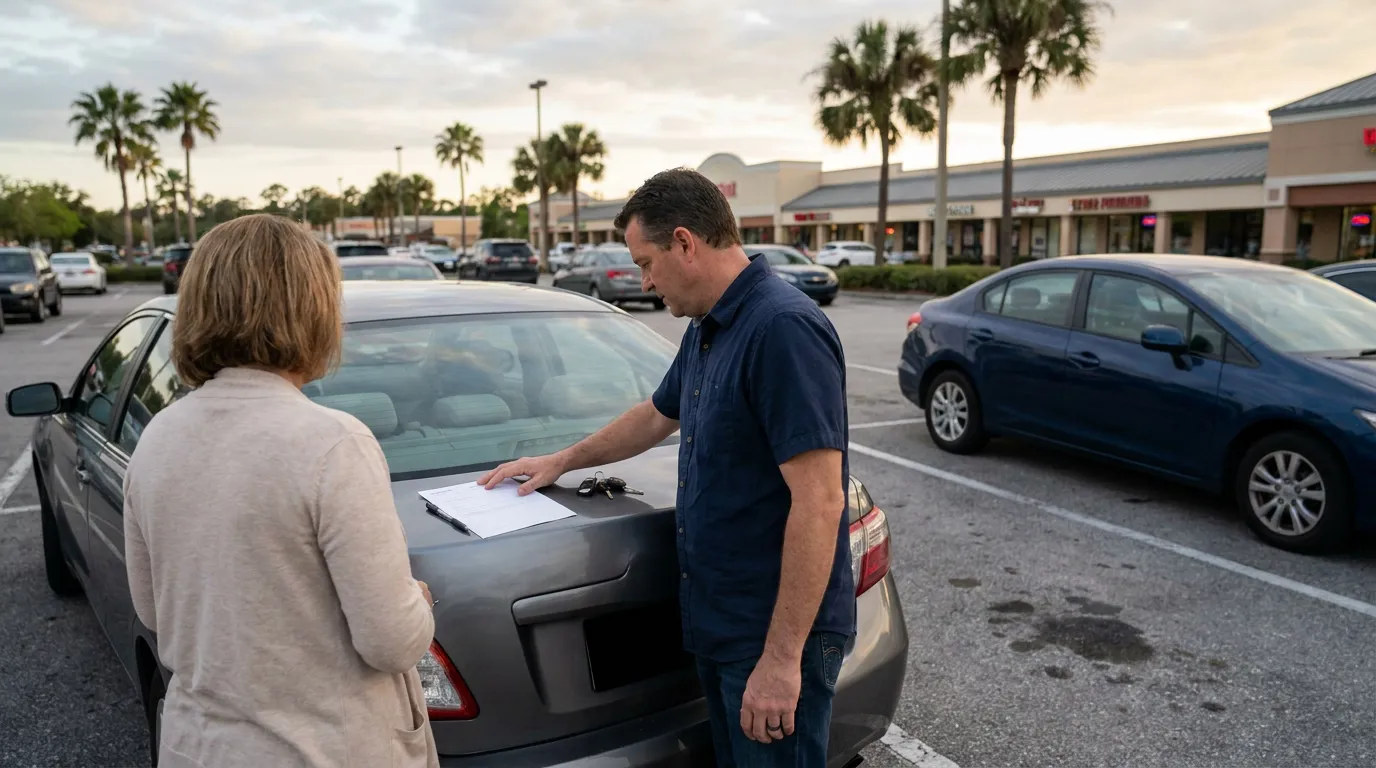
Do Florida Traffic Laws Even Apply in a Parking Lot?
In many cases, yes. Florida Statutes § 316.640(1)(a)1.b. gives listed state agencies, including the Florida Highway Patrol, authority to enforce traffic laws on streets and highways "and elsewhere throughout the state wherever the public has a right to travel by motor vehicle." A grocery store or shopping center lot open to the public often fits that description.
There are limits. A gated private lot or restricted employee area may be treated differently. Even then, the same safety rules are commonly used as a guide for deciding who acted carelessly under general negligence principles.
Parking lots are also more dangerous than most people think. The National Safety Council’s parking lot safety guidance points to distracted driving as a major cause of these crashes. Drivers often fail to check mirrors or surroundings before backing out.
How Fault Works When Both Drivers Are Backing in Florida
The key rule is Florida Statutes § 316.1985(1). It says a driver "shall not back the same unless such movement can be made with safety and without interfering with other traffic." When both drivers are backing, both carry that same duty at the same time.
That is why backing out accident liability so often ends up split. Insurers rarely place 100% of the blame on one driver when both cars were in reverse. They typically assign percentages based on the facts, and if the case goes to court, a jury makes the final determination.
Factors That Can Shift the Percentages
Not every two-car backing crash is a clean 50/50 split. These facts can move the needle:
- Who started backing first. A driver already well into the lane may have a stronger argument than someone who backed out suddenly.
- Whether one car had stopped. If you stopped and the other driver kept reversing into you, fault may lean heavily toward them.
- Speed and distraction. Phone use, backing too fast, or ignoring a backup camera warning can point to carelessness.
- Point of impact. Damage location may help show which car was moving.
- Pulling out or turning. Under Florida Statutes § 316.085(2), a driver may not leave a direct course until the move can be made safely.
What a Ticket Means for Your Claim
A backing ticket can help, but it does not decide the case by itself. Under Florida Statutes § 316.1985(3), a backing violation is a noncriminal traffic infraction punished as a moving violation under Chapter 318. Florida law limits how a citation and related crash report statements can be used at trial, so a ticket is often more useful in insurance negotiations than in court.
💡 Pro Tip: If you were stopped when the other car hit you, say so plainly to the officer and write it down that day. A clear early statement may carry real weight later.
Why Your Share of Fault Matters So Much
Your percentage of fault can directly affect what you may recover. Under Florida Statutes § 768.81(6), part of Chapter 768 of the Florida Statutes on negligence, an injured person found more than 50% at fault generally cannot recover damages from the other party. If you are 50% or less at fault, your damages are reduced by your share. This rule does not apply to medical negligence claims.
This is where insurance adjusters may play hardball. The other driver’s insurer may tell you that you were "equally responsible" and offer little or nothing. Being exactly 50% at fault still allows a reduced recovery, but one percentage point past 50% could mean a denied claim. You can read more about how Florida’s comparative negligence law works in our detailed guide.
| Your Fault Percentage | What Generally Happens |
|---|---|
| 0% | You may be able to recover your full proven damages |
| 1% to 50% | Damages generally reduced by your share of fault |
| More than 50% | Recovery from the other driver is generally barred |
Florida is a no-fault state for certain losses. Your own Personal Injury Protection coverage under Florida Statutes § 627.736 typically pays first for some medical bills and lost wages, regardless of fault, generally up to $10,000 and at a percentage of covered costs. You must seek initial treatment within 14 days of the crash to use those benefits. To claim pain and suffering damages from the at-fault driver, your injury generally must meet Florida’s permanent injury threshold under § 627.737(2).
What Florida Law Requires Right After a Parking Lot Accident
Even a low-speed crash comes with legal duties. Under Florida Statutes § 316.061(1), drivers in a property-damage-only crash must immediately stop and stay at the scene until they meet the information-exchange requirements of § 316.062. Leaving early is a second-degree misdemeanor. If the crash involves injury or death, leaving the scene is a more serious crime under § 316.027.
Information You Must Exchange
Florida Statutes § 316.062(1) requires each driver to give a name, address, and vehicle registration number. Drivers must show their license if asked and give reasonable help to anyone injured. When an officer is at the scene, Florida Statutes § 316.070 also requires drivers to share owner and driver names and addresses, the license plate number, and the liability insurance carrier’s name.
When a Crash Report Is Required
Under Florida Statutes § 316.066(1), officers must complete a Long Form crash report when a crash involves death, injury, or complaints of pain, as well as certain other crashes such as those involving a vehicle that must be towed or a suspected DUI. Under the current version of Florida Statutes § 316.066, effective October 1, 2026, if no police report is made for a crash that involves injury, death, or apparent property damage of at least $2,000, the driver must send a written report to the department within 10 days.
That crash report can become one of the most important pieces of evidence in a backing dispute. It often records statements, damage locations, and any citations, though driver statements in the report are generally privileged. If you are hurt, even mildly, tell the officer you are in pain so the right report gets made.
Evidence That Can Protect You in a Backing Dispute
Backing cases often turn on evidence that can disappear fast. Store security footage may be recorded over within days or weeks, and witnesses leave the lot.
Take photos of both cars, where they came to rest, and the parking lane before anyone moves, if it is safe. Ask nearby shoppers for names and phone numbers. Note any store cameras and ask the manager to save the footage. Dashcams, backup cameras, and vehicle sensor data can also tell the story.
💡 Pro Tip: Do not give a recorded statement to the other driver’s insurance company before talking with a lawyer. Adjusters may ask questions designed to get you to admit you "didn’t see" the other car.
Common Mistakes After a Parking Lot Crash
The biggest mistake we see is people brushing off a "fender bender." Neck and back injuries may not show up for a day or two. Skipping the doctor can hurt your health, may cost you PIP benefits under the 14-day rule, and may give the insurer an argument that you were not really injured.
Another common mistake is apologizing at the scene. Saying "I’m sorry, I didn’t see you" is natural, but it could be used as evidence of fault. Stick to the facts.
Finally, people wait too long. Under Florida Statutes § 95.11, as amended in 2023, most negligence claims arising after March 24, 2023, must generally be filed within two years; older claims may fall under the prior four-year deadline. It is safer to act early.
Why a Small Pensacola Firm Makes a Difference
When you call our office, you get JJ. He has more than 26 years of experience practicing in the Pensacola area and knows the local courts and insurance adjusters. Kristie, his paralegal, keeps you updated so you are never left wondering what is happening.
We will also be honest with you. If your share of fault looks too high or your case is not strong, JJ will tell you directly. Working with a parking lot accident Florida lawyer who knows your community means you are treated like a neighbor, not a file number.
Frequently Asked Questions
1. Is it always 50/50 when both drivers back into each other?
No, but shared fault is common. Fault depends on who was moving, who had stopped, speed, and distraction. Video and damage location may shift the percentages significantly.
2. Can I still recover if I was partly at fault?
In many cases, possibly. Under Florida Statutes § 768.81(6), you may recover reduced damages if you are 50% or less at fault. If you are more than 50% at fault, recovery from the other driver is generally barred. Your own PIP benefits are generally available regardless of fault.
3. Do police come to parking lot accidents in Florida?
Officers may respond, especially if someone is hurt, but response can vary on private property. If police do not file a report on a crash involving injury or apparent property damage of at least $2,000, you must file a written report yourself within 10 days.
4. Should I accept the insurance company’s fault decision?
Not without reviewing it carefully. Adjusters’ fault decisions are not final court rulings, and they may be challenged with evidence. An attorney can review whether the percentage assigned to you is supported by the facts.
5. What if the other driver left the scene?
Leaving the scene of a property-damage crash is a second-degree misdemeanor under Florida Statutes § 316.061(1), and leaving a crash involving injury is a felony under § 316.027. Get the plate number if you can, report it to police, and save any video. Your own coverage, such as PIP, collision, or uninsured motorist coverage, may also help.
Getting the Fault Question Answered Fairly
In a parking lot accident in Florida where both drivers were backing, fault is often divided based on the facts, not assumptions. Florida’s backing statute applies to both drivers, and your share of fault may affect whether you recover and how much. Strong evidence, prompt medical care, and careful handling of the insurer can all matter.
You do not have to sort this out alone while you are hurting and missing work. Contact The Law Office of JJ Talbott today. Call us today for a free consultation at (850) 437-9600, or reach out to our team and JJ will give you an honest look at your case.
Disclaimer: This content is for informational purposes only and is not legal advice. Every case is unique, and results may vary. Consult an attorney about your specific circumstances.