
Why Your Reason for Being on the Property Matters After a Fall
Key Takeaways: In Florida, your status as an invitee, licensee, or trespasser generally sets how much care the property owner owed you when you fell. Invitees, such as customers and delivery workers, are owed the highest duty, and invited social guests are generally treated the same way under Wood v. Camp, while uninvited licensees and trespassers receive less protection. Your status can depend on whether you reasonably believed you were welcome in the specific area where you were hurt, and insurers often try to downgrade it. In business slip-and-fall cases involving spills, you must also show the business had actual or constructive knowledge of the hazard, which can be proven with circumstantial evidence. Florida’s modified comparative negligence rule can bar your recovery if you are found more than 50% at fault, and most negligence claims arising after March 24, 2023 must be filed within two years. Saving proof of why you were there and talking to a lawyer before giving a recorded statement can help protect your claim.
In Florida, the reason you were on someone’s property can shape your entire slip and fall claim. If you were a customer, you were likely an invitee, and the owner generally owed you the highest duty of care. If you were a social guest or someone allowed on the property for your own purposes, you may be a licensee, and the duty owed may differ. This is the heart of the invitee vs licensee Florida question. Insurance adjusters know these categories well and use them early. You should know them too, before anyone asks for a recorded statement.
If you were hurt in a fall and aren’t sure how your visitor status affects your rights, we can help. At The Law Office of JJ Talbott, you talk directly with JJ, not a call center. Call us today for a free consultation at (850) 437-9600, or contact us now to tell us what happened.
The Three Visitor Categories in Florida Premises Liability
Florida premises liability law has traditionally sorted visitors into three groups: invitees, licensees, and trespassers. Your category generally decides how much care the owner owed you. Courts use this framework to decide what duty the owner had, and then whether the owner breached it.
This framework generally still applies even when a newer statute covers your fall. Under Florida Statutes § 768.0755(2), the business slip-and-fall statute does not affect any common-law duty of care a business owner owes.
Invitees: The Highest Level of Protection
An invitee is usually someone on the property for a purpose that benefits the owner, or someone invited onto property held open to the public. Shoppers, restaurant customers, and delivery workers often fit here. Owners generally must keep the property reasonably safe and warn of concealed dangers they know about or should know about, if the invitee doesn’t know about them and couldn’t find them with ordinary care.
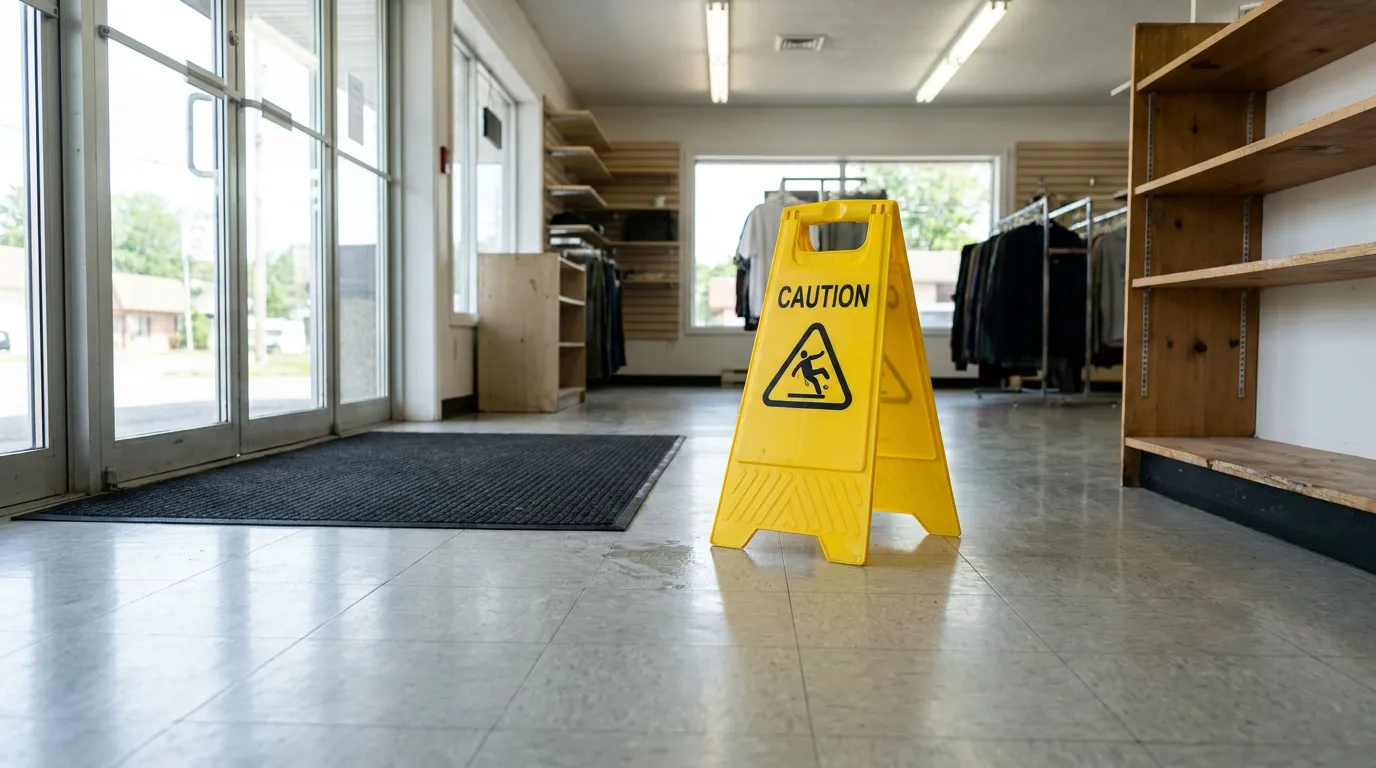
That duty generally includes fixing or warning about concealed hazards. A wet floor with no sign, a broken handrail, or a dark stairwell may all fall within that duty. Whether the owner broke it depends on the facts, and open and obvious dangers may change what the owner had to do.
Licensees: A Middle Ground
A licensee is generally someone on the property with permission but mainly for their own purposes. Florida courts distinguish invited licensees, such as social guests, from uninvited licensees. In Wood v. Camp, 284 So. 2d 691 (Fla. 1973), the Florida Supreme Court held that invited licensees, including social guests, are owed the same duty as invitees.
Uninvited licensees generally receive less protection. The owner generally only has to avoid willful or wanton harm and warn of known dangers that aren’t open to ordinary observation. That gap is why insurers sometimes try to describe an injured guest as "uninvited."
Trespassers: The Least Protection
Trespassers generally receive the least protection under Florida law. Florida Statutes § 768.075(2) says owners generally are not liable for injuries to discovered or undiscovered trespassers, except as provided in the statute. Separate rules, such as the attractive nuisance doctrine, may apply to children who trespass.
Under § 768.075(3)(b), the duties toward trespassers are narrow. For an undiscovered trespasser, the owner generally only has to avoid intentional misconduct and has no duty to warn. For a discovered trespasser, the owner generally must avoid gross negligence and intentional misconduct and must warn of known dangers that others would not easily see.
| Visitor Status | Common Examples | General Duty Owed |
|---|---|---|
| Invitee | Customers, delivery workers | Keep premises reasonably safe; warn of concealed dangers |
| Invited Licensee | Social guests | Generally the same as invitees (Wood v. Camp) |
| Uninvited Licensee | Someone permitted but not invited | Avoid willful/wanton harm; warn of known hidden dangers |
| Discovered Trespasser | Known unauthorized entrant | Avoid gross negligence; warn of known hidden dangers (§ 768.075(3)(b)) |
| Undiscovered Trespasser | Unknown unauthorized entrant | Avoid intentional misconduct only (§ 768.075(3)(b)) |
How Invitee vs Licensee Florida Rules Play Out in Real Cases
Your status is often tied to where on the property you were hurt, not just whether you were allowed on it. Under Florida Statutes § 768.075(3)(a)1., "invitation" means the visitor has an objectively reasonable belief that they were invited or otherwise welcome on the part of the property where the injury happened. A customer in a store aisle is legally in a different position than one who wanders into a back stockroom marked "Employees Only."
The statute also defines who counts as a "discovered" trespasser. Under § 768.075(3)(a)2., that is someone who entered without an express or implied invitation and whose physical presence the owner detected within 24 hours before the accident.
💡 Pro Tip: Save anything showing why you were there, such as a receipt, text inviting you over, work order, or delivery app record. Proof of purpose can help establish your visitor status before an insurer argues otherwise.
How Insurers Use Visitor Status Against You
In our experience, adjusters often look for ways to downgrade your status. They may suggest you wandered into an area customers weren’t supposed to be in, or argue a social visit was "uninvited."
Small details in your first statement can be twisted later. Saying "I was just cutting through" could be used to argue you weren’t welcome in that part of the property. Talking to a lawyer before giving a recorded statement can help you avoid that trap.
Proving a Slip and Fall Claim in a Florida Business
If you slipped on a spill or other "transitory foreign substance" in a business, Florida adds another requirement. Under Florida Statutes § 768.0755(1), you must prove the business had actual or constructive knowledge of the dangerous condition and should have taken action to fix it.
You generally don’t need a store manager to admit they knew about the hazard. Under § 768.0755(1)(a)-(b), constructive knowledge can be proven with circumstantial evidence showing either of these:
- The condition existed long enough that the business should have known about it with ordinary care
- The condition happened regularly and was therefore foreseeable
Evidence can disappear fast in these cases. Surveillance footage may be recorded over, and maintenance logs can be hard to get without a formal request. Our team works to request footage, inspection records, and witness statements early. You can learn more in our guide to Florida premises liability.
💡 Pro Tip: Look for footprints, cart tracks, or dirt in a spill when you photograph it. Those marks may suggest the substance had been there a while, which can matter for constructive knowledge.
Situations Where Florida Law Bars or Limits Recovery
Florida law includes some hard limits. Under Florida Statutes § 768.075(1), owners generally are not liable to trespassers with a blood-alcohol level of 0.08 or higher, or whose normal faculties were impaired by alcohol, chemical substances, or controlled substances, unless the owner’s gross negligence or intentional misconduct caused the injury.
Under § 768.075(4), owners are also generally not liable for negligence that injures someone attempting or committing a felony on the property. These rules generally don’t apply to most customers or guests, but insurers sometimes raise them.
Your own share of fault can matter too. Under Florida’s modified comparative negligence rule in § 768.81(6), you generally cannot recover damages if you are found more than 50% at fault. At 50% or less, your recovery is reduced by your percentage of fault.
Deadlines and the Real Stakes of a Fall
Timing matters in every Florida slip and fall claim. Under Florida Statutes § 95.11(4)(a), as amended in 2023, most negligence claims arising after March 24, 2023 must generally be filed within two years. Claims that arose earlier generally fall under the prior four-year deadline. You can review the Florida limitations statutes directly.
Claims against government property owners involve separate pre-suit notice requirements under § 768.28, different deadlines, and caps on damages. If you fell on a city sidewalk or at a public building, talk to a lawyer quickly.
Falls are often not minor events. They often lead to fractures, head injuries, and back injuries that can keep you off work for months. The full text of Florida’s negligence statutes shows how detailed these rules are, and why getting help early can make a difference.
Why a Local Attorney Who Answers the Phone Matters
Visitor status disputes are fact-heavy, and the details are easy to lose. JJ has more than 26 years of experience practicing in the Pensacola area and knows the local courts and the adjusters who handle these claims. Here, you work with JJ and Kristie directly, not a junior associate.
We’ll also be honest with you. If your status or the evidence makes your case weak, JJ will tell you so. Our invitee vs licensee Florida lawyer page explains how we handle these cases.
Frequently Asked Questions
1. Am I an invitee if I fell at a friend’s house?
Probably not in the traditional sense, but you may still be protected. Under Wood v. Camp, invited social guests in Florida are generally owed the same duty as invitees.
2. Can my status change while I’m on the property?
Yes, it can. Under § 768.075(3)(a)1., what matters is whether you reasonably believed you were welcome in the specific area where you were hurt.
3. What if I was a delivery driver when I fell?
Delivery workers are often treated as invitees because their visit benefits the owner. If you were an employee working at the time, workers’ compensation may also be involved, and you may still have a separate claim against the property owner.
4. Do I need proof the store knew about the spill?
Not necessarily direct proof. Under § 768.0755(1), constructive knowledge can be shown through circumstantial evidence, such as how long the hazard was there or whether it happened regularly.
5. How long do I have to file a claim?
For most negligence claims arising after March 24, 2023, the general deadline is two years under § 95.11(4)(a). Claims against government entities have their own notice rules. Talk to a lawyer soon so you don’t miss your deadline.
Your Visitor Status Is Only the Starting Point
Whether you were an invitee, licensee, or trespasser generally sets the duty the owner owed you, but it doesn’t decide your whole case. Proof of the hazard, the owner’s knowledge, your own share of fault, your injuries, and deadlines all matter too.
You don’t have to figure this out alone. Reach out to The Law Office of JJ Talbott at (850) 437-9600 or schedule your consultation so JJ can review what happened and give you an honest answer.
Disclaimer: This content is for informational purposes only and is not legal advice. Every case is unique, and results may vary. Consult an attorney about your specific circumstances.