
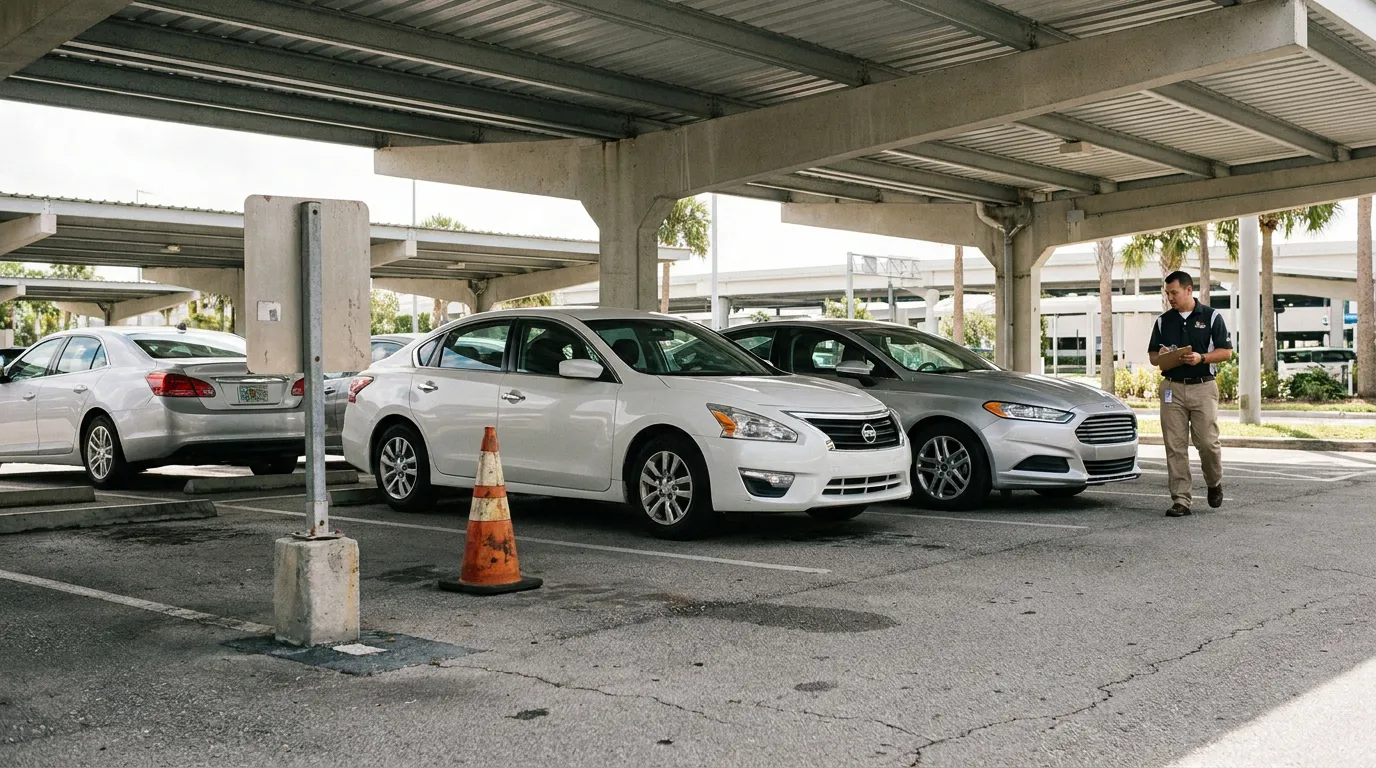
Hurt in a Crash With a Rental Car? Here Is Who May Have to Pay
Key Takeaways: A Florida rental car company can be held liable for a crash, but usually only in certain situations and often only up to set dollar limits. The federal Graves Amendment generally protects rental companies from liability based only on owning the car. That protection generally does not cover the company’s own negligence, such as negligent entrustment or negligent maintenance. Florida Statutes Chapter 324 nominally caps short-term rental companies’ liability at $100,000 per person, $300,000 per incident for bodily injury, and $50,000 for property damage, and they may also owe up to an additional $500,000 in economic damages if the driver was uninsured or carried less than $500,000 in combined coverage. However, the Florida Supreme Court’s 2011 decision in Vargas v. Enterprise Leasing Co. held that the federal Graves Amendment preempts these state-law vicarious liability caps for rental companies, so they generally cannot be held vicariously liable under them at all; they may only be liable for their own negligence, such as negligent entrustment or negligent maintenance. The rental company’s insurance is generally primary unless the contract shifts that to the renter in at least 10-point type. Most negligence claims arising after March 24, 2023, must generally be filed within two years.
A Florida rental car company can be held responsible for a crash, but usually only in certain situations and often only up to certain dollar limits. A federal law called the Graves Amendment generally shields rental companies from being blamed just because they own the car. However, that protection has important exceptions, and Florida has its own insurance rules and caps that may still allow injured people to recover compensation. If a rental car hit you, the first question is usually whose insurance pays and how much.
You do not have to sort this out alone. At The Law Office of JJ Talbott, you talk to JJ directly, not a call center. Call us today for a free consultation at (850) 437-9600, or contact us now to tell us what happened.
What the Graves Amendment Florida Drivers Hear About Actually Means
The Graves Amendment is a federal law, 49 U.S.C. § 30106, passed in 2005. It generally says a company in the business of renting or leasing vehicles cannot be held liable under state law simply because it owns the car that a renter crashed. Before that law, Florida’s "dangerous instrumentality" doctrine often made vehicle owners automatically responsible for anyone they let drive.
That does not mean rental companies are untouchable. The Graves Amendment only protects a rental company when there is no negligence or criminal wrongdoing on the part of the company or its affiliates. It also contains a savings clause, 49 U.S.C. § 30106(b), that preserves state laws imposing financial responsibility or insurance requirements on vehicle owners.
Courts have generally held that the law bars Florida’s dangerous instrumentality doctrine as applied to rental companies, while leaving room for insurance requirements and claims based on the company’s own carelessness. In Vargas v. Enterprise Leasing Co. (2011), the Florida Supreme Court held that the Graves Amendment preempts the liability caps in Fla. Stat. § 324.021(9)(b)2 for short-term rental companies, so the facts of your crash matter a great deal.
Graves Amendment Exceptions That Can Keep a Rental Company on the Hook
The biggest exception is the company’s own negligence. If the rental company did something wrong itself, the Graves Amendment generally offers no protection. Fla. Stat. § 324.021(9)(b)2 states that its limits do not affect "the liability of the lessor for its own negligence."
Negligent Entrustment
Negligent entrustment means handing a car to someone you knew, or should have known, was unfit to drive safely. This is a long-recognized theory of negligent entrustment liability in tort law. Examples could include:
- Renting to someone with a suspended or revoked license
- Ignoring obvious signs that a renter was intoxicated
- Skipping a license check that the company’s own policies required
- Renting to someone with a known history of reckless driving, where that history was available to the company
Proving this is not easy. You generally have to show what the company knew or should have known, and that its decision helped cause your injuries. Florida courts have generally not required rental companies to run full driving-record checks, so these claims often depend on what was obvious at the counter.
Negligent Maintenance
A rental company may also be responsible if it rented out a car it knew, or should have known, was unsafe. Worn brakes, bald tires, or ignored recall notices could all be part of that kind of claim. These cases often turn on maintenance records, so preserving evidence early can matter.
💡 Pro Tip: If possible, photograph the rental car’s tires, dashboard warning lights, and any rental paperwork in the vehicle after the crash. Rental fleets repair and re-rent cars quickly, and that evidence can disappear.
How Florida Rental Company Liability Works Under State Law
Florida has its own detailed rules for rental and leasing companies in Florida Statutes Chapter 324. These rules apply "notwithstanding any other provision of the Florida Statutes or existing case law," under Fla. Stat. § 324.021(9)(b). In plain terms, they generally control over the traditional dangerous instrumentality doctrine where the two conflict.
Also, an owner’s insurance policy must cover permitted drivers. Fla. Stat. § 324.151(1)(a) requires an owner’s liability policy to insure anyone driving with the owner’s express or implied permission, within the policy limits. That is often how a renter ends up covered under the rental company’s policy, unless the rental agreement validly makes the renter’s own insurance primary.
Short-Term Rentals vs. Long-Term Leases
The length of the rental changes the rules. Here is how Fla. Stat. § 324.021(9)(b) breaks it down:
| Situation | How Florida Treats the Rental Company |
|---|---|
| Rental or lease under 1 year | Nominally treated as owner for liability, up to $100,000 per person / $300,000 per incident for bodily injury and $50,000 for property damage, but under Vargas v. Enterprise Leasing Co. (2011), the Florida Supreme Court held the Graves Amendment preempts this provision, so short-term rental companies generally cannot be held vicariously liable under this cap at all |
| Driver uninsured or has under $500,000 combined coverage | Company may owe up to an additional $500,000 in economic damages only, reduced by amounts recovered from the renter, driver, or their insurance |
| Lease of 1 year or longer | Not treated as owner, if the lease requires the lessee to carry at least $100,000/$300,000/$50,000 (or $500,000 combined) and that coverage stays in effect; if the lessor buys the policy, it needs at least $1 million combined |
Note the words "economic damages only" in that extra $500,000. That generally means things like medical bills and lost wages, not pain and suffering.
Whose Insurance Pays First?
By default, the rental company’s insurance generally pays first. Under Fla. Stat. § 627.7263(1), the lessor’s liability and personal injury protection (PIP) coverage is primary, unless the agreement says otherwise in at least 10-point type on its face.
Many rental companies do shift that burden to the renter’s own policy. To do it, Fla. Stat. § 627.7263(2) requires the agreement to state, in at least 10-point type, that the renter’s valid and collectible liability and PIP insurance is primary. If the renter has no valid and collectible coverage, the rental company’s coverage generally still applies. That is why we always want to see the actual rental contract.
In our experience, insurers often point fingers at each other in these cases. Meanwhile, your medical bills keep coming.
Common Mistakes Injured People Make After a Rental Car Crash
The most common mistake is assuming the rental company has no responsibility at all. Adjusters may mention the Graves Amendment early to discourage a claim. Sometimes they are right, but sometimes the facts point to the company’s own negligence or to required insurance coverage.
Another mistake is giving a recorded statement too soon. You are generally not required to give one to the other side’s insurer, and what you say could be used to minimize your claim.
People also wait too long. Under Fla. Stat. § 95.11, as amended by HB 837 in 2023, most negligence claims arising after March 24, 2023, must generally be filed within two years. Claims that arose before that date generally fall under the older four-year deadline in § 95.11(3)(a). Exceptions are narrow and never automatic.
Not sure if your case qualifies? Call us, and we will tell you honestly. JJ has spent more than 26 years practicing in the Pensacola area, and if a case is not strong, he will say so.
Why a Small Local Team Makes a Difference in These Cases
Rental car claims often involve several insurers, a corporate fleet owner, and federal and state law all at once. That kind of case needs close attention, not a file passed between associates. With our two-person team, JJ and his paralegal Kristie, you know who is working on your case.
We also know how these claims tend to unfold locally. JJ knows the Northwest Florida courts and the adjusters who handle these claims. These cases share a lot with other multi-party crashes, which we cover in our guide to commercial vehicle liability.
Frequently Asked Questions
1. Does the Graves Amendment mean I cannot sue a rental car company in Florida?
Not necessarily. The Graves Amendment generally blocks claims based only on ownership. Claims based on the company’s own negligence, such as negligent entrustment or negligent maintenance, may still go forward.
2. What if the renter who hit me had no insurance?
Florida law may help in that situation. Under Fla. Stat. § 324.021(9)(b)2, a short-term rental company may owe up to an additional $500,000 in economic damages if the driver was uninsured or carried less than $500,000 in combined coverage. However, in Vargas v. Enterprise Leasing Co. (2011), the Florida Supreme Court held that the Graves Amendment preempts this kind of vicarious liability for rental companies, so this provision may not apply in practice.
3. Can I recover pain and suffering from the rental company?
It depends on the legal theory. The extra $500,000 covers economic damages only. However, a claim based on the company’s own negligence is not capped by that section and may include noneconomic damages such as pain and suffering.
4. How do I find out whose insurance is primary?
Look at the rental agreement. Under Fla. Stat. § 627.7263, the rental company’s coverage is generally primary unless the contract states otherwise in at least 10-point type. An attorney can request the agreement if you do not have it.
5. How long do I have to file a claim?
For most negligence claims arising after March 24, 2023, Florida generally allows two years under Fla. Stat. § 95.11. Claims that arose before that date generally follow the older four-year rule. It is wise to talk with a lawyer promptly.
The Bottom Line on Rental Car Crash Claims
A Florida rental car company is not automatically responsible for a renter’s crash, but it is not automatically off the hook either. The Graves Amendment limits ownership-based claims, while Florida law still requires insurance, sets coverage rules, and may leave the company responsible for its own negligence.
If you were hurt and the adjuster is already telling you there is nothing to claim, get a second opinion. A Graves Amendment Florida lawyer can review the contract, the insurance, and the company’s conduct. Reach out to The Law Office of JJ Talbott at (850) 437-9600, or schedule your consultation to talk with JJ directly.
Disclaimer: This content is for informational purposes only and is not legal advice. Every case is unique, and results may vary. Consult an attorney about your specific circumstances.