
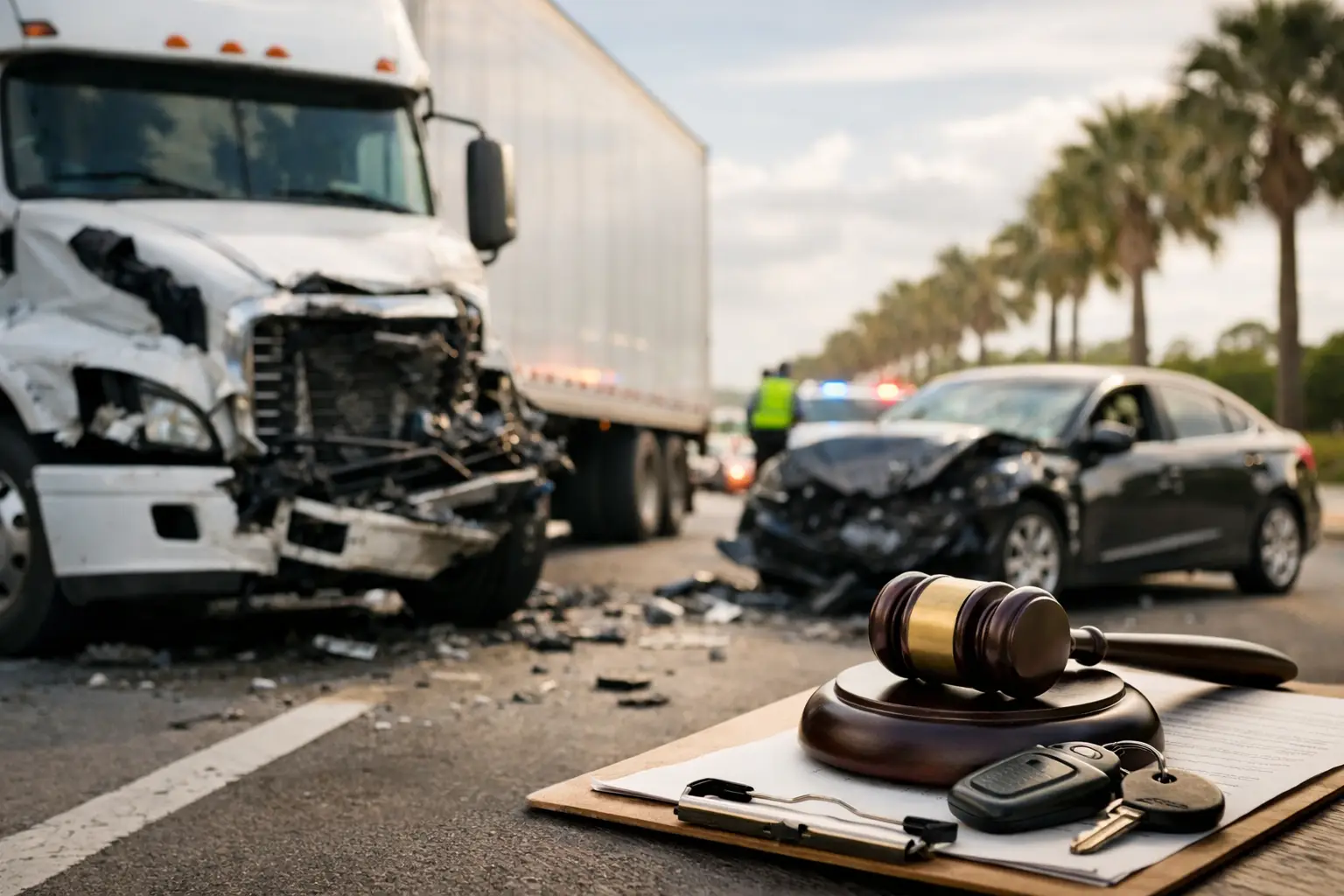
A commercial truck can weigh 20 to 30 times more than a passenger vehicle. When one collides with a car, motorcycle, or pedestrian, the injuries can change a family’s life in seconds. Truck accident liability Florida cases are rarely as simple as blaming the driver who was behind the wheel. The trucking company, a maintenance provider, a cargo loader, or another party may also be responsible for the harm done.
That matters because serious injuries bring serious costs: emergency treatment, surgery, rehabilitation, missed paychecks, permanent limitations, and a future that may look very different. Insurance companies begin protecting their own interests immediately. You deserve someone protecting yours with the same urgency.
Why Truck Accident Liability in Florida Is Different
A crash between two private vehicles may involve two drivers and two insurance policies. A tractor-trailer collision can involve a driver, a motor carrier, a trailer owner, a freight broker, a shipper, a maintenance contractor, and multiple insurers. Each party may point the finger somewhere else while the injured person is left facing medical bills and unanswered questions.
Commercial trucking is also heavily regulated. Drivers and carriers may have duties involving hours of service, vehicle inspections, drug and alcohol testing, driver qualifications, maintenance records, and cargo securement. A violation does not automatically decide every case, but it can be powerful evidence that a company put profits, deadlines, or convenience ahead of public safety.
The central question is whether a person or company failed to use reasonable care and whether that failure caused the crash and resulting injuries. The answer depends on evidence, not the trucking company’s first explanation.
Who May Be Responsible for a Truck Crash?
The Truck Driver
A driver may be liable for speeding, tailgating, driving while fatigued, distracted driving, unsafe lane changes, running a red light, or failing to adjust to rain, traffic, construction, or low visibility. Truck drivers need more room to stop and turn than ordinary motorists. A mistake that might cause a minor car crash can be catastrophic when an 18-wheeler is involved.
Fatigue deserves close attention. Federal and state rules limit driving time and require rest periods, but pressure to meet delivery deadlines can lead to violations. Electronic logging device data, dispatch messages, fuel receipts, and toll records may reveal whether the driver was on the road longer than permitted.
The Trucking Company or Motor Carrier
The carrier may be responsible for its driver’s negligence when the driver was working within the scope of employment. The company may also face direct liability for its own conduct, including negligent hiring, training, supervision, scheduling, or retention.
For example, a company that hires a driver with a known pattern of unsafe driving, ignores failed drug tests, pressures drivers to skip required breaks, or allows repeated inspection failures may have created a preventable danger. Some carriers attempt to label drivers as independent contractors. That label does not end the analysis. The actual relationship, control over the work, and applicable insurance arrangements can all matter.
Maintenance and Repair Companies
Brake failure, tire blowouts, steering problems, defective lights, and other mechanical failures can cause or worsen a crash. If an outside shop performed careless repairs or failed to identify a dangerous condition during an inspection, it may share responsibility.
Maintenance records can disappear quickly or become difficult to obtain after a crash. Preserving the truck, trailer, parts, inspection reports, and repair history can be critical when a mechanical defect is suspected.
Cargo Loaders, Shippers, and Other Parties
Improperly loaded or secured cargo can shift during a turn, make a trailer unstable, or spill into traffic. A company that loaded the freight or instructed the driver on transport may bear responsibility if its actions contributed to the wreck.
In some cases, a defective truck part or safety component is involved. In others, another motorist cuts off a truck, causing the driver to take evasive action. A thorough investigation should follow the facts wherever they lead, even when more than one party is at fault.
Evidence Can Decide the Case
After a major truck crash, the trucking company and its insurer may dispatch investigators quickly. Their goal is often to limit the company’s exposure, not to build the injured person’s claim. That is why prompt legal action can make a meaningful difference.
Key evidence may include the police report, photographs, witness statements, dash camera video, surveillance footage, driver qualification files, dispatch communications, electronic logs, black box data, inspection reports, maintenance records, and post-crash drug and alcohol testing. The truck’s event data recorder can sometimes show speed, braking, steering, throttle position, and other information from the moments before impact.
An attorney can send preservation notices demanding that the responsible parties retain relevant evidence. Without prompt action, video may be overwritten, electronic data may be lost, and vehicles may be repaired before they can be inspected. Waiting for an insurer to conduct a fair investigation is a risky strategy when the company controls much of the proof.
What If You Were Partly at Fault?
Florida uses a modified comparative negligence system in most injury cases. The insurance company may argue that you were speeding, distracted, failed to yield, or could have avoided the collision. Sometimes that argument is supported by evidence. Often, it is an effort to reduce what the insurer must pay.
If you are found partly responsible, your compensation may be reduced by your percentage of fault. Under Florida’s current general rule, a person found more than 50 percent at fault may be barred from recovering damages. The details matter, and fault should never be accepted based solely on an adjuster’s version of events.
Even if you made a mistake, that does not excuse a truck driver or trucking company from its own negligence. A careful reconstruction of the collision may show that excessive speed, fatigue, poor maintenance, or an unsafe maneuver was the true cause of the crash.
Compensation in a Florida Truck Accident Claim
A successful claim may seek compensation for medical expenses already incurred and reasonably expected in the future, lost income, reduced earning capacity, pain and suffering, disability, disfigurement, and the impact the injury has had on daily life. When a crash takes a loved one’s life, surviving family members may have a wrongful death claim for certain losses.
The value of a case is not determined by the size of the truck or a television-style settlement number. It depends on the injuries, available evidence, insurance coverage, fault, medical prognosis, and the real effect on the injured person and family. A quick settlement offer may sound helpful when bills are piling up, but it can fall far short of the long-term care and income a serious injury requires.
Florida generally imposes strict deadlines for filing injury and wrongful death lawsuits, often two years, though exceptions and special circumstances can affect the deadline. Do not assume there is plenty of time. Waiting can weaken both the legal claim and the evidence needed to prove it.
Steps to Take After a Truck Crash
Your health comes first. Get medical attention promptly, follow your treatment plan, and tell medical providers about every symptom, even symptoms that seem minor at first. Adrenaline can hide pain, and some brain, neck, back, and internal injuries become clearer over time.
If you are able, keep photographs, medical paperwork, repair estimates, missed-work information, and notes about how the injuries affect your routine. Avoid posting about the crash or your recovery on social media. Insurers may look for any statement or image they can use to challenge your injuries.
You can report the crash and cooperate with law enforcement without giving a recorded statement to the trucking insurer or accepting a settlement before you understand your rights. The insurer’s representative may sound concerned, but their job is to resolve the claim for as little as possible.
At The Law Office of J.J. Talbott, we know that a truck wreck is not just a case file. It is a disruption to your health, work, family, and peace of mind. We fight to identify every responsible party, preserve the evidence, and pursue the compensation our clients deserve.
If a truck crash has left you or someone you love injured, do not carry the legal burden alone while the trucking company builds its defense. Get clear answers early, protect the evidence, and give yourself the space to focus on healing.