
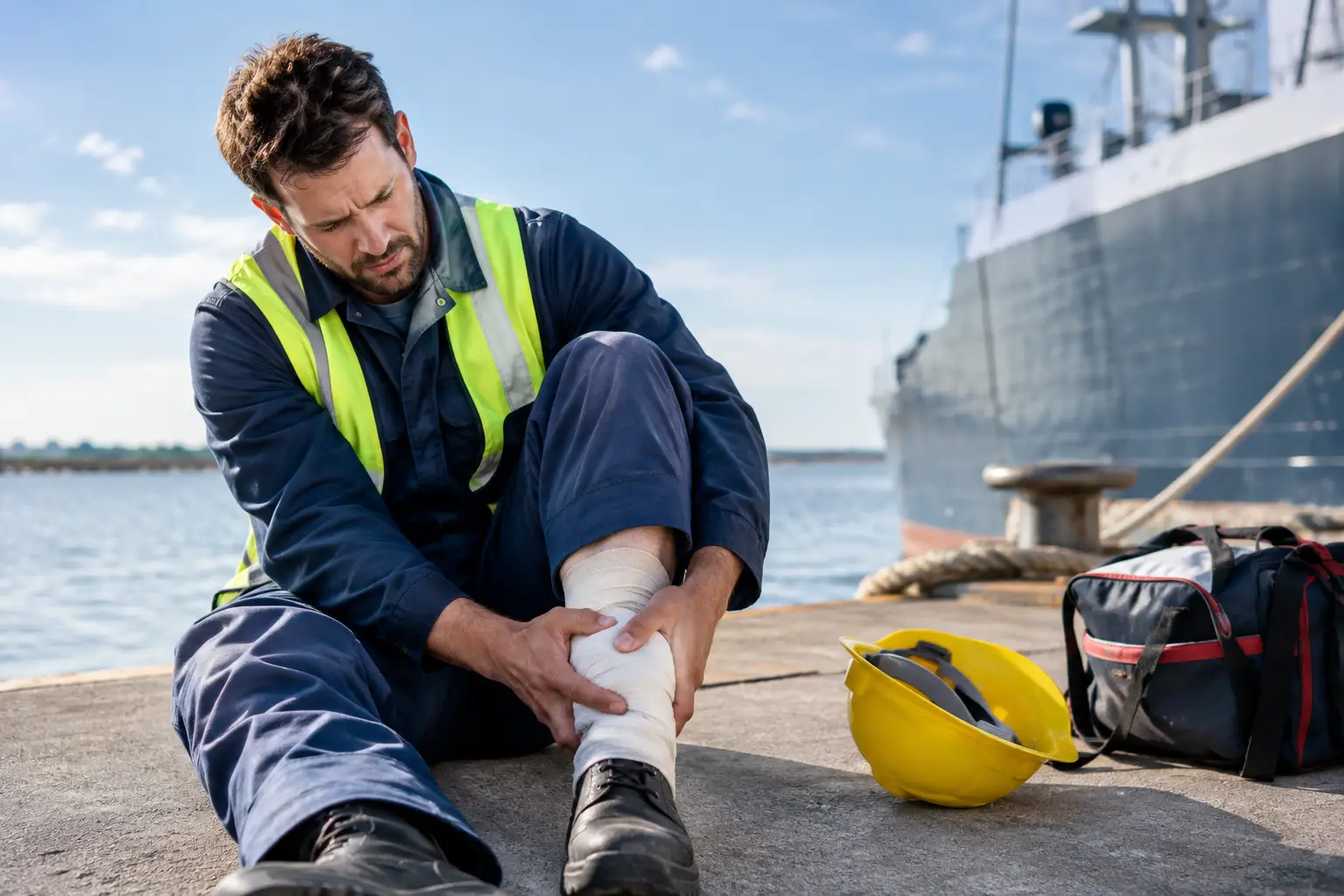
A fall on a wet deck, a snapped line, a defective winch, or a collision offshore can change everything in seconds. After a maritime injury, you may be dealing with severe pain, missed paychecks, medical appointments, and pressure from an employer or insurance company that wants answers before you know your rights. You do not have to face that pressure alone.
Maritime accidents are different from ordinary workplace accidents. The law that applies may depend on where you were hurt, what job you performed, the type of vessel involved, and whether you qualify as a seaman. Those details can determine who is responsible for your losses and what compensation may be available.
Maritime Injury Claims Are Not Ordinary Injury Claims
Florida’s Gulf Coast depends on people who work on and around the water. Deckhands, commercial fishermen, tugboat crews, offshore workers, charter boat employees, dockworkers, ship repair workers, and cruise ship personnel all face hazards that most workers never encounter.
A maritime injury can result from rough seas, unsafe equipment, poor vessel maintenance, inadequate training, negligent crew members, dangerous ladders, slippery surfaces, fires, explosions, cargo accidents, or a captain’s unsafe decisions. Some injuries happen in a single violent event. Others develop over time from repetitive work, toxic exposure, or physically demanding conditions.
The legal path is not one-size-fits-all. A worker injured aboard a vessel may have rights under the Jones Act and general maritime law. A dockworker or shipyard employee may instead be covered by the Longshore and Harbor Workers’ Compensation Act. A passenger hurt during a boating or cruise-related accident may have a negligence claim against the operator, owner, or another responsible party.
That is why an employer’s first explanation of your benefits should not be the final word. The classification of your job and the facts of the accident matter.
The Protections Available to Injured Seamen
Many crew members qualify as seamen under federal law. Generally, that means their work contributes to the mission or function of a vessel in navigation and that they have a meaningful connection to that vessel or a fleet of vessels. The exact analysis depends on the circumstances.
Jones Act Negligence Claims
The Jones Act allows qualifying seamen to seek damages when an employer’s negligence played any part in causing an injury. The burden of proving fault can be less demanding than in many land-based injury cases, but evidence still matters.
Negligence may involve failing to provide proper training, understaffing a crew, requiring dangerous work in unsafe conditions, ignoring known equipment problems, or failing to enforce safety procedures. Even a seemingly small safety failure can have serious consequences offshore.
A successful Jones Act claim may seek compensation for medical expenses, lost wages, reduced future earning ability, pain and suffering, and other damages tied to the injury. The amount depends on the severity of the harm, the worker’s expected recovery, and the impact on their ability to return to maritime work.
Maintenance and Cure
A seaman who becomes injured or ill while in service to a vessel may be entitled to maintenance and cure, even if no one was at fault. Maintenance generally helps with reasonable living expenses while you recover. Cure refers to reasonable medical treatment until you reach maximum medical improvement.
These benefits can be critical, but disputes are common. An employer may question whether treatment is necessary, push for a quick return to work, or stop benefits before an injured worker has recovered. Accepting an early decision from the company can leave you without the care and income support you need.
Unseaworthiness Claims
Vessel owners have a duty to provide a seaworthy vessel. This does not mean a vessel must be perfect. It does mean the vessel, its equipment, and its crew must be reasonably fit for their intended use.
A defective ladder, worn-out safety gear, malfunctioning machinery, inadequate staffing, or an improperly trained crew member can create an unseaworthy condition. In the right case, an injured seaman may pursue an unseaworthiness claim in addition to a Jones Act claim.
What to Do After a Maritime Injury
Your health comes first. Still, the early steps you take can protect both your medical recovery and your legal claim. If you are physically able, take the following actions:
- Report the accident promptly and ask for a written incident report. Be truthful and specific about what happened, where it happened, and the conditions involved.
- Get medical attention as soon as possible. Tell medical providers that the injury happened during maritime work and describe every symptom, even if some pain seems minor at first.
- Photograph visible injuries, the accident scene, equipment, wet surfaces, damaged gear, and anything else that may show how the incident occurred.
- Preserve names and contact information for witnesses. Coworkers may later be transferred, leave the company, or become difficult to locate.
- Avoid signing broad releases, recorded statements, or settlement paperwork before you understand what rights you may be giving up.
Do not exaggerate your symptoms, but do not minimize them either. Toughing it out may be part of the culture in many maritime jobs, yet delayed treatment can make recovery harder and give an insurer room to argue that your injury was not serious or was caused somewhere else.
Evidence Can Disappear Fast at Sea
A vessel can leave port, be repaired, change crews, or return to service quickly. Equipment may be replaced before anyone outside the company examines it. Electronic records, video footage, weather reports, vessel logs, maintenance records, safety meeting notes, and crew schedules can all become important.
That is one reason prompt legal guidance matters after a serious maritime accident. An attorney can work to preserve evidence before it disappears and identify every party that may be responsible. Depending on the case, that may include an employer, vessel owner, operator, equipment manufacturer, contractor, or third party working aboard the vessel.
The investigation should also look beyond the immediate accident. If a worker fell, the question is not only whether the deck was wet. Why was it wet? Was there a leak? Were non-slip surfaces missing? Had the condition been reported before? Was the crew rushed, understaffed, or denied proper equipment? The answers can shape the entire claim.
Insurance Companies Protect Their Bottom Line
After an offshore or maritime accident, an employer’s insurer may contact you quickly. They may sound concerned, offer to coordinate treatment, or suggest that a payment is all you are entitled to receive. Their goal is often to control the information and limit the company’s financial exposure.
A fast settlement can be tempting when bills are coming due. But a settlement should account for more than today’s expenses. It should consider surgery, rehabilitation, future care, time away from work, permanent restrictions, and whether you can return to the career you built on the water.
Every case has trade-offs. Some claims resolve through negotiation, while others require litigation because the insurer refuses to make a fair offer. A trial-ready legal strategy gives an injured worker leverage when the other side will not take responsibility.
Deadlines May Apply to Your Maritime Injury Case
Federal maritime claims often have deadlines, and some contracts or passenger tickets contain shorter notice requirements. Waiting can also make it harder to prove what happened as witnesses’ memories fade and physical evidence is lost.
Do not assume that workers’ compensation rules are the only rules that apply, or that you have plenty of time because you are still receiving medical care. The right deadline depends on the claim, the worker’s status, the location of the accident, and other facts.
If you were hurt on a vessel, at a dock, in a shipyard, or during offshore work, The Law Office of J.J. Talbott can help you understand the path forward. Our team fights for injured people and families across Northwest Florida and the Gulf Coast with the urgency, respect, and personal attention serious cases demand.
You should be able to focus on healing without wondering whether the company is protecting your future. Get clear answers early, preserve what matters, and put someone in your corner who is prepared to fight for the compensation and justice you deserve.