
Key Takeaways: Constructive notice means a Florida business should have known about a hazard even if no one reported it, and under Fla. Stat. § 768.0755(1) the injured person carries the burden of proving that knowledge. There are two statutory paths: showing the dangerous condition existed long enough that ordinary care would have caught it, or showing the condition occurred with regularity and was therefore foreseeable. Evidence like surveillance video, sweep logs, incident reports, and prior complaints often decides these cases, and much of it may disappear within days or weeks. The notice statute did not eliminate the common-law duty of reasonable care a business owes its invitees. For claims accruing on or after March 24, 2023, most negligence actions generally must be filed within two years, while claims against state entities generally follow a four-year period with separate presuit notice rules. Reporting the fall, photographing the scene, getting consistent medical care, and calling a lawyer early can help protect the proof a claim may depend on.
Constructive notice is the legal way of saying a business should have known about a hazard, even if nobody actually told them about it. If you slipped on a puddle in a Pensacola grocery store, the company may claim it had no idea the spill was there. Florida law puts the burden on you to prove they should have caught it. Florida Statute § 768.0755(1) requires the injured person to prove the business had actual or constructive knowledge of the dangerous condition and should have remedied it. Proving you fell and got hurt is generally not enough by itself.
At The Law Office of JJ Talbott, you talk to JJ directly, not an intake coordinator or a call center. JJ has practiced in the Pensacola area for more than 26 years and knows the local courts and the adjusters on the other side. Call (850) 437-9600 or reach out to our team now for a free consultation and an honest read on your situation.
The Constructive Notice Definition Under Florida Law
Constructive notice means the hazard was there long enough, or happened often enough, that a reasonably careful business would have found and fixed it. Actual notice is simpler: an employee saw the spill, a customer reported it, or a manager walked past it. Constructive notice covers the more common situation where nobody admits to knowing anything.
Florida Statute § 768.0755(1)(a)-(b) gives two paths to prove it with circumstantial evidence: "(a) The dangerous condition existed for such a length of time that, in the exercise of ordinary care, the business establishment should have known of the condition; or (b) The condition occurred with regularity and was therefore foreseeable."
These are separate routes, and you generally only need one. Which one fits depends on the facts of your fall, the property layout, and what evidence still exists. Courts applying the statute have generally required more than the mere presence of a substance on the floor.
Path One: The Hazard Sat There Too Long
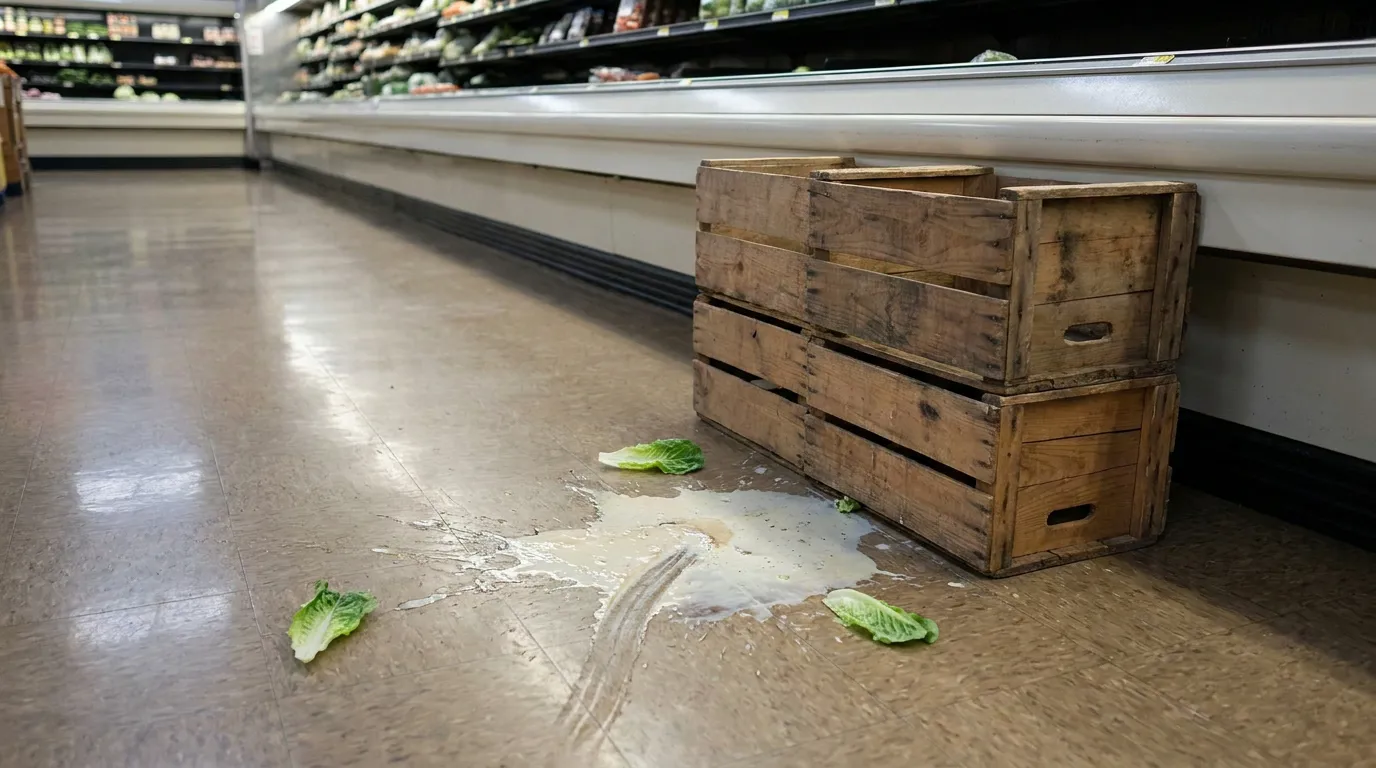
Time is a common way to attempt to establish constructive notice. Courts may consider evidence such as dirt or footprints through a puddle, melted and spread ice, or produce that’s been walked on and browned at the edges, details suggesting the substance was there well before you arrived.
There is no magic number of minutes that automatically wins a case. Whether a length of time is long enough is generally a fact question depending on store size, staffing, and hazard visibility.
Path Two: The Problem Kept Happening
The second route focuses on patterns rather than the clock. If a cooler leaks every weekend, a drink station regularly overflows, or an entryway floods whenever it rains without mats, the condition may be foreseeable under the statute. Prior incident reports, repeated maintenance calls, and employee testimony can support this theory.
This path often matters most when video is short or already gone. When you can’t pin down how long the substance sat there, showing a recurring, unfixed problem may carry the argument. More detail is available in our related guide on proving a slip and fall case.
💡 Pro Tip: Photograph the floor from several angles before anyone cleans it, and capture whether warning cones were present.
What Evidence Actually Proves a Store Knew About a Hazard
Constructive notice cases are often won or lost on evidence gathered in the first days and weeks. Surveillance footage is frequently the most important piece, and many retailers overwrite systems on a rolling cycle measured in days or weeks. Once gone, it often cannot be recovered.
Here is what our team typically pursues:
- Surveillance video covering the hazard area before, during, and after the fall
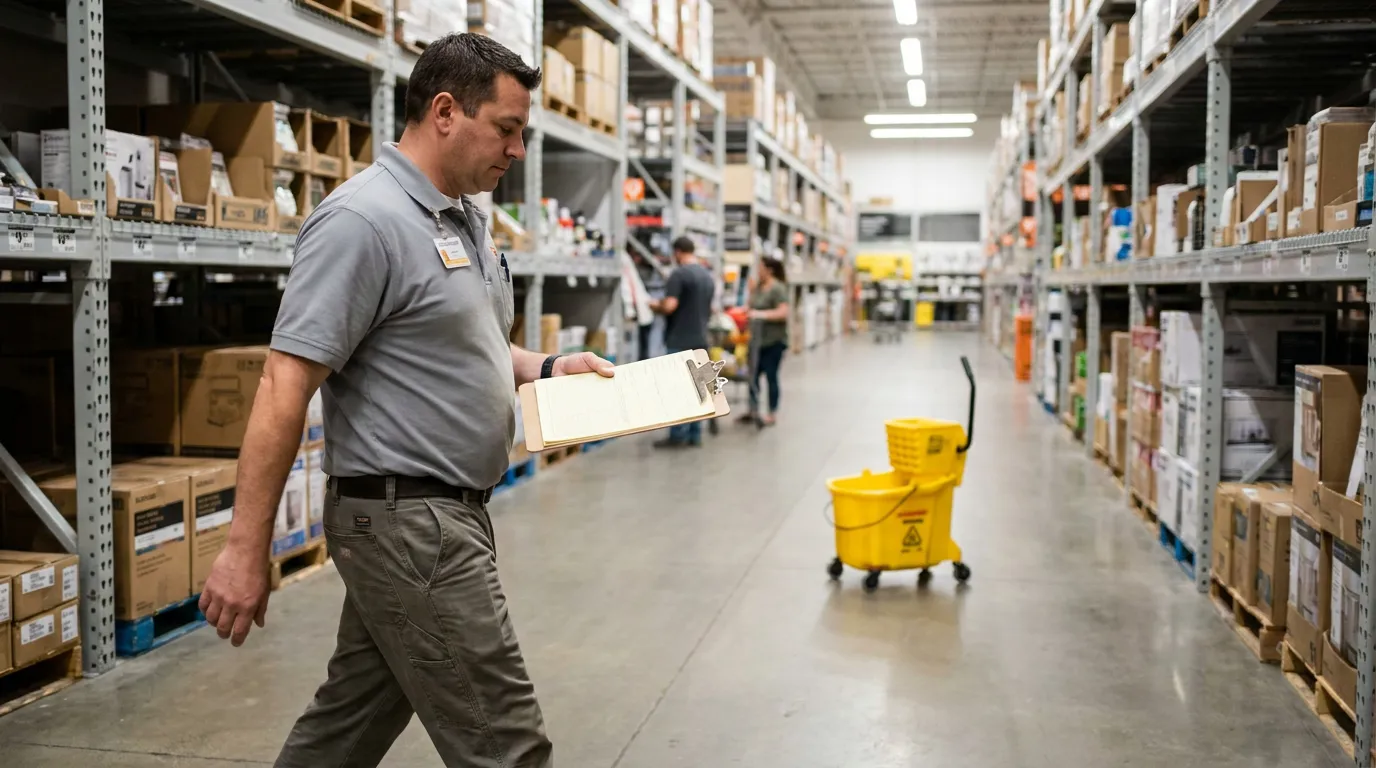
- Sweep logs, inspection sheets, and maintenance records for that shift
- The incident report, including any employee statements
- Prior complaints involving the same area or condition
- Witness and responding employee contact information
- Your medical records tying the injury to the fall
A preservation letter sent early can make a difference. When a business is on notice that litigation is reasonably anticipated and evidence has been formally requested, destroying it may carry consequences, though available remedies depend on the circumstances. Waiting months to call anyone often means the most useful proof no longer exists.
The Duty Still Owed to You
The notice statute did not erase the older duties a business owes its customers. Fla. Stat. § 768.0755(2) states the section "does not affect any common-law duty of care owed by a person or entity in possession or control of a business premises."
As a business invitee, you are generally owed a duty of reasonable care, including maintaining the property safely and warning of dangers the business knew or should have discovered through reasonable inspection. Claims involving broken handrails, unmarked steps, torn carpeting, or poor lighting often turn on that duty rather than the transitory substance rule, though the injured person must still prove the business knew or should have known.
These rules live inside Florida’s broader negligence framework. You can read the full text of the state’s negligence statutes through the Florida Senate. Legal scholarship, including analysis in the University of Miami Law Review, has traced how Florida moved away from a rebuttable presumption of negligence toward the current notice requirement.
Not sure if your case qualifies? Call us and we will tell you honestly.
Deadlines That Can End a Slip and Fall Claim
Most Florida slip and fall claims are negligence actions, and the general limitations period is now two years. Under Fla. Stat. § 95.11, an action founded on negligence that accrued on or after March 24, 2023 must generally be commenced within two years; claims accruing before that date were generally governed by the prior four-year period. Missing the applicable window will usually bar the claim, subject to narrow exceptions courts interpret strictly.
Falls on state or government property follow a different track. Under Fla. Stat. § 768.28(14), a claim against the state or its agencies for a negligent act must generally be presented in writing to the agency and the Department of Financial Services within three years after accrual, and suit must generally be filed within four years. These presuit notice requirements are separate from the filing deadline, and failing to satisfy them can defeat an otherwise timely claim.
| Where You Fell | General Filing Period | Governing Statute |
|---|---|---|
| Private business or retail store | 2 years | Fla. Stat. § 95.11 |
| State agency or political subdivision property | 4 years (with 3-year presuit notice) | Fla. Stat. § 768.28(14) |
Do not treat these periods as automatic or absolute. Tolling and delayed accrual generally apply only in limited circumstances that courts read narrowly. Because the correct deadline depends on when the claim accrued and who controlled the property, confirm it with a lawyer early rather than assuming.
Mistakes We See People Make After a Fall
A common mistake is not reporting the fall before leaving the property. Insurers may argue that an unreported fall never happened. Ask for a written incident report and request a copy before you go.
Talking to the Adjuster Too Soon
Adjusters often call within a day or two, sounding friendly and helpful. Recorded statements taken while you’re medicated or in shock can produce answers used against you later, particularly on comparative fault. You are generally not obligated to give a recorded statement to the other side’s carrier, though your own policy may impose cooperation duties.
Gaps in Medical Treatment
Delaying care or skipping follow-up appointments may give the insurer an argument that you weren’t really hurt. Consistent treatment records help connect the fall to the injury. Tell every provider exactly how the fall happened so it appears in the chart.
💡 Pro Tip: Save the shoes and clothing you wore, unwashed. Defense teams commonly raise footwear as a comparative fault issue.
How Our Pensacola Team Approaches These Cases
We are a small, tight-knit operation, and that is the point. JJ and his paralegal Kristie handle files personally, so you get answers from the person actually working your case instead of waiting on a callback from a stranger. Big enough to do the job, small enough to care.
Our approach to Pensacola premises liability cases starts with moving fast on evidence, preservation demands for video, requests for sweep logs, and locating witnesses while memories are fresh. In appropriate cases, we work with engineers or safety professionals to explain what a reasonable inspection should have caught.
We will also tell you if your case is weak. JJ would rather give an honest assessment than let someone spend months chasing a claim the evidence doesn’t support. Every outcome depends on the specific facts, and no lawyer can promise a result.
Frequently Asked Questions
1. How long does a spill have to be on the floor to prove constructive notice?
There is no fixed time set by statute. Florida law asks whether the condition existed long enough that a business exercising ordinary care should have discovered it, evaluated case by case.
2. What if the store says it has no surveillance video?
That answer may deserve scrutiny. If footage existed and was destroyed after the business had a duty to preserve it, a court may consider remedies ranging from evidentiary sanctions to an inference against the business. This is one reason to contact a Florida slip and fall lawyer quickly.
3. Does it hurt my claim if I was partly at fault?
Florida applies a modified comparative fault framework for most negligence claims accruing on or after March 24, 2023, so partial responsibility does not necessarily end a claim. Your recovery is generally reduced in proportion to your share of fault, and under Fla. Stat. § 768.81 a plaintiff found more than 50 percent at fault is generally barred from recovering damages.
4. Do I have a case if I fell on a sidewalk outside a store?
Possibly, but it depends on who owned and maintained that sidewalk. Falls on municipal or state property may involve different deadlines and presuit notice rules than falls inside a private business.
5. Can I still file if the store never made an incident report?
Possibly, though it may make proof harder. Witness statements, photographs, same-day medical records, and even receipts placing you at the store may help establish that the fall occurred as described.
Getting Straight Answers About Your Fall
Constructive notice is central to many Florida slip and fall claims, and it often comes down to two questions: was the hazard there long enough, or did it keep happening? Under Fla. Stat. § 768.0755, the injured person carries that burden, which is why early evidence can matter so much. The statute did not remove the common-law duty a business owes to people lawfully on its property.
Every case turns on its own facts, and nobody can tell you what your claim is worth from a blog post. What we can do is look at what happened, tell you honestly what the evidence shows, and explain your options under Florida law.
If you were hurt in a fall in Pensacola or Northwest Florida, we are ready to listen. Call (850) 437-9600 or contact the Law Office of J.J. Talbott today for a free consultation, and learn more about our personal injury practice when you are ready.
Disclaimer: This content is for informational purposes only and is not legal advice. Every case is unique, and results may vary. Consult an attorney about your specific circumstances.