
Hurt in a Fall on Someone Else’s Property? Here’s What Florida Law Requires
Key Takeaways: Under Florida law, slip and fall victims must prove the business had actual or constructive knowledge of a dangerous condition and failed to remedy it, per Fla. Stat. § 768.0755(1). A claim rests on four negligence elements: duty, breach, causation, and damages. The duty owed depends on your visitor status, with customers as invitees owed the highest care. Notice can be shown through actual knowledge or constructive knowledge by proving the hazard existed long enough or recurred regularly. Common-law premises liability duties apply alongside the statute, and the biggest challenges are preserving time-sensitive evidence and defending against comparative fault arguments. Because every case is fact-specific, acting quickly and getting an honest legal review is essential.
If you slipped, tripped, or fell inside a store, restaurant, or business in Pensacola, the law does not automatically blame the property owner. Florida requires you to prove specific things before you can recover compensation. You must show the business knew about the dangerous condition, or should have known, and failed to fix it. That requirement decides most slip and fall cases in our area.
We are the Law Office of JJ Talbott, a small, tight-knit team in Pensacola. If you were hurt and are unsure of your rights, we want to hear from you. Reach out through our contact page, call us at (850) 437-9600, or learn more at the Law Office of JJ Talbott. You talk to JJ directly, not a call center.
The Core of Your Florida Slip and Fall Claim: Proving Notice
The heart of any Florida slip and fall claim is notice. Florida’s slip and fall statute, Fla. Stat. § 768.0755(1), states that if a person slips and falls on a transitory foreign substance in a business establishment, the injured person must prove the business had actual or constructive knowledge of the dangerous condition and should have taken action to remedy it. The burden sits on you, the injured person.
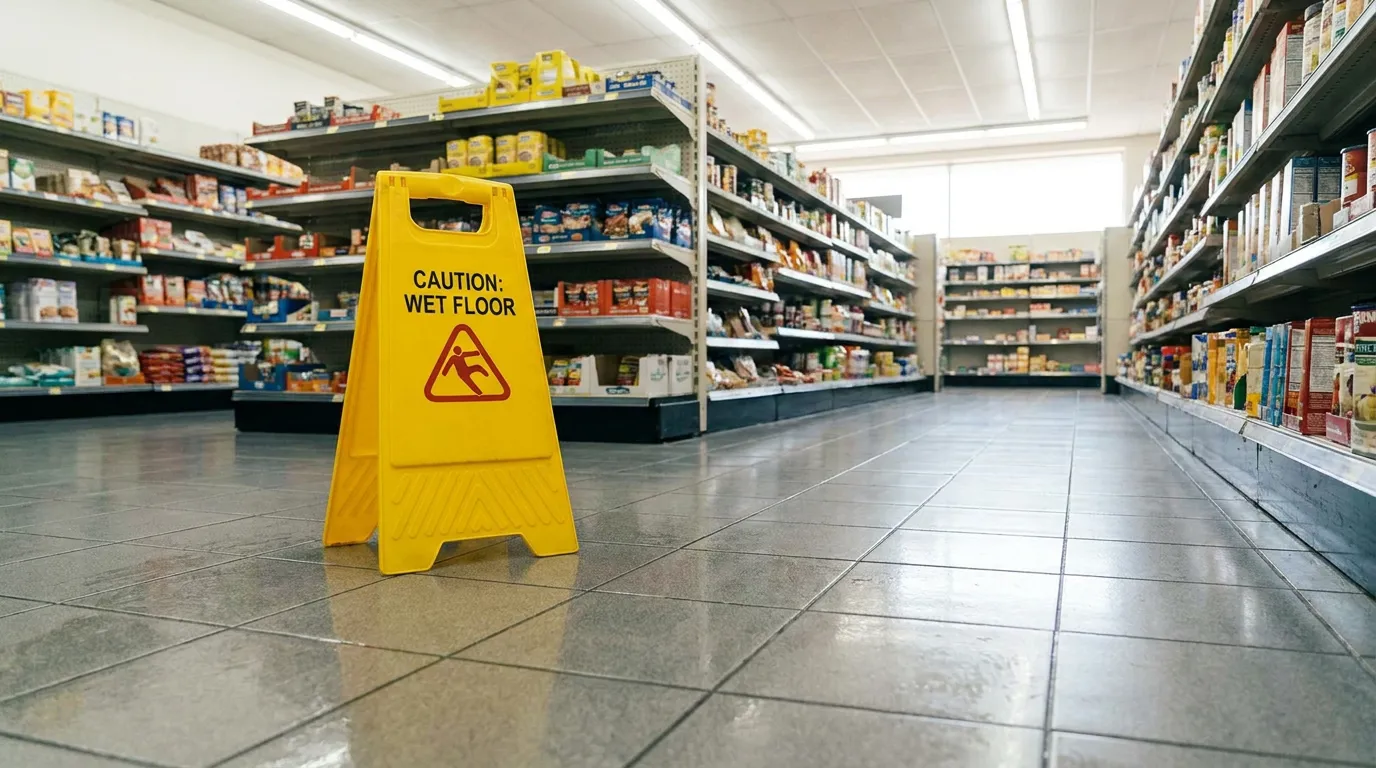
A "transitory foreign substance" describes something that should not be on the floor. Think of a spilled drink, water puddle, dropped produce, or slick cleaning product. You can read the full text of the Florida slip and fall statute to see how the law defines this category.
💡 Pro Tip: Take photos of the substance you slipped on before it gets cleaned up. Once a store mops the floor, your best evidence is gone.
How a Slip and Fall Attorney in Pensacola Builds the Four Elements
Beyond the notice requirement, a Florida premises liability case rests on four familiar negligence elements. A skilled slip and fall attorney in Pensacola establishes each one with evidence, not assumptions:
- Duty: The property owner owed you a legal duty of care.
- Breach: The owner failed to meet that duty.
- Causation: That failure caused your fall and injuries.
- Damages: You suffered real harm, such as medical bills, lost wages, or pain.
Each element matters, and a weak link anywhere can sink an otherwise strong case. Our team gathers surveillance footage, incident reports, and maintenance logs early, before that evidence disappears. The difference between winning and losing often comes down to what was preserved in the first few days.
Duty and Your Visitor Status in Florida Premises Liability
The duty a business owes you depends on your legal status on the property. Customers and shoppers are generally treated as invitees, owed the highest duty of care. As one legal resource on inadequate property maintenance explains, owners owe invitees duties including regularly inspecting the property for hidden dangers, repairing them, and warning of uncorrected hazards.
Your status is not a technicality; it shapes the entire case. A delivery worker, paying customer, and social guest may each be owed different protection. When we evaluate a slip and fall injury in Florida, one first question is why you were on that property.
Breach, Causation, and Damages
Proving breach means showing the business did something wrong or failed to act. That might be ignoring a spill for an hour, failing to inspect an aisle, or leaving a known hazard unmarked. Causation connects that failure directly to your fall.
Damages are the real-world costs of your injury. Fractures, head and neck injuries, and back injuries often lead to surgery, missed work, and long recoveries. Documenting these losses with medical records is critical to proving a slip and fall in Florida.
💡 Pro Tip: See a doctor the same day, even if you think you can walk it off. Gaps in medical treatment are the first thing adjusters use to argue you were not really hurt.
Actual vs. Constructive Knowledge: Two Ways to Prove Notice
Florida gives injured people two paths to prove the business had knowledge of the hazard. The first is actual knowledge, meaning an employee or manager knew the spill was there. The second, far more common, is constructive knowledge, which you can prove with circumstantial evidence.
Proving the Hazard Existed Long Enough
Under Fla. Stat. § 768.0755(1)(a), you can show the dangerous condition existed for such a length of time that, in the exercise of ordinary care, the business should have known of it. This often means proving how long a spill sat on the floor. Dirty footprints, cart tracks, or dried edges around a puddle can suggest the hazard had been there a while.
The Recurring Hazard Route
The second route, under Fla. Stat. § 768.0755(1)(b), applies when the condition occurred with regularity and was therefore foreseeable. A leaky freezer case that drips onto the same spot every day is a classic example. If the problem keeps happening, the law may treat the business as though it should have expected it.
💡 Pro Tip: Ask other shoppers or employees if they have seen the same problem before. A recurring hazard can be key to proving foreseeability under Florida law.
Common-Law Duties Still Matter
The statute did not erase older, common-law duties businesses have always owed. Fla. Stat. § 768.0755(2) makes clear that the section does not affect any common-law duty of care owed by a person or entity in possession or control of a business premises. The notice requirement operates alongside traditional premises liability principles.
This statute lives inside Chapter 768, Florida’s negligence framework, enacted by chapter 2010-8, Laws of Florida. Chapter 768 also contains other premises liability provisions, such as § 768.0701 on premises liability for criminal acts of third parties, created by the 2023 tort reform bill, HB 837, which Governor Ron DeSantis signed into law on March 24, 2023. Because these rules interact, outcomes depend heavily on specific facts, and general information is never a substitute for advice about your situation.
Common Challenges When Proving a Florida Slip and Fall Claim
The single biggest challenge in these cases is time. Surveillance video is often recorded over within days or weeks, and maintenance logs can vanish. Acting quickly to preserve evidence frequently makes or breaks a Florida slip and fall claim.
A second challenge is comparative fault. Insurance companies routinely argue you were distracted, wearing the wrong shoes, or ignored a warning sign. We have seen how adjusters build these arguments and prepare for them from day one. For more practical guidance, see our personal injury blog.
Not sure if your case qualifies? Call us, and we will tell you honestly. JJ has more than 26 years of experience with Pensacola courts and the adjusters on the other side, and he will not tell you what you want to hear just to sign you up.
Frequently Asked Questions
1. How long do I have to file a slip and fall lawsuit in Florida?
Florida sets a deadline called the statute of limitations for negligence claims. As of the 2023 tort reform law, that deadline was reduced from four years to two years. These deadlines are interpreted strictly, and limited exceptions may apply only under certain circumstances. Speak with a Pensacola premises liability attorney promptly rather than assume you have plenty of time.
2. What if I did not report my fall right away?
Reporting late makes a case harder, but does not always end it. You may still prove your claim with medical records, witness statements, and other evidence. The sooner you document what happened, the stronger your position.
3. Do I have to prove the business knew about the spill?
You must prove actual or constructive knowledge under Fla. Stat. § 768.0755(1). Constructive knowledge can be shown with circumstantial evidence, such as how long the hazard existed or whether it recurred regularly. You can review Florida’s broader negligence provisions in Chapter 768, Part I for full context.
4. What kind of compensation might be available?
Slip and fall compensation in Florida may include medical expenses, lost wages, and pain and suffering. The amount depends on the facts, injury severity, and evidence. No honest attorney can promise a specific result.
5. Can I still recover if I was partly at fault?
Possibly, though partial fault can reduce your recovery. Since 2023, Florida applies a modified comparative fault rule, under which a party found more than 50 percent at fault for his or her own harm may not recover any damages. If you are 50 percent or less at fault, your recovery is reduced by your share of blame. This is exactly what a slip and fall lawyer in Pensacola can evaluate for you.
Putting It All Together for Your Pensacola Case
Proving a slip and fall case in Florida comes down to notice, duty, breach, causation, and damages, all supported by evidence gathered quickly. The statute puts the burden on you, but constructive knowledge rules and preserved common-law duties give injured people real paths to recovery. Every case is fact-specific, so an honest, careful review matters more than any general rule.
When you work with a slip and fall attorney in Pensacola at our firm, you get direct access to JJ and our paralegal Kristie, not a rotating cast of associates. We are big enough to do the job and small enough to care, and we treat our clients like the neighbors they are. To talk through your options with the Law Office of JJ Talbott, call us today at (850) 437-9600 or send us a message through our online contact form.