
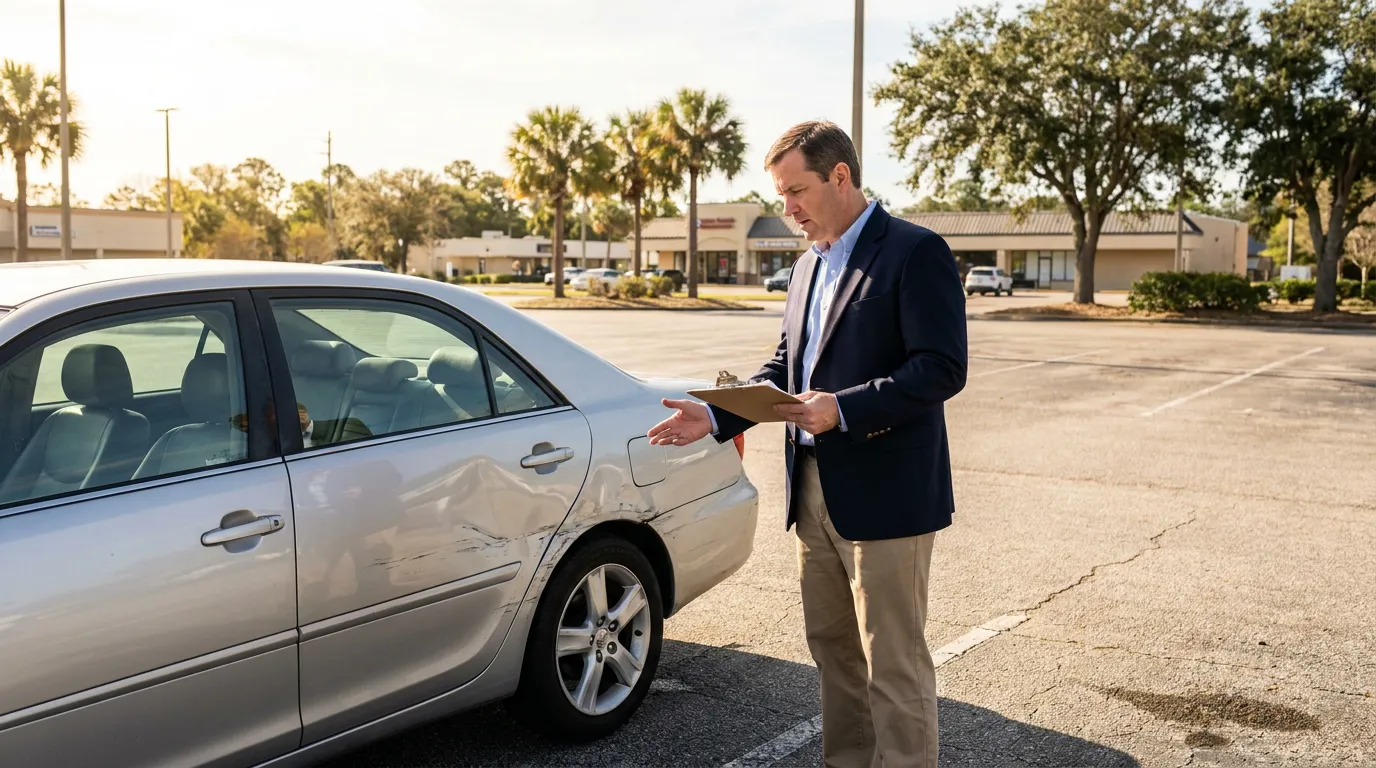
When a Crash Turns Your Life Upside Down
Key Takeaways: A strong Florida motor vehicle accident claim is built through five deliberate steps. First, get medical care within Florida’s 14-day PIP deadline to tie injuries to the crash; second, identify every insurance layer, since PIP pays only 80% of medical costs and 60% of lost wages up to $10,000. Third, establish fault while defending against Florida’s comparative negligence rules; fourth, calculate economic, non-economic, and any rare punitive damages. Fifth, manage insurer communication carefully, as they often push low offers or seek recorded statements that weaken claims. Florida’s no-fault system and comparative-fault rules make early guidance valuable, so working with an experienced local attorney like JJ Talbott helps protect your recovery from day one.
If you were hurt in a wreck around Pensacola, the days after are confusing, painful, and expensive. You may be missing work, dealing with medical bills, and getting calls from an adjuster who sounds friendly but is not on your side. A strong Florida MVA claim is built step by step, and knowing those steps protects you from day one.
Building a solid case is not about luck or courtroom drama. It is about careful, early work to document injuries, pin down fault, and account for every dollar of loss. Below, our team walks you through the five steps we take to build a strong claim.
Not sure where your case stands? Reach out to The Law Office of JJ Talbott online through our contact page or call (850) 437-9600. Call us today for a free consultation.
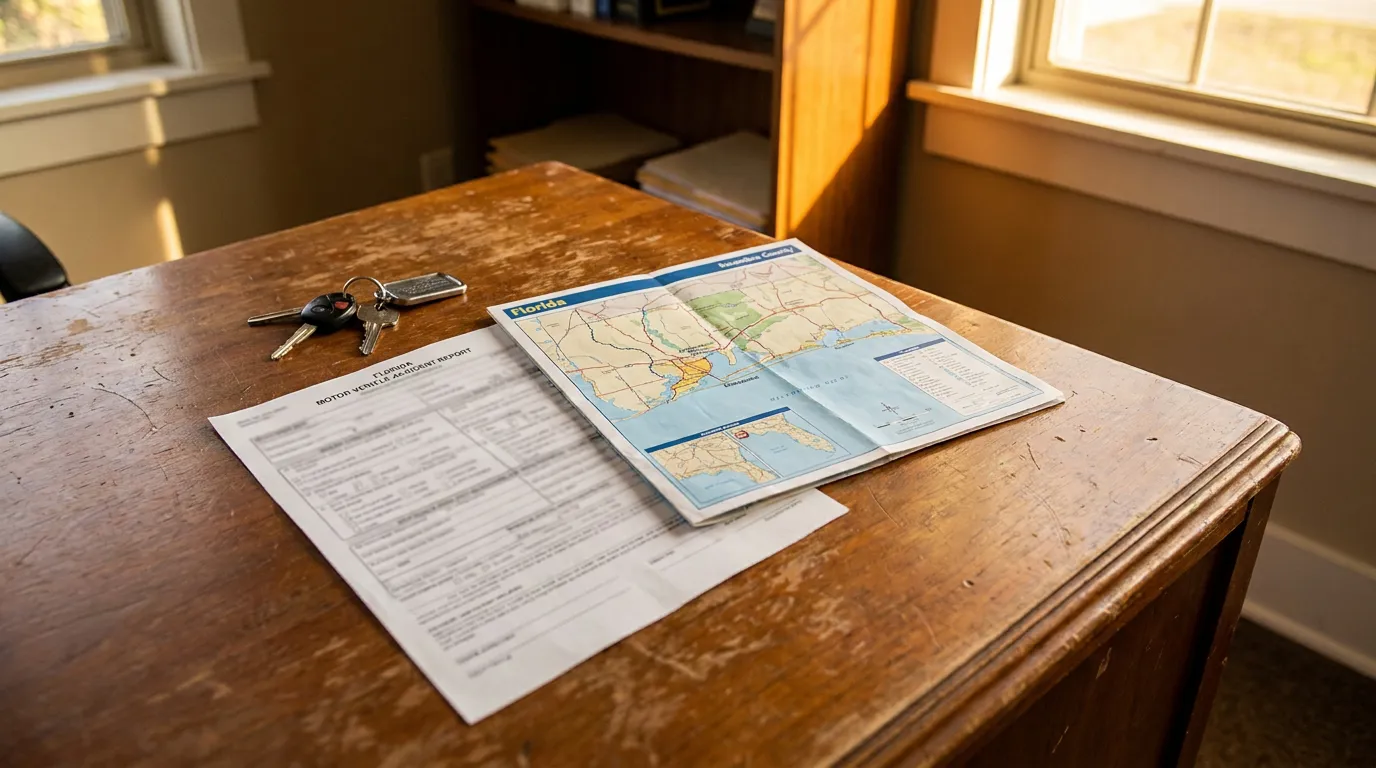
Florida’s No-Fault System and Why It Matters
Florida is a no-fault state, and that single fact shapes almost everything about your claim. Under Florida Statute § 627.736(1), every vehicle owner must carry Personal Injury Protection, or PIP, coverage. This coverage pays certain medical expenses and lost wages regardless of who caused the crash.
No-fault does not mean the at-fault driver gets a free pass. Each driver’s own insurance pays certain economic damages through PIP first, but you may still pursue the at-fault driver when losses exceed PIP or injuries meet a serious-injury threshold. Understanding where PIP ends and a liability claim begins is foundational to any Florida MVA claim.
💡 Pro Tip: Keep a single folder, digital or paper, for every crash-related document. Police reports, medical records, pay stubs, and repair estimates all become evidence later.
How a Motor Vehicle Accident attorney in Pensacola Builds Your Case
A strong claim is assembled in a deliberate order, and skipping steps early can cost you later. With 26-plus years working in the local courts, JJ handles each case personally rather than handing it off to an associate. Here is how our team approaches the work.
Step 1: Get Medical Care and Tie Your Injuries to the Crash
The first step is medical, not legal, and the timing is critical. Under Florida Statute § 627.736(1)(a), you must obtain initial medical services within 14 days of the accident, or the PIP insurer is not liable for those benefits. That 14-day window is a hard deadline you cannot afford to miss.
Seek attention immediately, even when you feel fine at first. Adrenaline can mask injuries, and delays give insurance companies an opening to argue your injuries are not crash-related. Prompt treatment creates the medical record that links your harm to the collision.
💡 Pro Tip: Follow your doctor’s instructions and keep every appointment. Gaps in treatment are the first thing an adjuster points to when reducing an offer.
Step 2: Identify Every Layer of Insurance Coverage
The second step is figuring out which policies can pay, because your own coverage usually comes first. Florida’s required PIP benefits generally cover 80% of reasonable medical expenses, 60% of lost gross income, and a death benefit equal to the lesser of $5,000 or the remaining unused benefits, all drawing from the same $10,000 limit. That 80/60 split means real losses often exceed what PIP alone will pay.
When damages run past the at-fault driver’s limits, other coverage may come into play. You may need to rely on your own Underinsured Motorist coverage or pursue the driver personally. Sorting out these layers early is central to any honest Florida injury claim steps analysis.
Step 3: Establish Fault and Account for Comparative Negligence
The third step is proving who caused the crash and defending against blame-shifting. Florida uses a modified comparative fault standard under Florida Statute § 768.81: your own negligence reduces your recovery proportionally, yet if you are found more than 50% at fault you are barred from recovering damages altogether (a narrow exception applies to medical negligence claims). So if you were 50% or less at fault, you may still recover a reduced amount.
Defendants often try to point the finger at someone not in the lawsuit. Under Florida Statute § 768.81(3)(a), a defendant must affirmatively plead a nonparty’s fault and prove it at trial by a preponderance of the evidence. We anticipate these tactics and build the fault picture accordingly.
Step 4: Calculate the Full Value of Your Damages
The fourth step is putting an honest, complete number on what you have lost. Florida Statute § 768.81(1)(b) defines economic damages to include past and future lost income reduced to present value, medical and funeral expenses, lost support and services, and the replacement value of lost personal property. Damages generally fall into economic losses, non-economic losses like pain and suffering, and, in rare cases, punitive damages.
In exceptional circumstances involving egregious conduct, such as drunk-driving crashes, punitive damages may be available. These are the exception, not the rule, and courts consider them only in egregious situations involving intentional misconduct or gross negligence, subject to the statutory standards and caps in Florida Statute § 768.72 and § 768.73. We assess your case honestly and will tell you if that category does not apply.
| Damage Type | What It May Cover |
|---|---|
| Economic | Medical bills, future care, lost income, property loss |
| Non-economic | Pain, suffering, loss of enjoyment of life |
| Punitive | Rare cases of extreme misconduct, subject to legal limits |
Step 5: Deal With the Insurers and Push for a Fair Resolution
The fifth step is managing communication with insurers, where many claims are quietly weakened. You are not legally obligated to give a recorded statement to the other driver’s insurance company, and adjusters are trained to ask questions that could hurt your claim. Talk to a lawyer before you talk to the other side’s adjuster.
Insurers also tend to open with low settlement offers to close cases cheaply. We work to confirm any offer is fair and covers all potential damages, including future medical care. When PIP benefits are not paid within 30 days after the insurer receives written notice of a covered loss and the amount, § 627.736(4)(b) treats them as overdue.
💡 Pro Tip: Under § 627.736(7), a PIP carrier may require you to attend a medical examination with a physician it chooses. Unreasonably refusing or missing two exams can end your right to further PIP benefits, so keep those appointments.
Common Mistakes That Can Hurt Your Claim
Even a strong case can be damaged by avoidable missteps in the first weeks. We flag the issues we see most often:
- Waiting past the 14-day window to seek initial care
- Giving a recorded statement without legal guidance
- Accepting the first offer before future costs are known
- Posting crash details or activity photos on social media
- Assuming PIP alone will cover a serious injury
Every case turns on its own facts, so treat this as general information rather than advice for your situation. For more plain-language guidance, browse our steps in an MVA claim Florida resources. When you are ready for a case-specific answer, that is what a consultation is for.
Frequently Asked Questions
1. How long do I have to file a car accident lawsuit in Florida?
Florida sets a statute of limitations for filing an injury lawsuit. For most negligence-based crashes occurring on or after March 24, 2023, that deadline is two years, though the period can differ depending on facts and limited exceptions may apply. Because missing the deadline can bar your claim, consult a lawyer early.
2. Do I have to use my own insurance even if the crash was not my fault?
Yes, your own PIP coverage pays first under Florida’s no-fault system. PIP generally covers 80% of reasonable medical expenses and 60% of lost gross income up to the policy limit. You may pursue the at-fault driver when losses exceed PIP or injuries meet the serious-injury threshold.
3. What if I was partly to blame for the Escambia County car crash?
You may still recover under Florida’s modified comparative fault rule in Florida Statute § 768.81. If you are 50% or less at fault, your share of fault reduces your recovery proportionally, but being found more than 50% at fault bars recovery in most negligence cases. How fault is divided depends on specific facts and evidence.
4. Should I accept the insurance company’s first offer?
Generally, be cautious, because initial offers are often low. Insurers may try to close a case quickly before the full extent of future medical needs is clear. A careful review helps confirm an offer actually covers your damages.
5. Why call a smaller firm instead of a large one?
At our firm, you work directly with JJ, not a rotating cast of associates. We are big enough to do the job and small enough to care about you as a neighbor. As a Pensacola auto accident attorney with deep local roots, JJ knows the courts and adjusters here.
Getting Honest Help Close to Home
Building a strong Florida MVA claim comes down to five disciplined steps: prompt medical care, identifying coverage, proving fault, valuing full losses, and handling insurers carefully. Each step depends on your case facts, and Florida’s no-fault and comparative-fault rules make early guidance genuinely valuable. Our job is to give you an honest assessment, not to tell you what you want to hear.
If you were hurt by a distracted, drunk, or careless driver, our team is ready to listen and help you understand your options. As a trusted Pensacola car accident lawyer, JJ personally reviews the fault and coverage questions that shape your recovery under Florida Statute § 768.81. You deserve straight answers from someone who has handled these cases for over 26 years.
Contact the Law Office of J.J. Talbott today. Reach The Law Office of JJ Talbott through our online contact form or call (850) 437-9600 to speak with us directly.