
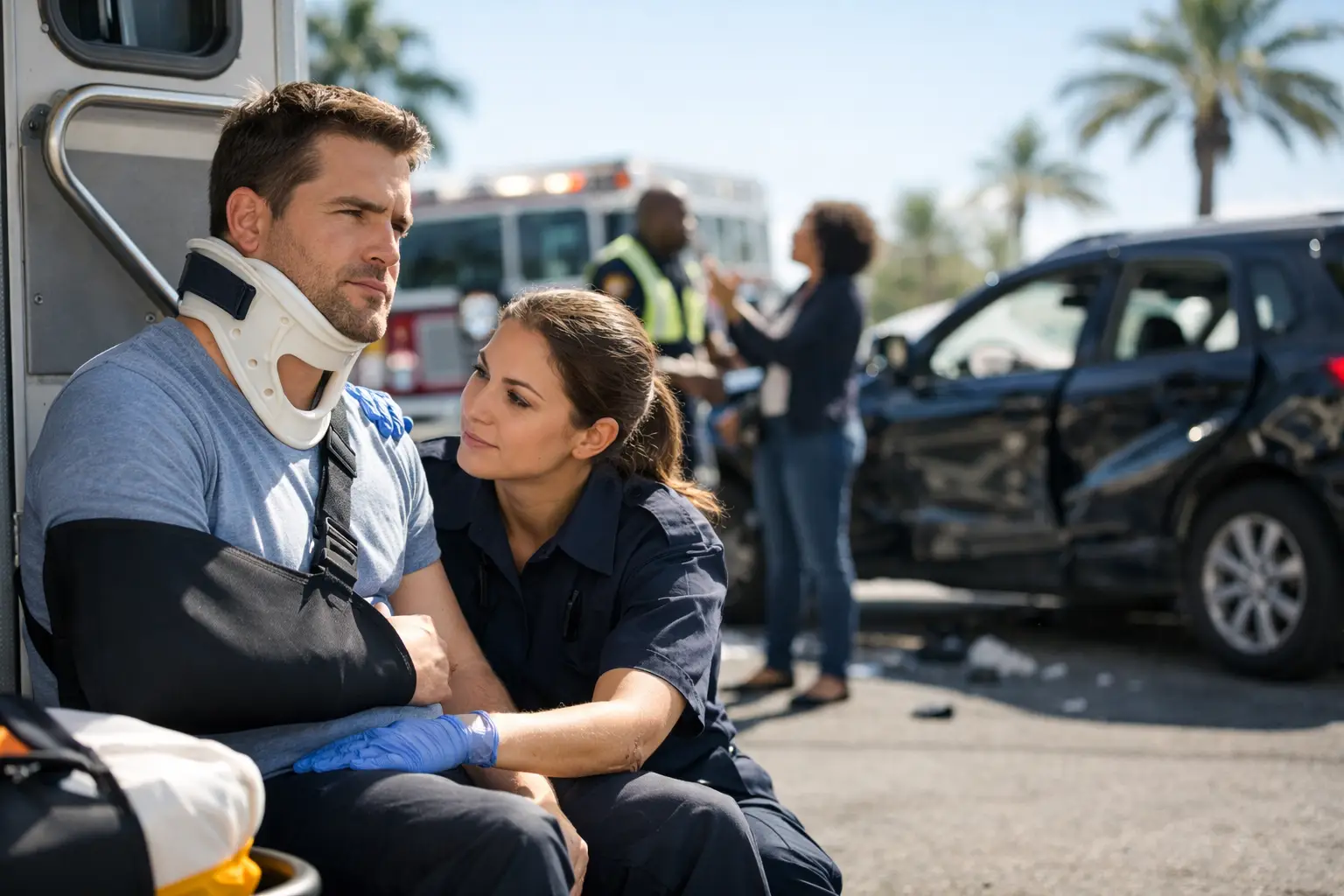
A crash can leave you shaken, hurting, and unsure whether your injuries are serious. Knowing what to do after a car accident injury can protect both your health and your ability to recover compensation. The decisions made in the first hours and days matter, especially when an insurance company is already looking for reasons to reduce or deny your claim.
You do not need to have every answer at the scene. You do need to take your symptoms seriously, preserve what you can, and avoid letting an insurer control the story of what happened.
What to Do After a Car Accident Injury: Start With Medical Care
Your first priority is getting medical attention. Call 911 from the scene when anyone is hurt, appears disoriented, has neck or back pain, or the collision is severe. Accepting an ambulance ride is not an admission that you are badly injured. It is a reasonable response when your condition is uncertain.
Some injuries do not announce themselves right away. Adrenaline can mask pain after a collision. Hours later, you may develop a headache, dizziness, stiffness, numbness, abdominal pain, or worsening soreness. These symptoms can be signs of a concussion, soft-tissue injury, herniated disc, internal injury, or other condition that needs prompt care.
See a qualified medical provider as soon as possible, even if you believe you can “walk it off.” Florida’s no-fault insurance system generally requires injured people to seek initial medical services within 14 days of the crash to access Personal Injury Protection benefits. Waiting can also give an insurer an opening to argue that your injuries came from something other than the wreck.
Follow the treatment plan your provider gives you. Go to follow-up appointments, fill prescriptions, attend therapy if recommended, and tell your doctor about every symptom – not only the one that hurts most. Gaps in treatment can affect your recovery and create questions in an injury claim.
Protect the Evidence Before It Disappears
At the scene, if you are physically able and it is safe to do so, take photographs and video. Capture vehicle damage, skid marks, debris, traffic signals, weather conditions, the roadway, visible injuries, and the positions of the vehicles. A wide shot establishes the setting; closer photos preserve the details.
Exchange information with the other driver, but do not argue about fault. Get their name, contact information, driver’s license details, insurance information, and vehicle tag number. If witnesses stopped, ask for their names and phone numbers. Independent witnesses can be powerful when drivers give conflicting accounts later.
Make sure law enforcement is called when required or appropriate, and ask how to obtain the crash report. The report is not always the final word on liability, but it can identify drivers, witnesses, insurance information, and the responding officer’s initial observations.
After you leave the scene, save every document connected to the wreck. This includes medical records, discharge instructions, prescriptions, bills, repair estimates, towing receipts, rental-car expenses, and letters from insurers. Keep a simple written record of how the injuries affect your sleep, work, mobility, family responsibilities, and daily activities. Pain does not fit neatly into a receipt, but its effect on your life still matters.
Notify Insurance Carefully
Report the crash to your own insurance carrier promptly, as your policy may require. Give accurate basic facts: when and where the crash happened, who was involved, and the claim number once one is assigned. Do not guess about fault, speed, injuries, or what you “should have done.” If you do not know an answer, say so.
The other driver’s insurer may call quickly. Their adjuster may sound sympathetic and may ask for a recorded statement, medical authorization, or immediate settlement discussion. You are not required to let them record your statement or give them broad access to your medical history before you understand the full situation.
A quick offer is often based on what the insurer knows at that moment, not on the treatment you may need weeks or months from now. Once you accept a settlement and sign a release, you usually cannot return for more money if your condition worsens. That is a serious trade-off, particularly with head, neck, back, or joint injuries that can take time to reveal their full impact.
Do Not Minimize Your Injuries or Apologize for the Crash
Many decent people apologize automatically after a frightening event. Avoid saying you are sorry, saying you are “fine,” or accepting blame before the facts are clear. A casual comment at the roadside can later be used to challenge your claim.
The same caution applies to social media. Do not post crash photos, updates about the claim, or statements about your health. A single smiling photo from a family gathering can be taken out of context and used to suggest you are not injured. Privacy settings help, but they do not make posts immune from scrutiny.
Be honest with your doctors, your insurer, and your attorney. You do not need to exaggerate to have a legitimate case. Clear, consistent information is far more valuable than trying to make an injury sound worse than it is.
Track Lost Income and Other Financial Pressure
A car wreck can affect far more than your medical bills. If you miss work, lose overtime, use vacation days, cannot perform physical duties, or need help at home, document it. Ask your employer for written confirmation of missed time and lost wages. Keep pay stubs and note any work restrictions your doctor gives you.
If your vehicle is damaged, understand that the property-damage claim and injury claim are related but separate. An insurer may move quickly to repair or total your car while your medical claim remains unresolved. Resolving the vehicle issue does not mean you must settle your injury claim at the same time.
Florida cases can also involve questions about uninsured or underinsured motorist coverage, multiple insurance policies, employer-related driving, rideshare vehicles, commercial trucks, or defective vehicle components. The available coverage may be much larger or more complicated than the policy information handed to you at the scene.
When to Call a Car Accident Lawyer
You should strongly consider speaking with an attorney if you needed medical treatment, missed work, have lasting pain, received a low settlement offer, or believe the other driver caused the crash. Legal help is especially valuable after a serious collision involving a motorcycle, commercial vehicle, drunk or distracted driver, hit-and-run driver, or wrongful death.
An experienced Florida injury lawyer can investigate the collision, preserve evidence, identify all available insurance coverage, calculate the losses that matter, and handle the adjusters while you focus on healing. This is not about turning every fender bender into a lawsuit. It is about making sure an insurer does not take advantage of someone who is injured, overwhelmed, and unfamiliar with the process.
At The Law Office of J.J. Talbott, the goal is to take the legal burden off your shoulders and fight for the compensation you deserve. You should not have to chase callbacks, decode insurance language, or face a powerful company alone while trying to recover.
Give Yourself Permission to Get Help
After a crash, people often wait because they do not want to make a fuss or they hope the pain will fade. Sometimes it does. Other times, that delay costs them medical benefits, evidence, and leverage when the insurer disputes the claim.
Get checked out, protect your records, and ask questions before signing anything. A car accident injury can disrupt your life in an instant, but the right next step can give you room to heal while someone fights for your future.