
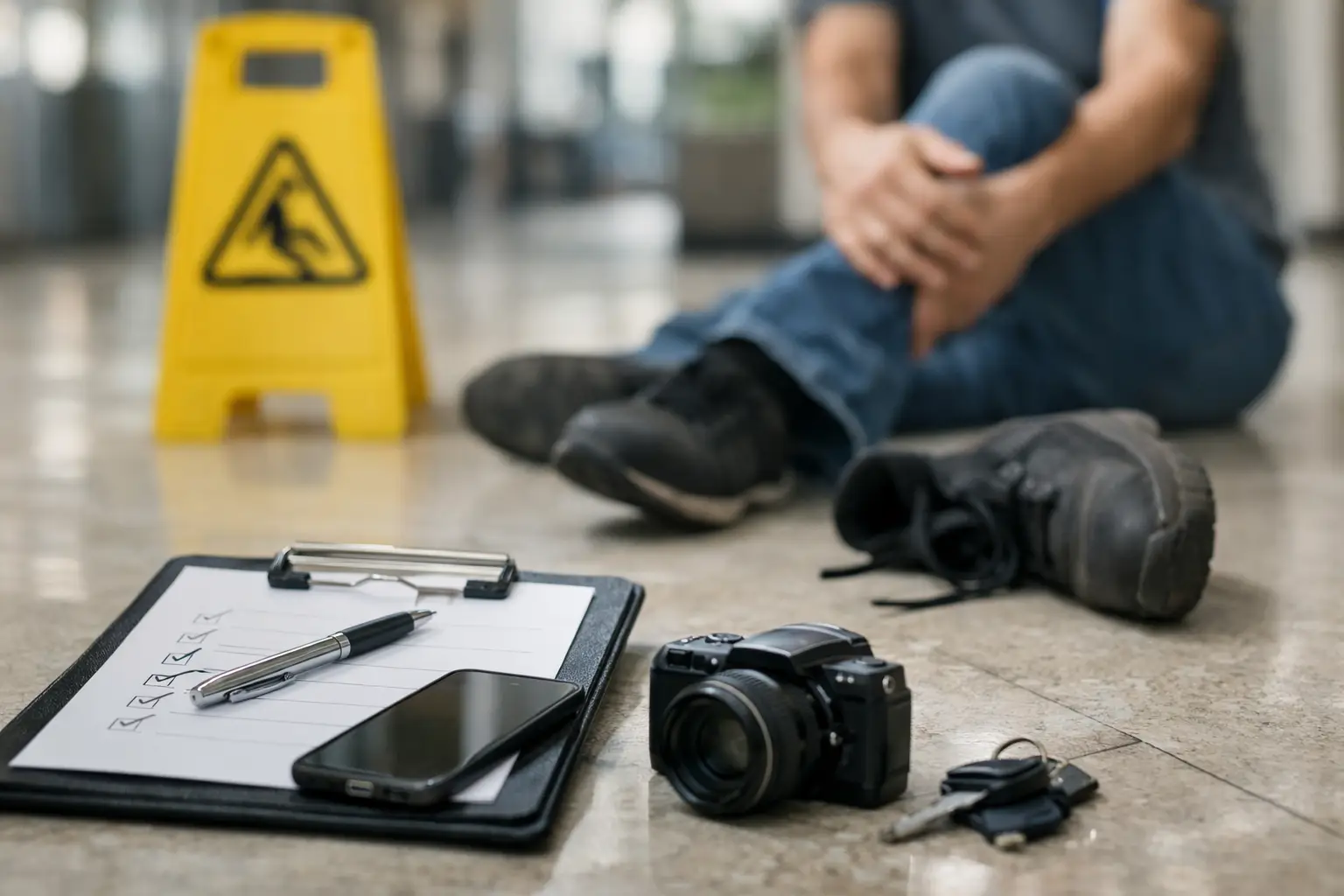
A wet floor can be dry by the time you get home. A broken handrail can be repaired before the next customer walks through the door. That is why a slip fall evidence checklist matters from the first minutes after an injury. In a Florida slip and fall claim, the property owner and its insurance company may dispute how the fall happened, whether a hazard existed, and whether they had enough notice to fix it. The proof you preserve can make a real difference.
You should not have to investigate a serious injury while you are in pain. Still, taking a few focused steps – or asking a trusted family member to help – can protect your ability to pursue the compensation you deserve.
Start With Your Safety and Medical Care
Your health comes first. If you hit your head, cannot bear weight, have severe pain, feel dizzy, or suspect a broken bone, seek emergency care. Do not let embarrassment convince you to walk off a fall. Adrenaline can mask serious injuries, and a delay in treatment gives an insurer room to argue that your condition was not caused by the incident.
Tell the medical provider exactly what happened, where you fell, what part of your body hit the ground, and when symptoms began. Be accurate without guessing. Medical records often become central evidence because they connect the fall to your injuries and document the treatment you need.
Follow discharge instructions, attend recommended appointments, and keep records of prescriptions, physical therapy, imaging, work restrictions, and out-of-pocket expenses. A claim is not just about the first emergency room bill. It may involve future care, missed work, pain, and the way an injury changes daily life.
Report the Fall Before You Leave
Tell a manager, employee, landlord, security officer, or other person in charge that you fell. Ask that an incident report be completed and request a copy. If they will not give you one, write down the name and job title of everyone you spoke with, the time of the conversation, and what they said.
Keep your explanation short and factual. For example: “I slipped on water near the produce section and fell.” Do not apologize, accept blame, minimize the injury, or speculate about why the hazard was there. You may not know whether a leaking cooler, missed inspection, poor lighting, or prior complaint created the dangerous condition.
An incident report is useful, but it is not the whole case. Businesses often write reports to protect themselves. Your own photographs, witnesses, medical records, and prompt legal guidance can provide the fuller picture.
Slip Fall Evidence Checklist: What to Preserve
If you are physically able, document the scene before conditions change. If you cannot, ask someone with you to do it. Avoid putting yourself at risk or interfering with emergency responders.
Preserve these items as soon as possible:
- Photos and video of the hazard. Capture the spill, uneven surface, loose mat, broken step, poor lighting, damaged handrail, debris, or other condition from close up and from several angles. Include wide shots showing where it was located.
- Photos of warning signs – or their absence. If there was a cone, caution sign, rope, or wet-floor sign, photograph where it stood in relation to the hazard. A sign across a room may not adequately warn someone approaching a dangerous area.
- Your footwear and clothing. Do not wash, throw away, or alter the shoes and clothes you wore. Put them in a bag and store them safely. They may show residue, damage, or other facts relevant to the fall.
- Witness information. Get names, phone numbers, email addresses, and a brief note about what each person saw. Independent witnesses can be especially valuable when a business disputes the condition of the property.
- The exact location and timing. Record the address, area of the property, date, approximate time, weather conditions, lighting, and what happened immediately before and after the fall.
- Visible injuries and changes over time. Photograph bruising, swelling, cuts, casts, mobility aids, and other visible effects. Take additional photographs as symptoms develop.
- Receipts and financial records. Save medical bills, pharmacy receipts, mileage records, assistive-device costs, wage statements, and documentation of missed work.
Use the notes app on your phone or send yourself an email with the details while they are fresh. Include what you saw, what you felt under your feet, whether anyone cleaned the area afterward, and whether an employee made a statement such as, “We have been meaning to fix that.” Small details can become significant later.
Do Not Let Video Evidence Disappear
Many stores, apartment complexes, restaurants, hotels, and parking areas have security cameras. Surveillance footage may show the dangerous condition, how long it was present, employee activity in the area, the fall itself, and what happened afterward.
But video is often recorded over quickly. Some systems retain footage for only days or weeks. A property owner is not likely to call and remind you that its video will be deleted. Contacting an experienced slip and fall attorney quickly gives your legal team the opportunity to demand preservation of relevant footage, inspection records, cleaning logs, maintenance records, and internal reports.
Do not assume the camera angle is unhelpful. Footage from an entrance, checkout lane, hallway, or adjacent business may show far more than the moment of impact. It may establish that employees walked past a spill repeatedly or that a defective condition existed long before you arrived.
Understand What Must Be Proven
A fall alone does not automatically make a property owner responsible. Florida premises liability claims commonly turn on whether the owner or business knew, or should have known, about a dangerous condition and failed to correct it or provide a reasonable warning.
That is why evidence of notice matters. In a spill case, proof might include dirt or track marks showing liquid had been there for a while, witness testimony about prior complaints, surveillance footage, or cleaning records with unexplained gaps. In a defective-property case, evidence may include prior repair requests, recurring maintenance problems, code concerns, or photographs showing an issue that did not appear overnight.
The defense may argue that the hazard was open and obvious, that a warning was present, that you were distracted, or that your shoes caused the fall. Florida’s comparative fault rules can affect recovery when more than one party is alleged to share responsibility. That does not mean you should accept blame or assume you have no case. It means the facts need to be investigated carefully and early.
Be Careful With Insurance Calls and Social Media
An insurer may contact you soon after the fall and sound helpful. Remember that its goal is to limit what it pays. You can provide basic identifying information, but do not give a recorded statement, sign a broad medical authorization, or agree to a settlement before you understand the full extent of your injuries.
Early settlement offers can be tempting when bills are arriving. They also may come before you know whether you will need surgery, ongoing therapy, or time away from work. Once you sign a release, you may lose the right to seek more compensation later.
Avoid posting about the fall, your activities, or your recovery on social media. A single photo without context can be used to create a misleading picture of your condition. Privacy settings are not a guarantee that a post will stay private.
Get Help Before the Evidence Is Gone
The strongest cases are built early, while the scene can still be inspected, witnesses can be located, and records can be preserved. The Law Office of J.J. Talbott fights for injured people across Northwest Florida who are facing medical bills, lost income, and an insurance company looking for reasons to say no.
If you or someone you love was hurt on unsafe property, keep what you can, get the care you need, and speak with a lawyer promptly. You deserve a team that treats your claim with urgency and gives you the room to focus on healing.