
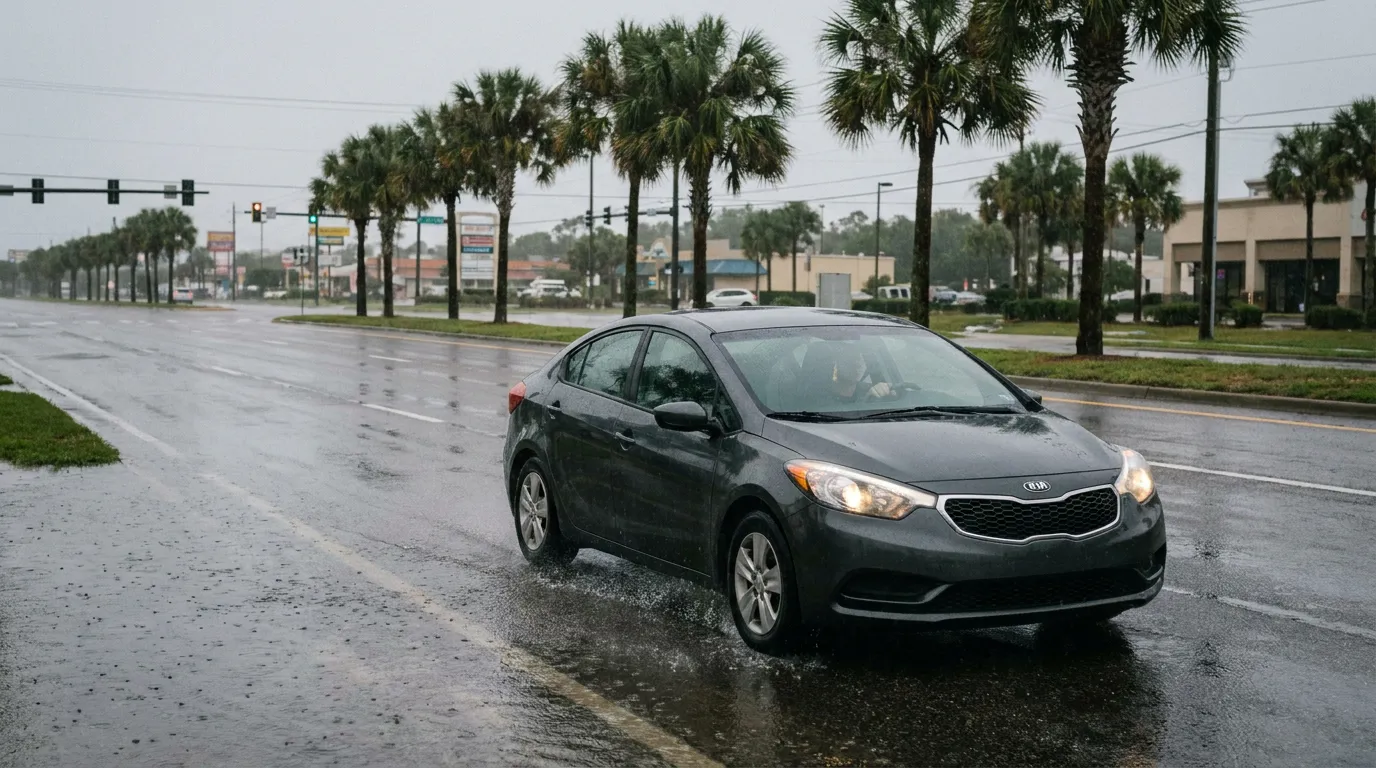
Hydroplaning in Pensacola Rain Rarely Leaves the Driver Blameless
Key Takeaways: When a driver hydroplanes and hits you in Pensacola, Florida law usually points to that driver first, because speed, following distance, and tire condition are within their control. Florida Statutes § 316.183 requires drivers to drive at a speed that is reasonable for the conditions, so going the posted limit in a downpour may still be negligent, and § 316.0895 bars following more closely than is reasonable. A vehicle owner may also be liable under Florida’s dangerous instrumentality doctrine or, where the owner knowingly allowed driving on unsafe tires, § 316.610. In limited cases a government road authority may be responsible, subject to the notice rules and damage caps in § 768.28. Under Florida’s modified comparative negligence rule, your recovery is reduced by your share of fault, and you generally cannot recover if you are more than 50% at fault. Evidence can disappear quickly, so preserving it early and seeing a doctor promptly can strengthen your claim. Most negligence claims arising after March 24, 2023 carry a two-year filing deadline, so speaking with a local Pensacola attorney soon can help protect your rights.
When a driver hydroplanes and hits you, Florida law usually looks at that driver first. The choices that lead to hydroplaning, like speed, following distance, and tire condition, are often the driver’s own. Fault is not automatic, though. Other parties may share responsibility, such as a vehicle owner who let someone drive on bald tires or, in limited situations, a government agency responsible for the road.
If you were hurt, you do not have to work through this alone. Call us today for a free consultation at (850) 437-9600. At The Law Office of JJ Talbott, you talk directly with JJ, not a call center.
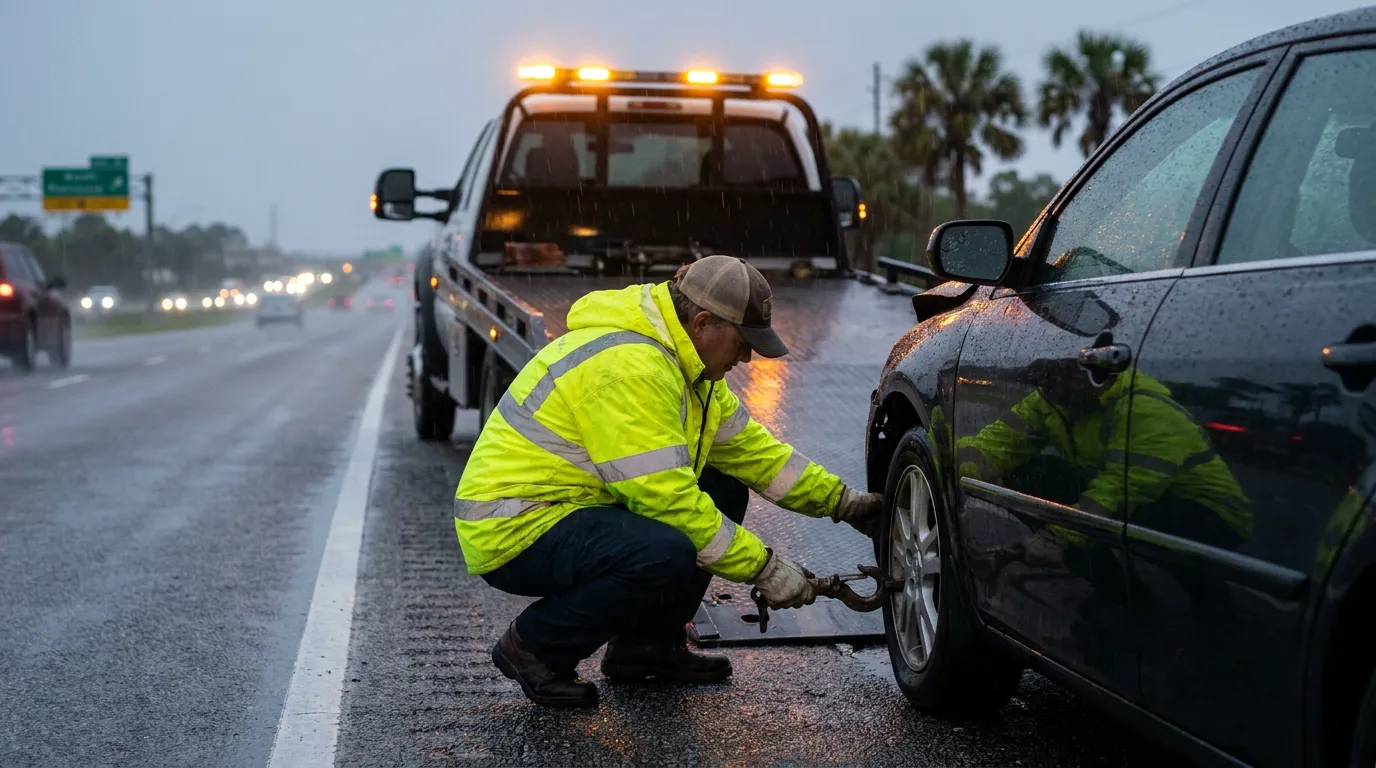
What Actually Happens When a Car Hydroplanes
Hydroplaning happens when water builds up between a tire and the pavement faster than the tread can push it away. The water pressure lifts the tire off the road, and the driver loses steering and braking traction. Research such as the study on dynamic hydroplaning of pneumatic tires shows that key factors include vehicle speed, water depth, and tire tread condition.
That science matters for your case. A driver controls two of those factors: speed and tire safety. When a driver ignores either one, the "it was just the rain" excuse may fall apart.
Why Pensacola Roads Are a Setup for Hydroplaning
Pensacola gets sudden, heavy downpours that can leave standing water on roads within minutes. Stretches of I-10, Nine Mile Road, and Davis Highway can flood fast during summer storms. Local drivers often know this, and courts and juries may expect them to drive accordingly.
Who Is Liable in a Hydroplaning Crash Under Florida Law?
Usually the driver who lost control is liable, but each case depends on its facts. Florida’s traffic laws in Chapter 316 of the Florida Statutes set out several duties that apply to driving in the rain. Violating them can be evidence of negligence, though a violation does not automatically establish liability.
Driving the Speed Limit Is Not Always a Defense
Florida Statutes § 316.183(1) says no one may drive faster than is "reasonable and prudent under the conditions." A driver going 45 in a 45 zone during a downpour may still be driving too fast. The posted limit is the maximum under normal conditions, not a safe speed in every storm.
The same statute requires drivers to control their speed as needed to avoid colliding with any person, vehicle, or object. This can undercut the claim that hydroplaning was an "unavoidable accident."
Under § 316.183(4), drivers must reduce speed in certain situations, including around curves and when special hazards exist because of weather or highway conditions. Heavy rain and standing water may fit that description.
Following Too Closely on Wet Pavement
Florida Statutes § 316.0895(1) bars drivers from following another vehicle more closely than is reasonable and prudent, considering speed, traffic, and highway conditions. Stopping distances get longer on wet pavement. Florida law generally presumes the rear driver was negligent in a rear-end collision, though that presumption can be rebutted.
Commercial trucks face an additional rule. Under § 316.0895(2), outside a business or residence district, drivers of trucks and vehicles towing other vehicles generally may not follow within 300 feet of another such vehicle, though this does not prevent passing. Under § 316.0895(4), a violation is a noncriminal moving violation. This can matter in truck crashes on I-10 near Pensacola.
Bald Tires and Unsafe Vehicles
Worn tires are one of the most common causes of hydroplaning. Florida Statutes § 316.610 makes it a violation to drive a vehicle in an unsafe condition that endangers any person, or for an owner to knowingly allow someone else to drive that vehicle.
This means you may have a claim against both the driver and the vehicle owner. Separately, Florida’s dangerous instrumentality doctrine can make an owner liable for a permissive driver’s negligence, subject to statutory limits for certain owners such as rental and leasing companies.
💡 Pro Tip: Photograph the other vehicle’s tires at the scene if you can safely do so. Tread condition is much harder to prove once the tires are replaced.
Can the Road Itself Share the Blame?
Under certain circumstances, poor road design or maintenance may contribute to hydroplaning accidents. Worn, polished pavement or poor drainage may raise the risk.
Claims against government road authorities are generally harder and follow different rules. Florida Statutes § 768.28 generally requires written notice to the agency, and to the Department of Financial Services for most claims, within three years after the claim accrues and before filing suit. It also caps recoverable damages, currently $200,000 per person and $300,000 per incident absent a legislative claims bill, and governments are often immune from claims based on planning-level design decisions. Our team will give you an honest read on whether one makes sense.
How Fault Gets Split Under Florida’s Comparative Negligence Rule
Florida uses a modified comparative negligence system under Florida Statutes § 768.81. Your compensation is generally reduced by your percentage of fault. If you are found more than 50% at fault, you generally cannot recover damages. Medical negligence claims are the main exception.
Insurance companies know this rule well and often use it. An adjuster may suggest you were also speeding, braked too suddenly, or should have seen the other car sliding. Every percentage point they shift onto you can lower what they pay.
| Possible At-Fault Party | Legal Basis | Common Evidence |
|---|---|---|
| Driver who hydroplaned | Fla. Stat. §§ 316.183, 316.0895 | Speed data, citations, witness statements |
| Vehicle owner | Fla. Stat. § 316.610 | Tire condition, maintenance records |
| Trucking company | Fla. Stat. § 316.0895(2) | Following distance, dash cam footage |
| Government road authority | Fla. Stat. § 768.28 | Drainage history, pavement records |
Building a Strong Case After a Rain-Related Crash
Proving fault often comes down to evidence, and in rain cases it can disappear quickly. Water dries up, skid marks fade, and tires may get swapped out. You can read more about how to prove fault in a Florida car accident.
Useful evidence often includes:
- The police crash report and any citation issued
- Photos of standing water, the road surface, and both vehicles’ tires
- Witness names and phone numbers
- Dash cam, traffic camera, or nearby business surveillance footage
- Weather data from the time of the crash
- Vehicle data recorder ("black box") information
A traffic citation may help your case. Under Florida Statutes § 316.183(7), a speed violation is a noncriminal moving violation. A citation does not decide civil fault, and the crash report itself and a plea of guilty to a traffic infraction generally are not admissible at a civil trial, but the facts behind a citation can still support your negligence claim.
Don’t Skip the Doctor, Even If You Feel Fine
Many people walk away from a crash thinking they are okay. According to Boston Medical Center, whiplash symptoms like neck pain, stiffness, and headaches may not show up until 24 hours or more after the injury.
Insurance companies often look closely at gaps in treatment. If you wait weeks to see a doctor, an adjuster may argue your injuries came from something else. Under Florida’s PIP law, you generally must get initial care within 14 days of the crash to qualify for PIP medical benefits.
💡 Pro Tip: Keep a simple daily journal of your pain, missed work, and things you cannot do. These notes can help show how the crash affected your life months later.
Why Working With a Local Pensacola Hydroplaning Accidents Lawyer Matters
Hydroplaning cases often turn on local details: which roads flood, how area police write reports, and how local adjusters handle claims. JJ has practiced in Pensacola for more than 26 years. He knows the local courts and the adjusters on the other side.
Our team is small on purpose. When you work with a Pensacola car accident attorney at our office, you talk with JJ directly, and Kristie keeps you updated along the way. If your case has weak spots, he will tell you up front.
Frequently Asked Questions
1. Can the other driver just blame the weather?
They can try, but Florida law may make that argument harder. Florida Statutes § 316.183 requires drivers to adjust speed for conditions and control their vehicle to avoid collisions. Bad weather is generally a reason to drive more carefully, not an excuse. A sudden-emergency defense may apply only in rare cases where the driver did not help create the danger.
2. How long do I have to file a claim?
For most negligence claims arising after March 24, 2023, Florida Statutes § 95.11 generally sets a two-year deadline. Claims that arose before that date generally have four years. Wrongful death claims have a two-year deadline, and claims against government agencies have separate notice requirements. Do not wait to find out which deadline applies to you.
3. What if I was partly at fault?
You may still recover damages if you were 50% or less at fault. Your recovery would generally be reduced by your share of fault under Florida Statutes § 768.81.
4. Will my PIP insurance cover everything?
Usually not. Florida’s PIP coverage under Florida Statutes § 627.736 generally pays 80% of reasonable medical expenses and 60% of lost income, up to $10,000 total. Without an emergency medical condition diagnosis, medical benefits are limited to $2,500. You can claim pain and suffering against the at-fault driver only if your injury meets a threshold in § 627.737(2), such as significant and permanent loss of an important bodily function, permanent injury, significant and permanent scarring or disfigurement, or death.
5. Should I give a recorded statement to the other driver’s insurer?
It is generally wise to speak with an attorney first. Adjusters may ask questions designed to shift blame toward you. You are generally not required to give the other driver’s insurer a recorded statement, though your own policy may require you to cooperate with your own insurer.
Getting Answers After a Hydroplaning Crash
Hydroplaning accidents are often more than just bad luck. Florida law expects drivers to slow down, leave space, and keep their vehicles safe when the rain comes. When they don’t, and you get hurt, they and others may be held responsible.
Every case is different, and the right next step depends on your facts. Contact the Law Office of J.J. Talbott today. Call JJ directly at (850) 437-9600 or visit The Law Office of JJ Talbott to learn how our Pensacola team can help.
Disclaimer: This content is for informational purposes only and is not legal advice. Every case is unique, and results may vary. Consult an attorney about your specific circumstances.