
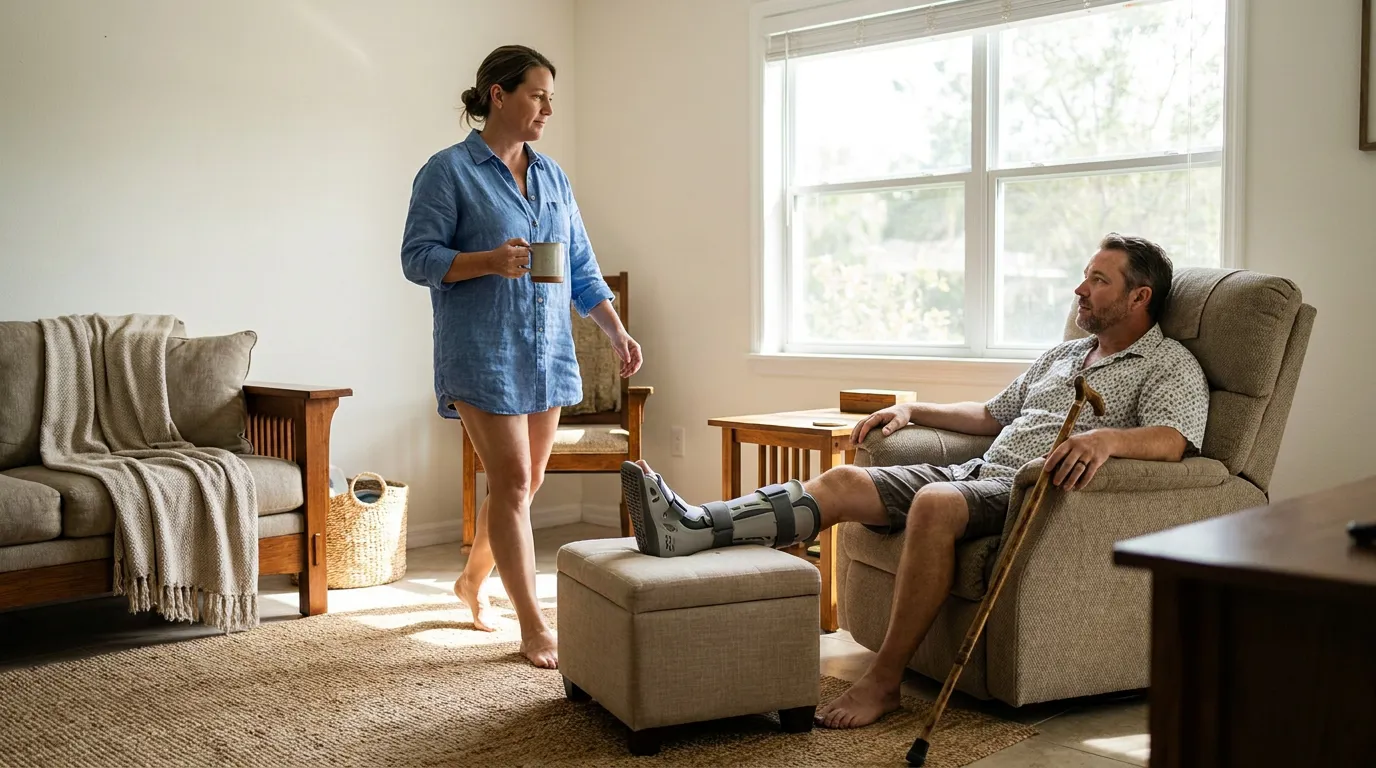
Unmarried Partners and Injury Claims After a Florida Crash
Key Takeaways: In most cases, a common law spouse cannot file a loss of consortium claim in Florida. Fla. Stat. § 741.211 voids common law marriages entered into after January 1, 1968, and consortium claims generally require a legal marriage at the time of the injury. There are narrow exceptions: a common law marriage formed in Florida before 1968, a marriage with a legal defect entered in good faith and in substantial compliance with Florida’s marriage statutes, and a common law marriage validly formed in a state that allows it. In fatal crashes, Florida’s Wrongful Death Act limits recovery to listed survivors, and an unmarried partner is not on that list. Adjusters often check marital status early and may deny spousal claims outright, so be careful how you describe your relationship in recorded statements. Being unmarried does not take away the injured person’s own right to seek medical bills, lost wages, and pain and suffering. Deadlines still apply, so speaking with an attorney early can help protect your options.
In most cases, a common law spouse cannot file a loss of consortium claim in Florida. Florida stopped recognizing new common law marriages decades ago, and consortium claims generally require a legally recognized marriage at the time of the injury. There are some exceptions: a Florida common law marriage formed before 1968, a formal marriage with a technical defect, or a common law marriage validly formed in another state. If you were hurt in a crash, or your partner was, you deserve a straight answer about where you stand. Below, we explain how Florida law treats unmarried couples and what exceptions may apply.
Reach out to The Law Office of JJ Talbott and talk directly with JJ about your situation. You will not be passed to a call center or a junior associate. Call (850) 437-9600 or contact us now to get an honest look at your case.
What a Loss of Consortium Claim Actually Covers
A loss of consortium claim covers what a spouse loses when their husband or wife is seriously injured. That can include companionship, emotional support, help around the house, and the closeness of the marriage. It is a separate claim that belongs to the spouse.
Because the claim depends on the injured spouse’s case, it is called a "derivative" claim. If the injured person has no case, the spouse usually has no consortium claim either. Any reduction for the injured person’s comparative fault may also reduce the consortium recovery. Without a legal marriage at the time of the injury, there is generally no consortium claim at all.
Why Marriage Status Is the First Question
Whether you were legally married when the injury happened is the threshold question. Marrying after the injury generally does not create a consortium claim for that injury. In our experience, adjusters check marital status early and rarely give the benefit of the doubt to couples without a marriage license.
How Florida Treats Common Law Marriage
Florida does not recognize common law marriages entered into after January 1, 1968. Under Fla. Stat. § 741.211, "No common-law marriage entered into after January 1, 1968, shall be valid." If you and your partner began living together as a married couple in Florida after that date, without a license and ceremony, Florida law generally does not consider you married.
This holds no matter how long you have been together. Twenty years together, shared kids, joint bank accounts, and calling each other "husband" and "wife" do not create a legal marriage in Florida. We know that can feel unfair.
What Makes a Florida Marriage Legally Valid
Under Florida’s marriage statutes, a valid marriage generally requires three steps. Fla. Stat. §§ 741.01, 741.04, 741.041, and 741.07 set out the process:
- A marriage license issued by a county court judge or the clerk of the circuit court
- A ceremony held within 60 days after the license is issued
- An officiant authorized by law, such as clergy, a judicial officer, a clerk of the circuit court, or a notary public
Couples who have not completed these steps, and who do not fit an exception below, are generally not legal spouses under Florida law. That can affect consortium claims, wrongful death recovery, and other spousal rights.
Same-Sex Spouses Are Treated Equally
Validly married same-sex spouses have the same rights as any other spouse. Fla. Stat. § 741.212 still contains language refusing to recognize same-sex marriages. Since the U.S. Supreme Court’s 2015 decision in Obergefell v. Hodges, however, that language is unconstitutional and unenforceable.
Exceptions That May Change the Answer
There are a few narrow situations where a partner without a formal Florida marriage might still qualify. Each depends heavily on the facts.
| Situation | Possible Spouse Status in Florida |
|---|---|
| Common law marriage formed in Florida before January 1, 1968 | Not voided by Fla. Stat. § 741.211 |
| Formal marriage with a legal defect, entered in good faith and in substantial compliance with Chapter 741 | May be protected under Fla. Stat. § 741.211 |
| Common law marriage validly formed in another state | Generally recognized under case law if valid where formed; needs attorney review |
| Couple who never tried to marry formally in Florida | Generally not a legal spouse |
The Good Faith Exception
Fla. Stat. § 741.211 does not invalidate a marriage that has a legal defect if it was entered in good faith and in substantial compliance with Chapter 741. For example, a couple who got a license and held a ceremony but made a paperwork error may still be treated as married. A couple who never tried to marry formally does not fit this exception.
Out-of-State Common Law Marriages
If you formed a valid common law marriage in another state before moving to Florida, your situation may be different. Fla. Stat. § 741.211 does not address marriages formed in other states. Florida courts generally recognize a marriage that was valid where it was formed, but this comes from case law and conflict-of-laws principles, not the statute.
These questions need an attorney’s review. The couple must have met the other state’s requirements while living there. Simply visiting a common law marriage state is usually not enough. Insurance companies may push back hard, so documentation is important.
💡 Pro Tip: If you believe you formed a common law marriage in another state, gather old leases, tax returns, insurance forms, or other records from that time that list you as married.
Not sure if your case qualifies? Call us. We will tell you honestly. If the law is not on your side, JJ will say so.
Loss of Consortium Florida Rules in Fatal Crashes
When a crash is fatal, Florida’s Wrongful Death Act controls who can recover, and an unmarried partner is generally not included. Under Fla. Stat. § 768.18(1), "survivors" means the decedent’s spouse, children, parents, and, when partly or wholly dependent on the decedent for support or services, any blood relatives and adoptive brothers and sisters. An unmarried partner is not on that list, even if financially dependent on the decedent.
The surviving spouse has a specific right under the Florida Wrongful Death Act. Fla. Stat. § 768.21(2) allows the surviving spouse to seek recovery for loss of companionship and protection, plus mental pain and suffering from the date of injury. Only a legal spouse can bring this claim, and it is brought through the decedent’s personal representative.
Proving Your Relationship in Court
A wrongful death complaint must name all potential beneficiaries and state their relationship to the decedent. A person claiming to be a surviving spouse may need to prove a legally valid marriage.
How Insurance Companies Handle Unmarried Partners
Insurance adjusters often use marital status to cut whole categories of damages from a claim. If you are not legally married, they may deny any consortium or spousal claim outright, sometimes before anyone has looked at whether an exception might apply.
A common mistake is giving a recorded statement that describes the relationship in a way that hurts you later. Calling your partner your "boyfriend" or "girlfriend" on a recorded call can be used against you if you later try to prove an out-of-state marriage. Before you talk to the other driver’s insurer, it may help to speak with a Pensacola personal injury lawyer.
💡 Pro Tip: Even if you cannot bring a consortium claim, the injured partner’s own claim can still include lost income that the household relied on.
What Unmarried Couples Can Still Do After a Pensacola Car Accident
Being unmarried does not erase the injured person’s own right to seek compensation. The person who was hurt may still pursue medical bills, lost wages, and pain and suffering from the at-fault driver. Under Florida’s no-fault system, pain and suffering generally requires an injury that meets the permanent injury threshold, and recovery may be barred under Florida’s modified comparative negligence rule if the injured person was more than 50% at fault.
If the partner was also in the car, they may have their own injury claim. Children of the injured or deceased person may also have rights. You can learn more through our Pensacola injury articles.
Deadlines still apply. Florida generally allows two years to file a negligence claim for injuries from crashes on or after March 24, 2023, and two years for wrongful death claims. Waiting can put your claim at risk.
Frequently Asked Questions
1. Can my girlfriend or boyfriend file a loss of consortium claim if I was hurt?
Generally, no. Florida consortium claims require a legally recognized marriage at the time of the injury.
2. We have lived together for 15 years. Doesn’t that make us married?
In Florida, it does not. Fla. Stat. § 741.211 voids common law marriages entered into after January 1, 1968, no matter how long the couple has been together. Exceptions may apply for pre-1968 Florida marriages or valid out-of-state marriages.
3. We got married in a state that allows common law marriage. Does Florida honor it?
It might. Florida courts generally recognize a marriage that was valid where it was formed. You would need to show you met that state’s requirements while living there. An attorney should review your situation.
4. Can an unmarried partner recover in a wrongful death case?
Generally, no. Fla. Stat. § 768.18(1) limits "survivors" to spouses, children, parents, and certain dependent relatives.
5. What if our marriage license had a mistake on it?
You may still be legally married. Fla. Stat. § 741.211 protects a marriage with a legal defect if it was entered in good faith and in substantial compliance with Chapter 741. Whether it applies depends on the specific facts.
Getting Honest Answers About Your Rights
Florida law draws a firm line between legal spouses and unmarried partners when it comes to loss of consortium claims. Common law relationships formed in Florida after January 1, 1968 will not qualify. Pre-1968 Florida common law marriages, good faith marriages with legal defects, and valid out-of-state common law marriages may be exceptions, and each depends on the facts. JJ has practiced in Pensacola for more than 26 years. He and Kristie will look at your situation and tell you the truth about it.
Contact the Law Office of J.J. Talbott today. When you call The Law Office of JJ Talbott, you will talk with JJ directly. Call (850) 437-9600 or reach out to our team. Call us today for a free consultation.
Disclaimer: This content is for informational purposes only and is not legal advice. Every case is unique, and results may vary. Consult an attorney about your specific circumstances.