
The Bruise Across Your Lap Might Be Hiding Something Serious
Key Takeaways: Seatbelt syndrome describes internal injuries that can develop beneath the bruise a seat belt leaves across the abdomen, chest, or neck during a crash, including bowel tears, organ damage, rib fractures, and lumbar spine injury. These injuries often stay hidden at first, and symptoms like worsening stomach pain, nausea, or fever may not appear for a day or more, giving insurers room to argue you were barely hurt. Early documentation, photographs of the belt mark, and follow-up imaging can help tie the crash to what surgeons later find. Florida’s modified comparative fault rule under Fla. Stat. § 768.81 generally bars recovery when you’re more than 50 percent at fault, while Fla. Stat. § 95.11(5) sets a two-year deadline for negligence claims accruing after the 2023 amendment, and Fla. Stat. § 324.021(9)(b) may limit a private vehicle owner’s exposure. Being belted does not make you responsible for another driver’s negligence. Prompt medical care and early legal guidance can keep a serious case from being valued like a minor one.
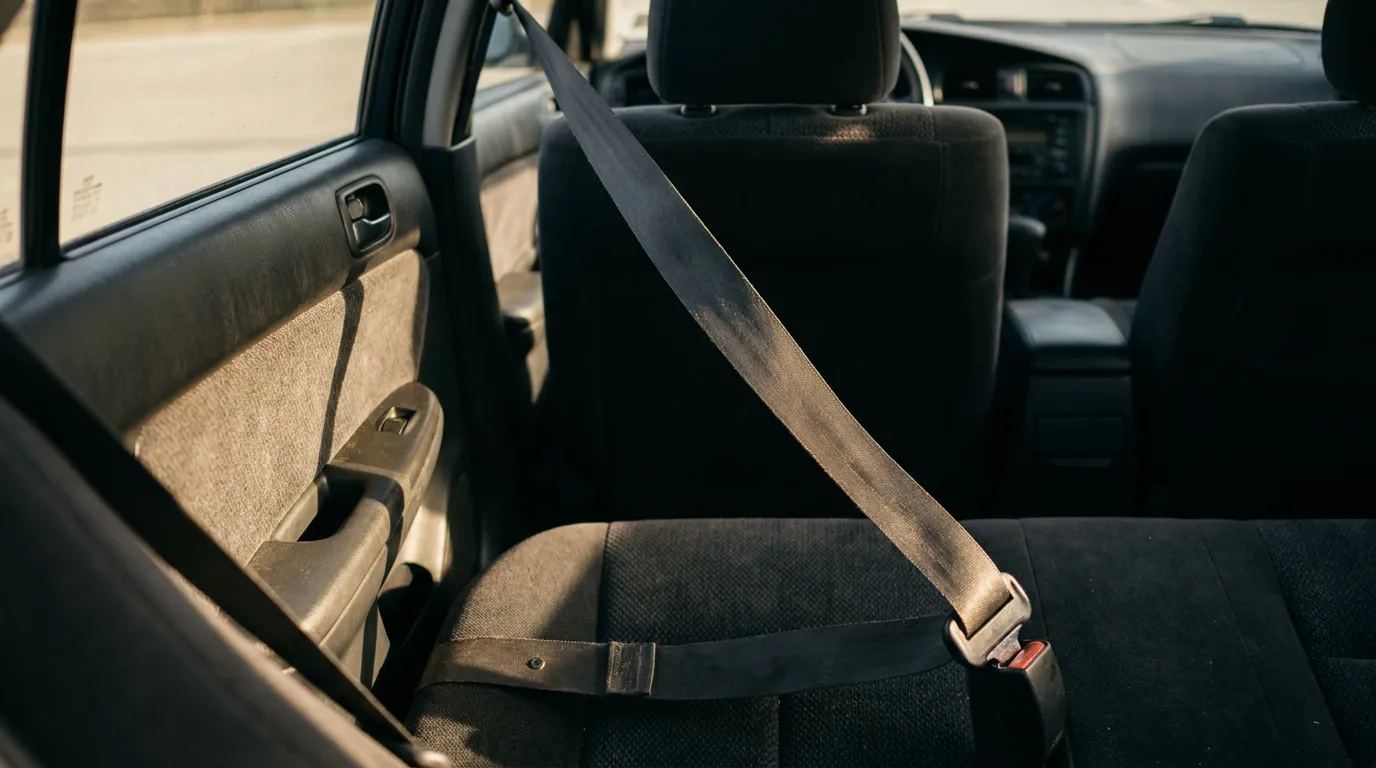
Seatbelt syndrome is the pattern of internal injuries that can show up after a crash exactly where your seat belt held you back. The visible part is often a bruise or abrasion across the abdomen, chest, or neck, sometimes called a seat belt sign injury. The dangerous part is what may sit underneath: torn bowel, damaged spleen or liver, injured blood vessels, fractured ribs, or lumbar spine injury. These injuries can be missed or downplayed in the ER, giving adjusters an opening to argue you were barely hurt, and Florida’s fault and damages rules have changed recently, so how your claim gets valued can depend on facts that need early documentation.
If you or a family member walked away from a wreck with belt marks and stomach pain, do not wait it out. Talk with The Law Office of JJ Talbott. Call us today for a free consultation at (850) 437-9600 or reach out to our team now so we can look at your medical records and the crash facts together.
What Happens to Your Body Inside the Belt
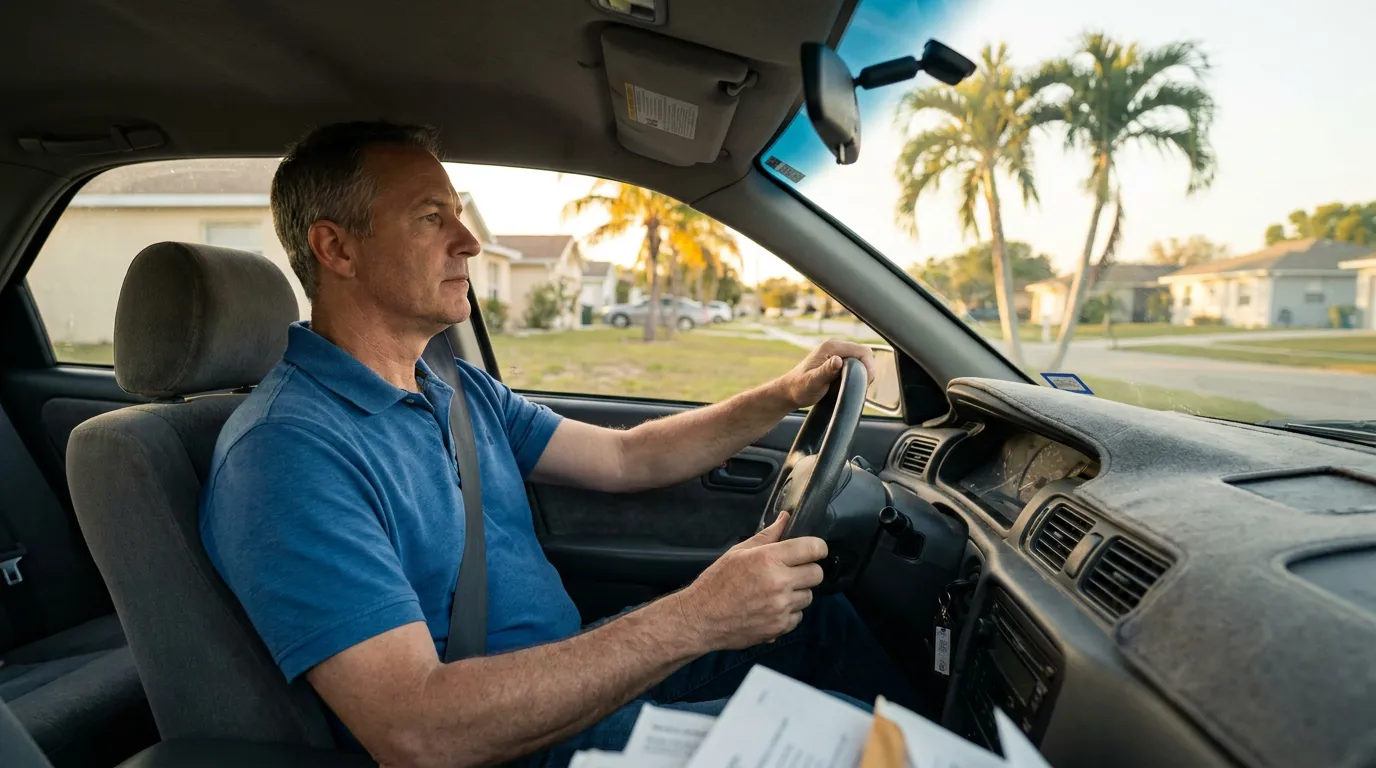
A seat belt saves lives by stopping your torso before it hits the dashboard, steering wheel, or windshield. That force has to go somewhere, generally into the narrow band under the lap and shoulder belt. In a hard collision, organs may keep moving forward for a fraction of a second after the belt stops your frame.
That mismatch can produce an abdominal seat belt injury. The lap belt may compress the small intestine or colon against the spine, potentially causing tears. The shoulder portion can bruise the heart, lungs, or vessels of the neck and chest.
Belt fit changes the picture significantly. Peer-reviewed forensic engineering research on children in motor vehicle collisions has examined how restraint systems interact with smaller bodies during crashes, and improper belt position is a recurring theme.
Warning Signs People Commonly Ignore
Internal injuries from a crash do not always announce themselves on day one. Bowel perforations in particular can take a day or more to produce obvious symptoms, by which point infection may have set in, one reason a serious case gets treated like a minor one.
Watch for these after any collision where the belt engaged:
- Bruising, redness, or an abrasion line across the abdomen, chest, or collarbone
- Stomach pain that worsens, or a hard or swollen belly
- Nausea, vomiting, fever, or dizziness in the hours and days after
- Shortness of breath, chest pain, or pain when breathing deeply
- Numbness, tingling, or weakness in the legs, or new low back pain
💡 Pro Tip: If you have a visible belt mark, photograph it the same day and again over the next several days as it darkens. Those photos can become persuasive evidence, since bruises often fade before a claim is resolved.
Why Seatbelt Syndrome Cases Get Fought Harder Than You Would Expect
Insurance companies rarely dispute that a crash happened. They dispute how badly you were hurt. With internal injuries, that argument may be easier to make, because the damage isn’t visible in a photo of your car and may not appear on an initial X-ray.
We see a familiar pattern: the adjuster points to an ER record noting "abdominal contusion," notes same-day discharge, and may offer a small figure before your follow-up imaging is even complete. If you sign a release, the cost of later surgery could become your problem, not theirs.
There’s also a strange defense argument that surfaces here: the suggestion that the belt itself caused the harm. Wearing your seat belt is what Florida law requires under Fla. Stat. § 316.614 and what safety campaigns encourage. Being restrained does not, by itself, make you responsible for another driver’s negligence.
Handling these claims takes an attorney who understands both the medicine and the mechanics. Read our discussion of the seatbelt defense and how it gets raised against injured people.
How Florida’s Fault Rules Affect Your Recovery
Florida allocates fault under Chapter 768, the statutory framework governing negligence actions. Fla. Stat. § 768.81 sets out the comparative fault system, including how a plaintiff’s own negligence may reduce recoverable damages. Following 2023 tort reform, Florida moved from pure comparative negligence to a modified system for causes of action accruing on or after March 24, 2023.
Under the current standard, a party found more than 50 percent at fault for his or her own harm generally may not recover damages. That threshold does not apply to medical negligence claims under Chapter 766, and § 768.81 does not apply to intentional torts. Related statutory negligence provisions in Fla. Stat. §§ 768.041, 768.0427 address releases, setoffs, and evidence of medical damages, which may shape recovery even when some fault is assigned to the injured person.
Not sure if your case qualifies? Call us, and we will tell you honestly.
| Issue | What Florida Law Generally Provides |
|---|---|
| Fault allocation | Fla. Stat. § 768.81; recovery generally barred above 50% own fault |
| Damages and related rules | Fla. Stat. §§ 768.041, 768.0427 (releases, setoffs, medical damages evidence) |
| Negligence filing deadline | Fla. Stat. § 95.11(5): two years (claims accruing on or after March 24, 2023) |
| Vehicle owner liability limits | Fla. Stat. § 324.021(9)(b) |
When Someone Else Owned the Car
If the at-fault driver was operating a borrowed, rented, or leased vehicle, the owner’s exposure may be limited by statute. Under Fla. Stat. § 324.021(9)(b), an owner who is a natural person and loans a vehicle to a permissive user is generally liable only up to $100,000 per person and $300,000 per incident for bodily injury, plus up to $50,000 for property damage. If the permissive driver is uninsured or carries less than $500,000 in combined property damage and bodily injury liability coverage, the owner may face up to an additional $500,000 in economic damages under Fla. Stat. § 324.021(9)(b)(3). Separate rules apply to rental and leasing companies, whose liability is further limited by federal law.
That limitation generally does not shield an owner from the consequences of his or her own negligence, such as handing keys to someone known to be impaired or unlicensed. Identifying every potentially responsible party early can determine whether there’s enough coverage for a surgical case.
The Deadline That Ends Cases
Under Fla. Stat. § 95.11(5), an action founded on negligence accruing on or after March 24, 2023 generally must be brought within two years; a four-year period applies to earlier claims. Missing the window ordinarily bars recovery, regardless of how strong the facts may be. Limited exceptions and tolling doctrines exist, including for minors and wrongful death claims, but Florida courts generally interpret them narrowly, and no one should assume one applies to their situation.
Claims involving government vehicles or public entities generally carry separate pre-suit notice requirements under Fla. Stat. § 768.28, along with sovereign immunity damage limits. Those administrative steps are not a substitute for filing suit. If your crash involved a government vehicle, the timeline deserves attention right away.
Building a Seat Belt Injury Claim That Holds Up
The strength of these claims often comes down to documentation created in the first few weeks. Because internal injuries can evolve, the record may need to connect what happened in the crash to what surgeons found later, which can help stop an adjuster from calling your injury unrelated or pre-existing.
Steps that generally help:
- Get imaging beyond a basic exam if you have belt marks or abdominal pain, and tell every provider you were belted in a collision.
- Return for follow-up care and keep every appointment, gaps in treatment can become arguments against you.
- Preserve the vehicle and belt hardware if possible, since belt geometry and load marks can be examined.
- Keep a short daily note on pain, work missed, and tasks you cannot do.
- Avoid giving a recorded statement to the other driver’s insurer before you understand your own injuries.
Florida’s liability landscape continues to shift. Business groups have pushed further changes, as reported in Florida Bar News coverage of efforts to amend tort laws, and prior legislative proposals have touched on restraint requirements and related liability rules. Outcomes depend heavily on the specific facts and the law in effect when the claim arises.
Frequently Asked Questions
1. Can I still recover damages if I was not wearing my seat belt?
Possibly, though it may affect the value of your claim. Florida courts have long treated seat belt non-use as a form of comparative negligence when the defense proves non-use caused or worsened the injuries, and under Fla. Stat. § 768.81 comparative fault reduces damages proportionally, with recovery generally barred above 50 percent. How much weight non-use carries is fact-dependent and usually requires expert proof.
2. How soon should I see a doctor after a crash with belt bruising?
The same day, if you can. Some internal injuries, particularly bowel injuries, may not produce clear symptoms for a day or longer. Early imaging can protect your health and help create the medical record your claim may later depend on. Florida’s no-fault law also requires initial treatment within 14 days for PIP benefits to be available.
3. Does a visible seat belt mark prove I have internal injuries?
No. It is a warning sign, not a diagnosis. Emergency physicians often treat the belt sign as a reason to look closer, but the injuries themselves generally must be confirmed through imaging or surgical findings. That is why follow-up care matters so much.
4. What if my child was hurt by an improperly fitted belt?
Children can sustain distinct injury patterns because adult belts often sit across the abdomen rather than the pelvis. Claims involving children may also raise questions about restraint selection and vehicle design, and Florida law imposes child restraint requirements under Fla. Stat. § 316.613. These cases deserve a careful look at both the crash mechanics and the equipment.
5. Do I have to file a lawsuit, or can this settle?
Many claims resolve without a trial, but not all of them should. Whether settling makes sense can depend on the medical picture, available coverage, and how fault is likely to be viewed. We give an honest assessment rather than the answer someone hopes to hear.
Straight Talk About Your Next Step
Seatbelt syndrome cases generally reward early attention and punish delay. The medical part needs a doctor who looks past the bruise. The legal part needs someone who understands Florida’s fault rules, the owner liability limits, and the applicable negligence deadline, and who can document your injuries before an insurer sets the narrative. JJ has practiced in the Pensacola area for over 26 years, and when you call, you talk to him, not an intake screener.
We are a small, tight-knit team. Big enough to do the job, small enough to actually know your name and answer your questions.
If a crash left you with belt marks, stomach pain, or injuries that turned out worse than anyone first thought, let us take a look. Learn more about how we handle Florida car accident injury matters, then contact The Law Office of JJ Talbott for a free consultation. Call (850) 437-9600 or get in touch with us today, and we will give you a straight answer about where you stand.
Disclaimer: This content is for informational purposes only and is not legal advice. Every case is unique, and results may vary. Consult an attorney about your specific circumstances.