
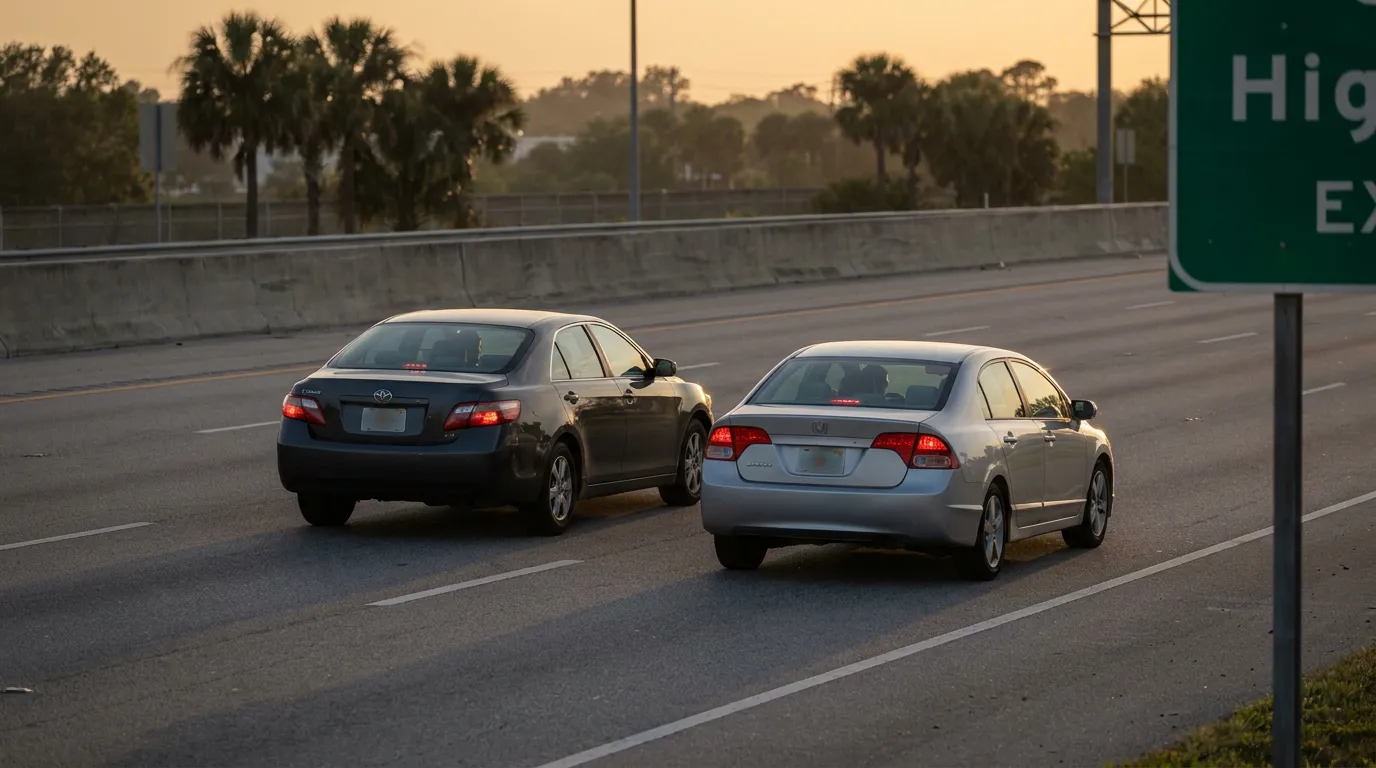
When a Sudden Stop Turns Into a Crash on a Pensacola Road
Key Takeaways: Brake checking isn’t named in Florida’s traffic code, but intentionally slamming your brakes with no legitimate traffic reason can still be illegal. Depending on proof of intent, the conduct may support a careless driving infraction under Fla. Stat. § 316.1925, a reckless driving charge under Fla. Stat. § 316.192(1)(a), or an aggressive careless driving allegation under Fla. Stat. § 316.1923, with penalties escalating to a third-degree felony when serious bodily injury results. Rear drivers start at a disadvantage because Fla. Stat. § 316.0895(1) requires a reasonable following distance, though that presumption can be rebutted with evidence of a sudden, unexpected, unexplained stop. These claims generally come down to documentation, dashcam video, event data recorder downloads, witnesses, and skid marks, since drivers rarely admit to brake checking afterward. Every driver must stop at the scene under Fla. Stat. § 316.027(2)(a); leaving can turn a traffic dispute into a felony matter. Because criminal and civil cases run on separate tracks and evidence disappears quickly, early legal help matters.
Yes, brake checking can be illegal in Florida, even though no statute uses that exact phrase. A driver who intentionally slams the brakes with no legitimate traffic reason, to cause a crash or intimidate the driver behind, may be charged under Florida’s reckless driving law. Under Fla. Stat. § 316.192(1)(a), "Any person who drives any vehicle in willful or wanton disregard for the safety of persons or property is guilty of reckless driving." Whether that standard is met is a fact question; conduct falling short of it may still be charged as careless driving.
If you rear-ended a driver who brake checked you, or got hit because someone behind you was riding your bumper, your next steps matter. Our team at The Law Office of JJ Talbott has spent more than 26 years handling crash claims in Escambia and Santa Rosa Counties, and we know how local adjusters tend to treat these cases. Call us today for a free consultation at (850) 437-9600 or contact us now.
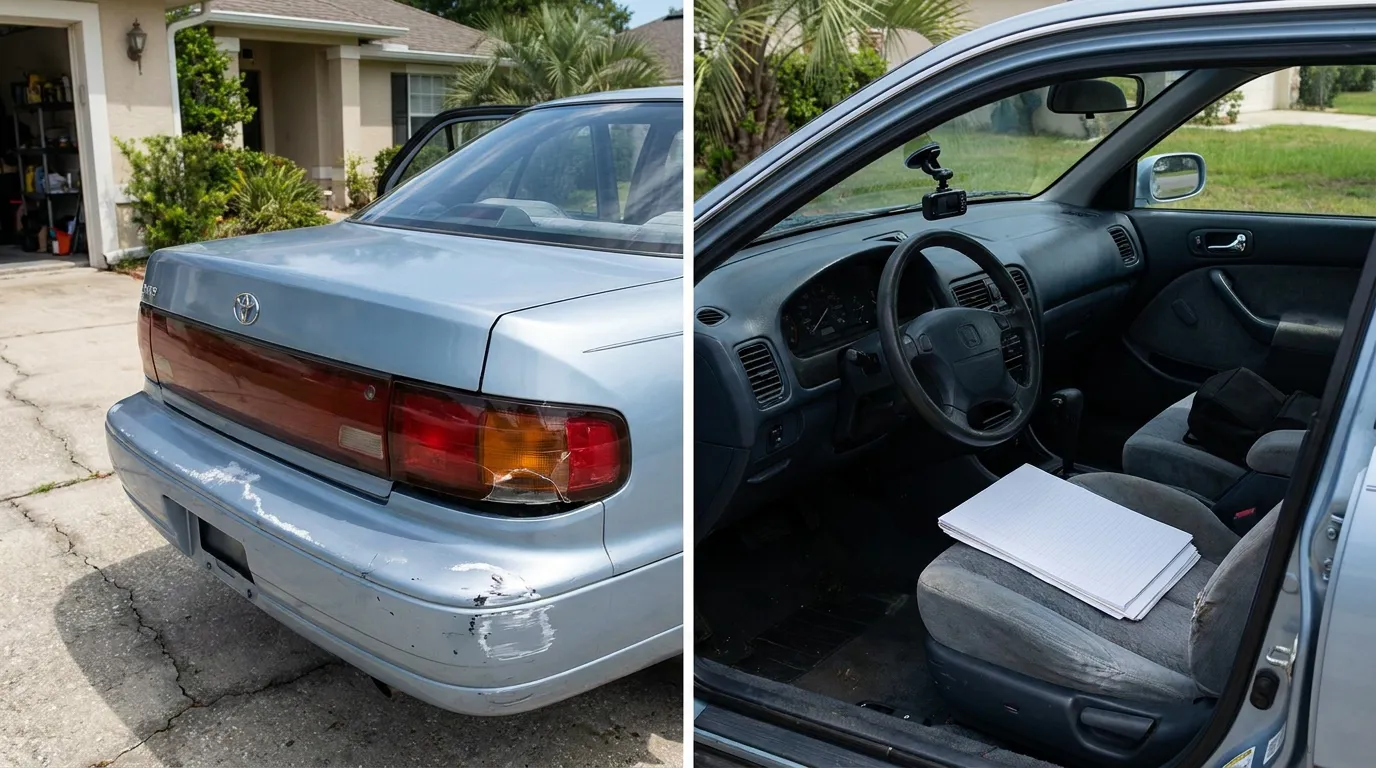
Why the Law Starts by Blaming the Rear Driver
Florida places an affirmative duty on the driver in back, which is why rear drivers get blamed first. Fla. Stat. § 316.0895(1) states the driver "shall not follow another vehicle more closely than is reasonable and prudent, having due regard for the speed of such vehicles and the traffic upon, and the condition of, the highway." Officers and adjusters generally start from that rule.
That presumption isn’t necessarily the end of the analysis. Florida courts recognize a rear driver may rebut it with evidence of a sudden, unexpected, and unexplained stop by the lead driver, or other evidence such as mechanical failure or an abrupt lane change. A stop explained by ordinary traffic, a signal, or a hazard generally won’t rebut the presumption. Whether the evidence persuades depends on the facts, witnesses, and physical damage, which is why similar-looking crashes can end very differently.
Being in back doesn’t necessarily end your claim. For a deeper walkthrough of how fault gets sorted out, see our post on rear-end collision liability. Every case turns on proof, not assumptions.
Not sure if your case qualifies? Call us and we will tell you honestly.
JJ answers the phone himself, and he won’t tell you what you want to hear. If the evidence in your brake check crash is thin, he’ll say so up front rather than string you along. That honesty is part of why people in Pensacola keep sending their neighbors to a two-person office instead of a call center.
Is Brake Checking Illegal in Florida Under the Traffic Code?
Several statutes can reach brake checking behavior, even without one naming it. The applicable charge generally depends on whether the conduct looks sloppy or genuinely intentional.
| Statute | Conduct Covered | Classification |
|---|---|---|
| Fla. Stat. § 316.1925 | Operating without due care and reasonable regard for other traffic | Careless driving, noncriminal moving violation |
| Fla. Stat. § 316.192(1)(a) | Willful or wanton disregard for safety of persons or property | Reckless driving, criminal |
| Fla. Stat. § 316.0895 | Following too closely | Noncriminal traffic infraction under chapter 318 |
| Fla. Stat. § 316.1923 | Two or more listed unsafe acts committed in succession | Statutory definition of "aggressive careless driving," charged as careless driving |
Careless driving is often the fallback charge when intent can’t be proven. Fla. Stat. § 316.1925(1) requires driving "in a careful and prudent manner." A sudden, unjustified stop may fall short of that standard even without proof of intent to wreck.
Reckless driving is the more serious label and requires more proof. Officers reviewing Florida’s reckless driving statute typically look for evidence the stop was deliberate, repeated brake taps, gestures, or an admission. Dashcam footage can make the difference between a careless citation and a reckless charge, though the charging decision rests with law enforcement and the State Attorney.
Aggressive Careless Driving and Road Rage Sequences
When brake checking comes packaged with other unsafe moves, exposure may climb. Fla. Stat. § 316.1923 defines "aggressive careless driving" as committing two or more listed acts in succession, speeding, unsafe lane changes, following too closely, failing to yield, improper passing, or signal violations. The section supplies a definition rather than a stand-alone penalty, so underlying conduct is still cited under applicable statutes.
Road rage crashes often fit that pattern. A driver who cuts someone off, tailgates, then stomps the brakes has arguably strung together multiple violations. These overlapping Florida driving statutes may give investigators more to work with than a single infraction.
What Brake Checking Penalties Look Like in Florida
A brake check citation can range from a moving violation to a felony, depending on what happened after the brakes hit. Criminal and civil sides are separate tracks, though a criminal charge can create useful evidence for an injury claim.
- Reckless driving, no injury or damage: Under Fla. Stat. § 316.192(2), a first conviction is punishable "by imprisonment for a period of not more than 90 days or by fine of not less than $25 nor more than $500, or by both," with harsher penalties for later convictions.
- Reckless driving causing property damage or non-serious injury: A first-degree misdemeanor under Fla. Stat. § 316.192(3).
- Reckless driving causing serious bodily injury: Elevated to a third-degree felony, with "serious bodily injury" defined as an injury creating substantial risk of death, disfigurement, or protracted impairment.
- Following too closely: A noncriminal infraction under Fla. Stat. § 316.0895.
Notice the gap. The rear driver who was tailgating may face a civil infraction, while the lead driver who intentionally brake checked may face criminal exposure, a contrast that matters when an adjuster tries to pin everything on the person in back.
💡 Pro Tip: Ask the responding officer whether the crash report notes any statement about intentional braking. That single line can shift a negotiation months later.
Proving Brake Check Crash Liability Takes Real Evidence
Intent is invisible, so these cases are generally won with documentation. Drivers rarely admit to brake checking after the fact. What matters is a pattern a jury or adjuster can see.
Evidence That Tends to Carry Weight
Physical and digital proof tends to carry more weight than competing stories. The strongest cases involve dashcam video, event data recorder downloads showing braking without a triggering hazard, independent witnesses, and consistent testimony about the miles before impact. Skid marks and the absence of any obstruction ahead of the lead vehicle can also matter.
Insurance companies often behave predictably here. The lead driver’s carrier will frequently deny any brake check occurred and point to the following-too-closely rule. You may see a quick, low offer and a request for a recorded statement, and anything you say may be used against you under Florida’s modified comparative fault framework, which bars recovery entirely if you’re found more than 50 percent at fault.
Duties at the Scene Apply to Everyone Involved
Florida law requires you to stop, regardless of who caused the crash. Under Fla. Stat. § 316.027(2)(a), a driver involved in a crash causing injury "shall immediately stop the vehicle at the scene… A person who willfully violates this paragraph commits a felony of the third degree." Related subsections impose stricter penalties for serious injury or death, and § 316.061 covers property-damage-only crashes. Leaving because you feel wronged can turn a traffic dispute into a criminal case.
💡 Pro Tip: Save your dashcam file to a separate drive the same day. Loop-recording cameras overwrite footage, and lost video is one of the most common preventable mistakes we see.
A Note on Statutes People Confuse With Brake Checking
Not every following-distance rule in Chapter 316 applies to ordinary traffic. For example, Fla. Stat. § 316.2025 restricts following fire apparatus closer than 500 feet, a narrow rule about emergency vehicles, not the standard governing a brake check wreck.
The rule that generally controls most rear-end crashes is the reasonable-and-prudent following distance requirement. Confusing the two can lead people to argue the wrong point with an adjuster. When in doubt, work from § 316.0895 and § 316.1925 rather than the emergency-apparatus provision.
How Our Pensacola Team Approaches These Claims
We start by locking down evidence before it disappears, sending preservation letters, requesting the crash report, tracking down 911 audio, and identifying nearby businesses with exterior cameras. Time generally works against you here.
You will deal with JJ directly, not a rotating cast of associates. He has practiced in this community for more than 26 years and knows the judges, courts, and adjusters who handle Northwest Florida claims. If you need broader help, our Pensacola car accident lawyer page explains the range of injury matters our small team handles.
Keep Florida’s filing deadlines in mind. For negligence claims accruing on or after March 24, 2023, the statute of limitations is generally two years; claims accruing before that date were generally governed by a four-year period. Different deadlines can apply to wrongful death, government claims, or claims involving minors, and narrow exceptions like tolling or delayed discovery may apply but are interpreted narrowly. Don’t assume an extension applies without talking to an attorney.
Frequently Asked Questions
1. Can I still recover damages if I rear-ended someone who brake checked me?
Possibly, depending on your proof. Florida applies modified comparative fault, so a jury may assign percentages of responsibility, and a plaintiff found more than 50 percent at fault generally recovers nothing. Without evidence of an intentional stop, the presumption against the rear driver can be hard to overcome.
2. Will police issue a brake check citation at the scene?
Sometimes, but not usually without strong evidence. Officers frequently write a following-too-closely infraction against the rear driver since it’s the easier call. A careless or reckless charge against the lead driver generally requires video, witnesses, or an admission.
3. Does a criminal charge against the other driver mean I automatically win my claim?
No. Criminal and civil cases are separate proceedings with different burdens of proof. A conviction may be admissible in some circumstances, but a citation alone generally isn’t proof of civil liability, you still must prove duty, breach, causation, and damages.
4. What if the brake checking happened during a road rage confrontation?
Those cases can involve multiple violations and coverage questions. The aggressive careless driving definition in § 316.1923 may apply when several unsafe acts occur in succession. Some policies also raise coverage disputes over intentional conduct, worth reviewing with counsel.
5. How soon should I talk to an attorney after a rear-end crash in Pensacola?
As early as you reasonably can. Video evidence gets overwritten, witnesses move, and recorded statements happen fast. Early involvement may give our team a better chance to preserve what matters.
Where This Leaves You After a Brake Check Crash
Brake checking isn’t named in Florida’s traffic code, but that doesn’t mean it’s lawful. Depending on proof of intent, the conduct may support a careless driving citation, a reckless driving charge, or an aggressive careless driving allegation, with penalties that can escalate sharply when someone is hurt. On the civil side, outcomes depend on the specific facts, available evidence, and how quickly it’s preserved.
If you were hurt in a rear-end crash in Pensacola and believe the other driver hit the brakes on purpose, talk to someone who will give you a straight answer. Contact the Law Office of J.J. Talbott today, call (850) 437-9600, or get your case reviewed and we’ll tell you honestly what we think of your case.
Disclaimer: This content is for informational purposes only and is not legal advice. Every case is unique, and results may vary. Consult an attorney about your specific circumstances.