
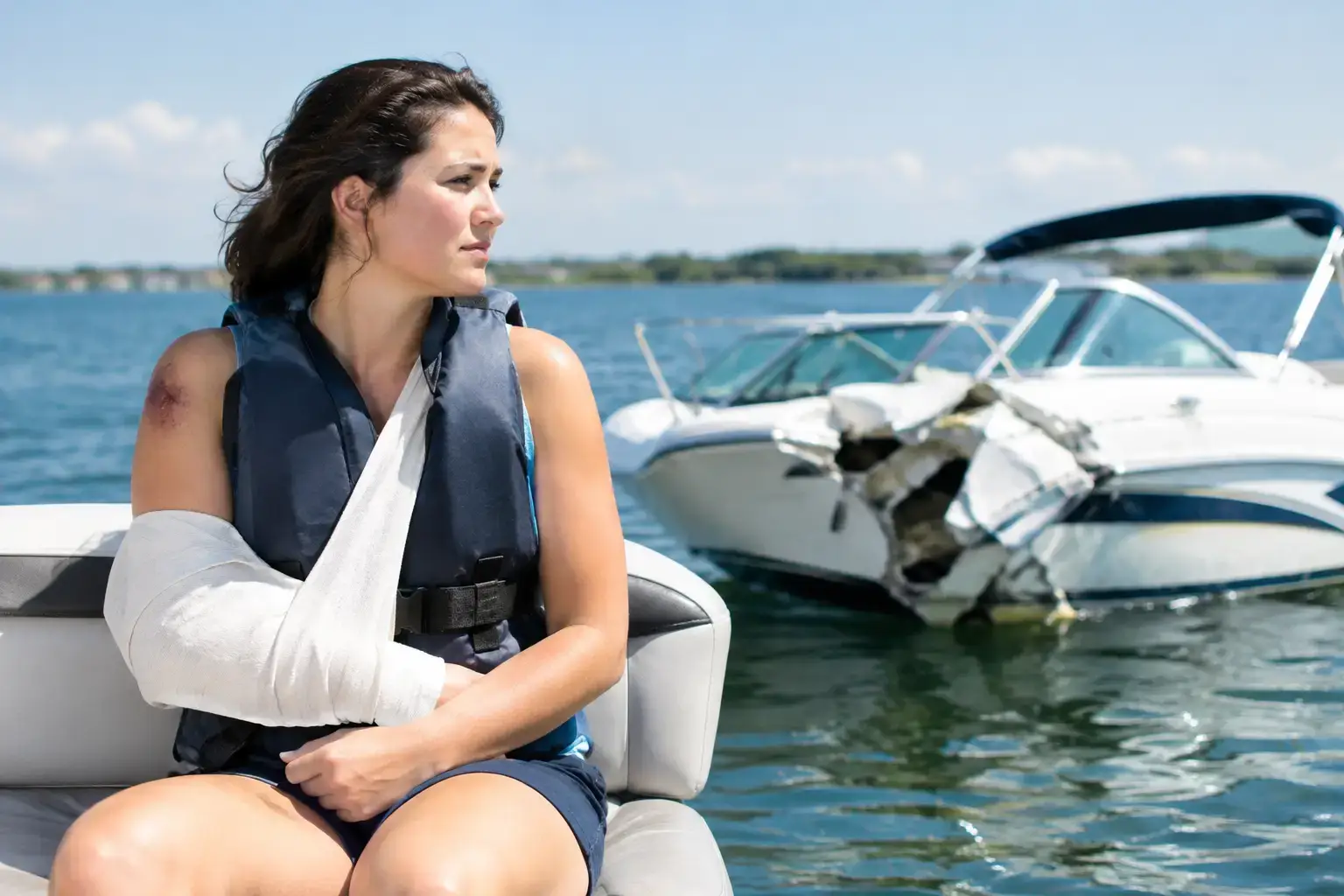
A peaceful day on the Gulf can turn frightening in seconds. A collision near Destin, a fall on a charter boat, a propeller injury, or a crash involving a jet ski can leave families facing painful injuries and unanswered questions. This boat accident injury guide explains the steps that can protect your health, preserve your claim, and put you in a stronger position when insurance companies start asking questions.
The first priority is always medical care. The next is protecting yourself from being blamed for an accident you did not cause.
Get Safe, Get Care, and Report the Accident
If anyone is seriously hurt, call 911 or request emergency help over marine radio immediately. Move out of danger if you can do so safely, but do not leave the scene simply because the other operator says the crash was minor. Boat injuries are often more serious than they first appear, particularly after a person is thrown, struck by equipment, pulled from the water, or exposed to a propeller.
Seek a medical evaluation as soon as possible, even if you initially feel shaken but believe you are fine. Adrenaline can mask symptoms of a concussion, internal injury, spinal trauma, soft-tissue damage, and near-drowning complications. Prompt treatment connects your injuries to the accident and gives you a clear record of what happened.
In Florida, certain boating accidents must be reported to the Florida Fish and Wildlife Conservation Commission, the county sheriff, or another appropriate authority. Reporting requirements can apply when there is death, injury requiring treatment beyond first aid, disappearance, significant property damage, or the destruction of a vessel. Do not assume someone else has handled the report. Ask which agency responded and how you can obtain the report later.
What to Do at the Scene
The details gathered in the first hour may become the evidence that proves your case months later. If you are physically able, use your phone to document the scene. Take photographs of vessel damage, visible injuries, safety equipment, weather conditions, wakes, channel markers, dock conditions, and the surrounding water.
Get the names and contact information of everyone involved, including passengers and independent witnesses. A neutral witness who saw an operator speeding, drinking, failing to keep a lookout, or making an unsafe turn can make a major difference.
Do not apologize or speculate about fault. A simple statement such as, “I did not see you,” can be twisted by an insurer into an admission. Stick to the facts when speaking with law enforcement or emergency personnel. You can describe what you observed without guessing why the crash happened.
If possible, also preserve information that may disappear quickly: screenshots of texts arranging the outing, charter confirmations, social media posts, GPS or navigation data, and photographs of alcohol containers or defective equipment. Do not alter, repair, sell, or dispose of damaged property before getting legal advice. The boat, life jackets, engine components, and other equipment may be critical evidence.
Common Causes of Boat Accident Injuries
Boating cases are not always simple collisions between two vessels. Negligence can take many forms, and more than one person or company may be responsible. An operator may be liable for reckless speed, inattention, intoxication, failure to follow navigation rules, or allowing an inexperienced person to take control.
A boat owner may be responsible for lending a vessel to someone unqualified to operate it or failing to maintain steering, lights, fuel systems, bilge pumps, or safety equipment. Charter companies and tour operators can face claims when they put profits ahead of passenger safety, hire unqualified crew, overload a vessel, or ignore dangerous weather conditions.
Defective products can also cause serious harm. A failed throttle, faulty engine part, defective life jacket, unstable seating system, or unsafe vessel design may create a claim against a manufacturer or distributor. Determining who is responsible requires more than accepting the explanation offered at the dock.
Boat Accident Injury Guide: Protecting Your Legal Claim
Insurance companies often move fast after a boating accident, especially when there is significant vessel damage or a commercial operator involved. Their goal is not to make sure you receive everything you need. Their goal is to limit what they pay.
You may receive a call asking for a recorded statement, a broad medical authorization, or permission to settle quickly. Be careful. An early settlement offer may cover an emergency room bill while ignoring future treatment, physical therapy, lost income, permanent limitations, and the daily pain an injury can cause.
You are generally not required to give the other party’s insurer a recorded statement before you understand your legal position. You should also avoid signing blanket medical releases that give an insurer access to your entire health history. Insurers may look for unrelated conditions to argue that your injuries were preexisting.
Keep a file with your medical records, bills, prescriptions, mileage to appointments, time missed from work, and communications with insurance representatives. A short daily journal can also help document sleep problems, pain levels, missed family activities, anxiety around the water, and other ways the injury has changed your life. These losses are real, even when they do not appear on a hospital invoice.
Why Florida Boat Accident Cases Can Be Complicated
The waters around Northwest Florida bring together private boaters, fishing vessels, personal watercraft, charter operations, rental companies, and visitors unfamiliar with local conditions. That mix creates complicated questions about insurance, ownership, licensing, safety rules, and jurisdiction.
Some claims are governed primarily by Florida law, while others may involve federal admiralty or maritime law. The location of the accident matters. An injury on a recreational boat near shore may be evaluated differently than an injury involving a commercial vessel in navigable waters. Deadlines and legal rules can vary, so waiting to get answers can put valuable evidence and legal rights at risk.
Florida also follows a modified comparative negligence system in most personal injury cases. That means an injured person may recover damages if they were partly at fault, but their compensation can be reduced by their share of responsibility. If a court finds a claimant was more than 50% responsible, recovery may be barred in many cases. Insurers know this and may try to overstate your role in the accident.
That is why the facts matter. Were life jackets available? Was the operator watching the water? Were navigation lights working? Was alcohol involved? Was there a warning about weather, wakes, shallow water, or dangerous equipment? A thorough investigation can answer questions an insurance adjuster would prefer to leave unanswered.
Compensation After a Serious Boating Injury
The value of a claim depends on the injuries, available insurance coverage, evidence of fault, and the long-term effect on your life. A fair recovery may include payment for medical expenses, future medical care, lost wages, reduced earning capacity, physical pain, emotional distress, scarring, disability, and property damage.
When a loved one is killed in a boating accident, surviving family members may have the right to pursue a wrongful death claim. No case can undo that loss. But holding the responsible party accountable can provide financial stability and a measure of justice for the family left behind.
Be wary of anyone who promises a specific dollar amount before reviewing the evidence and medical records. Serious cases require careful work. At the same time, you should not accept an insurer’s low estimate simply because it is the first number placed in front of you.
When to Call a Boat Accident Lawyer
You should consider speaking with an attorney promptly if the accident caused more than minor injuries, involved a death, included alcohol or suspected impairment, involved a charter or rental company, or resulted in competing stories about fault. Legal help is especially valuable when the other party is represented, an insurer is pressuring you, or crucial evidence is in someone else’s control.
At The Law Office of J.J. Talbott, we understand that an injury can turn an ordinary family outing into a financial and emotional crisis. Our team fights for injured people across Northwest Florida with direct communication, personal attention, and a willingness to take cases to court when an insurer refuses to be fair.
You do not have to untangle the paperwork, insurance calls, and legal pressure while trying to heal. Get medical care, save what you can, and ask for help early. The right action after a boating accident can protect far more than a claim – it can protect your family’s path forward.