
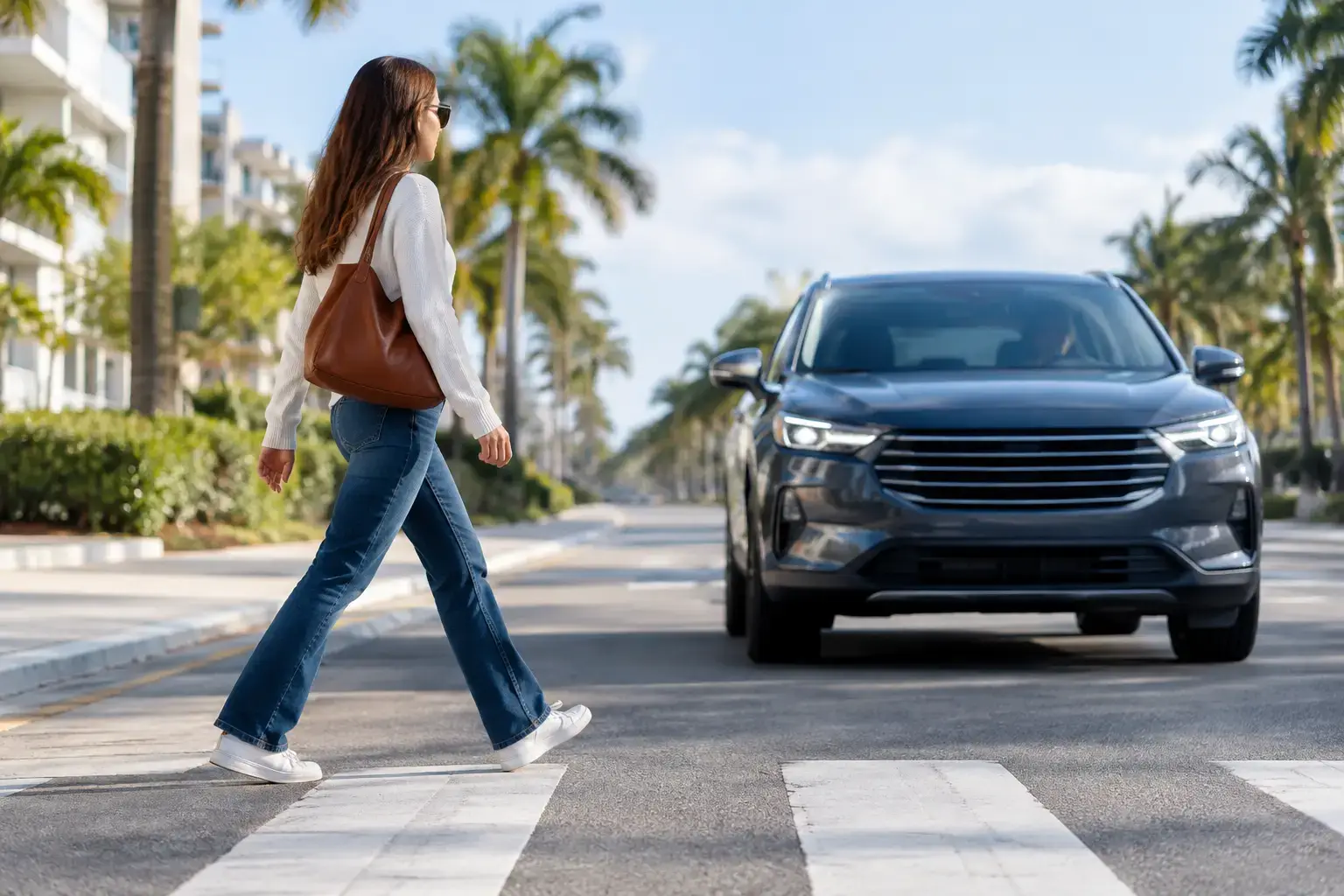
A driver says you stepped out too quickly. An insurance adjuster says you were outside the crosswalk. Meanwhile, you are dealing with a broken bone, missed work, and medical bills that keep arriving. Florida pedestrian accident fault rules can determine whether you recover compensation and how much, but an insurer’s first version of the crash is not the final word.
Pedestrian cases are rarely as simple as a driver-versus-walker argument. The location, traffic signal, vehicle speed, visibility, roadway design, witness statements, and phone records can all matter. If someone else’s careless driving hurt you or someone you love, do not accept blame before the evidence has been fully examined.
Florida Pedestrian Accident Fault Rules and Shared Blame
Florida uses a modified comparative negligence system for most personal injury claims. That means more than one person can share responsibility for an accident. A pedestrian who is found partly at fault may still seek damages, but their recovery is reduced by their percentage of fault.
For example, if your losses total $100,000 and you are found 20% responsible, your recovery could be reduced by $20,000. But if you are found more than 50% at fault, Florida law generally bars recovery in ordinary negligence cases. Different rules may apply in limited situations, which is one reason an early legal review matters.
Insurance companies know that shifting even a small amount of fault onto an injured pedestrian can save them money. They may focus on dark clothing, a mid-block crossing, headphones, or an allegation that you were distracted. Those facts can be relevant, but they do not erase a driver’s duty to watch the road, obey traffic signals, control speed, and avoid a collision when reasonably possible.
Fault Is Based on Facts, Not Assumptions
A pedestrian does not automatically win because a vehicle struck them. But a driver is not automatically free from responsibility because the pedestrian was not in a marked crosswalk. Florida law expects both drivers and pedestrians to use reasonable care.
The real question is usually whether the driver had a reasonable opportunity to see the pedestrian and prevent the crash. A driver turning right while watching for oncoming traffic may fail to check the crosswalk. A driver may speed through a parking lot, look down at a phone, run a red light, or drive too fast for rain and low visibility. Those choices can create strong evidence of negligence.
When Drivers Are Commonly at Fault
Drivers must remain alert for people walking, crossing, exiting vehicles, or moving through parking areas. This duty is especially serious near schools, neighborhoods, beach access points, busy intersections, and commercial parking lots throughout Northwest Florida.
A driver may be at fault when they fail to yield to a pedestrian with the right of way, ignore a walk signal, turn through an occupied crosswalk, back up without checking behind the vehicle, or travel at an unsafe speed. Drunk driving, drug impairment, fatigue, and distracted driving can make the driver’s conduct even more serious.
Fault can also arise from what a driver failed to do. If a driver had enough time and distance to brake, swerve safely, or sound the horn but did nothing, that evidence may matter. The fact that a pedestrian was hard to see does not end the analysis. Headlights, streetlights, dash camera footage, weather, sightlines, and the color of the vehicle all help show what the driver reasonably should have seen.
Crosswalks and Traffic Signals Matter
At a marked crosswalk, a pedestrian generally has the right of way when crossing with the appropriate signal or when a driver is otherwise required to yield. Drivers should not treat a green light as permission to turn without looking for people lawfully crossing the street.
At an intersection without a marked crosswalk, pedestrian rights can still exist. Many intersections have an unmarked crosswalk, and the facts must be evaluated carefully. A driver cannot simply claim, “There were no painted lines,” as a defense to failing to watch for people crossing.
Traffic signals matter too. A pedestrian who crosses against a signal may face an argument of shared fault. Still, the driver’s speed, attention, and ability to avoid the crash remain central issues. One mistake by a pedestrian does not give a driver permission to cause a serious injury.
When a Pedestrian May Share Fault
Pedestrians also have responsibilities under Florida law. Crossing outside a crosswalk when one is nearby, entering the road suddenly, walking into traffic while distracted, or disregarding a traffic-control signal can affect a claim. Walking along a roadway where sidewalks are available may also become an issue depending on the location and circumstances.
Yet these cases require more than a quick judgment. Consider a person crossing mid-block because there was no safe sidewalk, no usable crosswalk, or a construction zone blocking the path. Consider a person struck on a dark road where the driver was speeding with poor headlights. The pedestrian’s actions are only part of the evidence, not the whole case.
Florida’s Gulf Coast communities also have roadways built for heavy vehicle traffic but used daily by visitors, workers, runners, and families on foot. Poor lighting, inadequate signage, dangerous road design, and broken sidewalks may contribute to a crash. In some cases, a business owner, property manager, contractor, or government entity could share responsibility. Claims involving public entities have special notice requirements and shorter deadlines, so waiting can put valuable rights at risk.
Evidence Can Change the Fault Story
The crash report is useful, but it is not always the final answer on fault. Officers often arrive after the collision and may rely on incomplete statements. A thorough investigation can uncover facts that were missed in the first report.
Strong pedestrian accident claims often depend on preserving evidence quickly, including:
- Surveillance footage from nearby homes, stores, traffic cameras, or businesses
- Vehicle event data, dash camera footage, and cell phone records
- Witness names, statements, and photographs taken at the scene
- Medical records that connect your injuries to the force and mechanics of the crash
Photos of the scene should capture the roadway, crosswalk markings, signal placement, lighting, obstructions, skid marks, and your clothing or personal items. If possible, do not repair or discard damaged property before it has been documented. Shoes, a backpack, a bicycle, or a phone can help establish what happened.
A lawyer may also work with accident reconstruction experts when the damage is severe or the facts are disputed. These experts can analyze vehicle speed, braking distance, impact points, sightlines, and available reaction time. That analysis can challenge an insurer’s attempt to blame an injured pedestrian without proof.
What Compensation May Cover
When another party caused or contributed to your injuries, a claim may seek payment for medical treatment, future care, lost income, reduced earning ability, pain and suffering, and other losses recognized under Florida law. A serious pedestrian collision can involve traumatic brain injuries, spinal damage, internal injuries, fractures, surgeries, and lasting mobility problems. The claim should account for more than the first emergency room bill.
If a pedestrian dies from their injuries, surviving family members may have a wrongful death claim. These cases involve devastating losses and strict legal deadlines. Families deserve straight answers, respectful support, and an advocate prepared to fight for accountability.
Do Not Let the Insurer Define the Case
After a pedestrian crash, an adjuster may call quickly and sound sympathetic. They may ask for a recorded statement, request broad medical authorizations, or offer a settlement before you understand the full extent of your injuries. You are not required to accept their framing of the accident or sign away your claim to get the conversation over with.
Get medical care promptly, follow your treatment plan, and be careful about discussing the collision online. Then speak with an attorney before making a recorded statement or accepting a settlement. The Law Office of J.J. Talbott can evaluate the evidence, identify every responsible party, and fight for the compensation you deserve.
Pain can make every decision feel urgent after a crash. Protecting your claim does not mean rushing into the insurer’s terms. It means getting clear advice, preserving the facts, and giving yourself the chance to recover with someone in your corner.