
Getting Hit by Someone Else and Then Getting a Higher Bill
Key Takeaways: Yes, your insurance can go up in Florida after a crash that wasn’t your fault, but only within limits set by law. Fla. Stat. § 626.9541(1)(o)2 bars insurers from surcharging or refusing to renew solely because you were in a wreck, unless their file supports a good-faith finding that you were substantially at fault. If a surcharge is applied anyway, the statute lists conditions, such as being rear-ended, hit by a hit-and-run driver, or submitting an unrebutted written not-at-fault statement, that may entitle you to reimbursement or renewal. What the law does not stop are statewide rate hikes driven by market pressures like uninsured drivers, which is why many blameless drivers still see higher bills. Florida’s no-fault PIP system also generally means your own carrier pays first, so a claim may land on your record regardless of fault, and initial care is generally required within 14 days. Documentation matters: gather the crash report, photos, and citations, dispute the increase in writing, and get legal guidance if you were injured.
Yes, your car insurance can go up in Florida after a wreck that was not your fault, but there are real legal limits. Florida law generally blocks a company from raising your premium or refusing to renew just because you were in a crash, unless its file shows you were substantially at fault. But the law does not stop broader statewide rate hikes, so blameless drivers still see their bills climb.
If a surcharge showed up after someone else hit you, our team can help. JJ Talbott has practiced in the Pensacola area for more than 26 years, and when you call the Law Office of JJ Talbott, you talk to JJ, not a call center. Call us today for a free consultation at (850) 437-9600 or contact us now.
What Florida Law Actually Says
Florida’s unfair insurance trade practices statute addresses this directly. Under Fla. Stat. § 626.9541(1)(o)2, it is generally an unfair practice for a carrier to impose an additional premium, or refuse to renew, solely because the insured was in an accident, unless the insurer’s file shows a good-faith determination the insured was substantially at fault. Enforcement involves both state agencies — the Florida Department of Financial Services and the Office of Insurance Regulation — and private civil litigation, as Florida Stat. § 624.155(1) expressly creates a private cause of action allowing an insured to sue an insurer for violations of § 626.9541.
That word "solely" carries weight. An insurer with evidence of your fault may still act on it. What it generally cannot do is treat the mere fact of a collision as an automatic trigger for a surcharge.
The statute also protects drivers with one blemish. An insurer generally may not fail to renew a policy if the insured has had only one at-fault accident in the current three-year period, though nonrenewal remains available for other reasons, and the protection does not extend to a driver with three or more accidents in that window.
Your Right to Get the Money Back
If a company surcharges you or refuses to renew, it generally must tell you how to fight it. Under § 626.9541(1)(o)2, that notice must state you may be entitled to reimbursement or renewal if you can demonstrate certain facts about the crash.
Those conditions generally include situations where the driver was:
- Lawfully parked when the crash happened
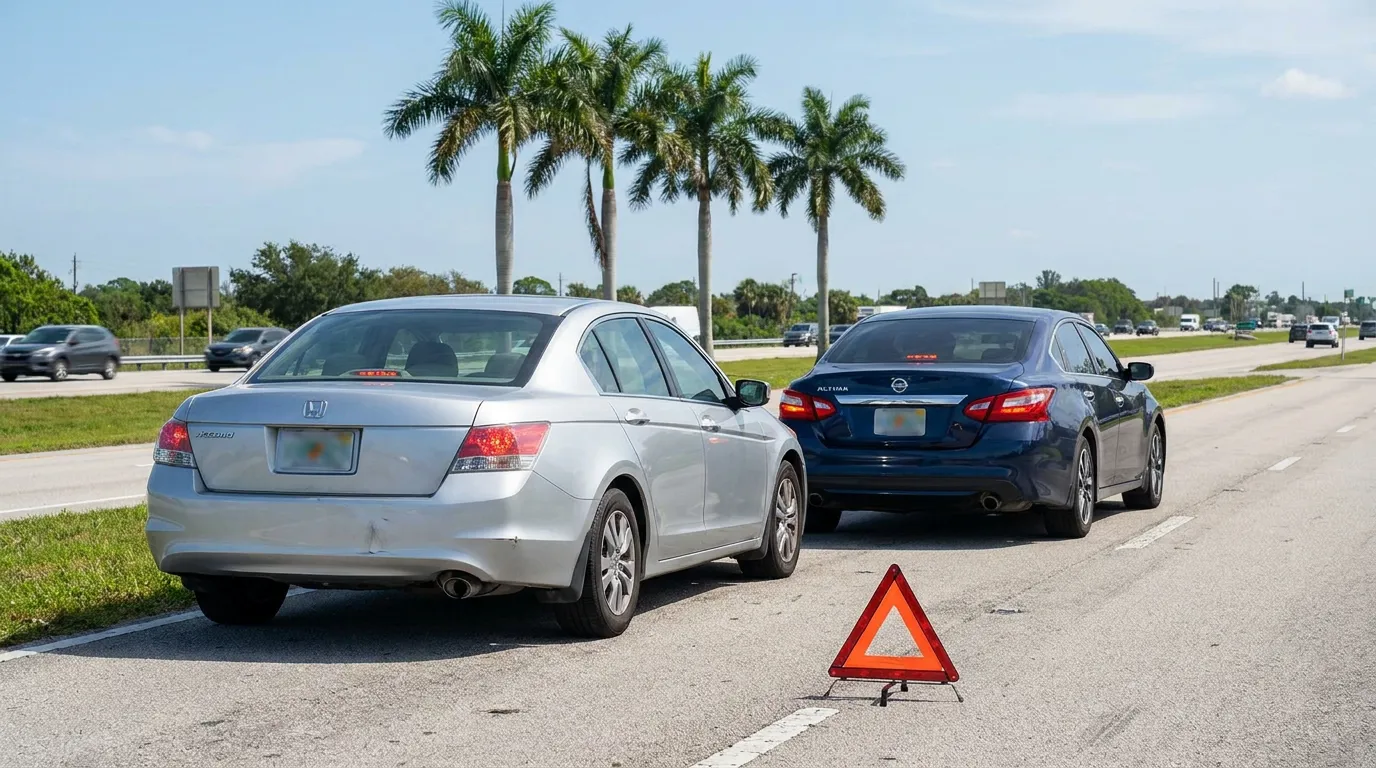
- Struck in the rear by another vehicle headed the same direction, without a moving violation conviction tied to the crash
- Hit by a hit-and-run driver, if reported within 24 hours after discovery
- Not convicted of a moving violation when the other driver was
- Finally adjudicated not liable by a court
- Issued a citation later dismissed or nolle prossed
- Reimbursed by the responsible party, or holding a judgment against them
- Able to submit a written statement establishing lack of fault that the insurer’s file does not rebut
Read that last item closely, since many people can use it. A clear written statement with photos, the crash report, and witness names may be enough, unless the carrier’s file supports a good-faith finding of substantial fault.
💡 Pro Tip: Send your written not-at-fault statement to the insurer in writing and keep a dated copy. Phone calls with adjusters rarely leave a record you can use later.
Why Your Premium Went Up Anyway
Plenty of premium increases have nothing to do with a fault finding. Florida drivers have watched rates climb for market-wide reasons, and the growing share of uninsured drivers in Florida is one pressure pushing costs up statewide. Rate levels are set through filings reviewed by the Office of Insurance Regulation, not the statutes governing individual surcharges.
Timing also confuses people. A general rate filing, a change in your ZIP code’s loss experience, or an added driver can land on the same renewal notice as your claim, looking like punishment for the wreck. Ask the carrier in writing to identify the specific reason for the change.
Accident Forgiveness Is Not a Shield Against Everything
Accident forgiveness is an optional add-on built for at-fault crashes, a different situation from a wreck the other driver caused. A not-at-fault crash generally shouldn’t need forgiveness in the first place. Availability and terms vary by insurer.
Even with the endorsement, rates can still move at renewal, since premiums may rise for reasons unrelated to the forgiven accident, including across-the-board increases.
How Florida’s No-Fault System Changes the Math
Florida is a no-fault state, and that shapes the whole conversation. Under Fla. Stat. § 627.736(1), insurers must provide PIP benefits for medical, disability, and death losses from an accident, payable without regard to fault. Your own carrier generally pays first, even when someone else caused the crash.
The statute sets the coverage floor and a timing rule. § 627.736(1)(a) generally provides 80 percent of reasonable expenses for medically necessary services within a $10,000 combined limit, conditioned on receiving initial care within 14 days after the crash. Benefits are generally limited to $2,500 unless a qualified provider determines an emergency medical condition existed. Missing that 14-day window can jeopardize your PIP benefits.
Because your own policy generally pays regardless of fault, a claim may show up on your record even when you did nothing wrong, which is why a rate increase feels unfair to the person who was hit.
| What Happened | Florida Statute in Play | What It Generally Means for You |
|---|---|---|
| Rear-ended, no moving violation | § 626.9541(1)(o)2 | Grounds to request reimbursement of a surcharge |
| Adjudication withheld, no points | § 626.9541(1)(o) | Surcharge or nonrenewal generally barred, with an exception |
| Speeding under 70 mph on qualifying divided highways | § 626.9701 | Generally excluded from rate increases and surcharges |
| PIP claim paid on your own policy | § 627.736(1) | Paid without regard to fault, still appears in claim history |
Withheld Adjudication and Other Overlooked Situations
Florida generally bars a surcharge, cancellation, or nonrenewal based on a traffic infraction when adjudication was withheld and no points were assessed under s. 318.14(9) and (10). The exception: it generally does not apply to infractions involving accidents where the insurer incurred a loss due to the insured’s fault.
Florida also carved out certain minor speeding infractions. Under § 626.9701, noncriminal violations solely for excessive speed under 70 mph on qualifying divided highways outside business and residential districts, including interstates, are generally not to be considered by insurers in rate increases or surcharges.
Where the Deadline for Your Injury Claim Fits In
If you were hurt, the surcharge is only part of the picture. Under Fla. Stat. § 95.11, the Florida personal injury deadline is generally two years from the crash date for claims accruing on or after March 24, 2023, while many earlier claims remain subject to the prior four-year period. Confirm your deadline with an attorney.
Not sure if your case qualifies? Call us, and we will tell you honestly. JJ will not tell you what you want to hear. If the facts do not support a claim, he will say so.
What to Do When the Renewal Notice Shows a Higher Number
Start by gathering proof of what actually happened, not just what the adjuster wrote down. The crash report, photos of both vehicles, the other driver’s citation, and witness contact information are the raw material for a not-at-fault accident insurance dispute. Our team sees people lose these disputes for lack of documentation more often than for lack of merit.
Then put your dispute in writing and ask for the statutory review. Reference the specific conditions in § 626.9541(1)(o)3.b that apply and attach your supporting records. If the carrier does not respond, you can also file a complaint with the Florida Department of Financial Services.
💡 Pro Tip: If your carrier’s notice does not mention your right to reimbursement or renewal, save that notice. The statute requires that disclosure alongside the premium or nonrenewal notice.
Local knowledge helps here, since Pensacola car insurance disputes often involve the same regional adjusters. After 26-plus years in Escambia and Santa Rosa counties, JJ knows how these companies handle Northwest Florida claims. We are big enough to do the job and small enough that you get the attorney on the phone.
If the crash left you hurt, the rate hike may not be your biggest problem. A working person facing an insurance rate increase not at fault Florida claims often accompany may also have medical bills and lost wages stacking up. Our team handles the injury claim and the coverage headaches together.
Frequently Asked Questions
1. Does insurance go up after an accident that was clearly the other driver’s fault?
It can, but generally not lawfully as a penalty for the accident alone. § 626.9541(1)(o)2 generally prohibits a surcharge or nonrenewal solely because you were in a crash, absent a good-faith finding of substantial fault. Broader market increases applied to a class of drivers generally remain permitted.
2. What proof do I need to reverse an insurance surcharge in Florida?
Documents that fit one of the statutory conditions generally carry the most weight, such as a crash report showing you were rear-ended, proof the other driver was convicted of a moving violation, or an unrebutted written not-at-fault statement.
3. Can my carrier drop me after one at-fault wreck?
Generally no, under the three-year rule. The statute generally bars nonrenewal if you have had only one at-fault accident in the current three-year period, subject to nonrenewal for other reasons and the three-or-more-accidents exception.
4. Why does my own insurer pay when the other driver caused the crash?
Because Florida runs a no-fault PIP system. Under § 627.736(1), your PIP benefits are generally payable without regard to fault, which is why you typically file with your own company first. You may also pursue the at-fault driver for damages PIP does not cover, and noneconomic damages generally require meeting Florida’s injury threshold under § 627.737.
5. Should I talk to the other driver’s adjuster about fault?
Be careful, and consider getting advice first. Recorded statements may be used to build a fault narrative, and casual wording can hurt you later. Reading through our car accident claim guides can help you understand the process before you call anyone back.
Where This Leaves You
Florida law gives not-at-fault drivers more protection than most people realize, and also less than they hope. The statutes limit what an insurer can charge you for a crash you did not cause and may provide a path to reverse a wrongful surcharge. They do not freeze the market, and they do not stop a company from reassessing risk at renewal. Whether a specific increase crosses the line depends on what sits in that insurer’s file.
Do not let a confusing renewal notice keep you from dealing with the bigger claim. Reach out to our Pensacola personal injury attorneys at the Law Office of JJ Talbott for a straight answer about your crash. Call (850) 437-9600 today for a free consultation, or contact our Pensacola office and tell us what happened.
Disclaimer: This content is for informational purposes only and is not legal advice. Every case is unique, and results may vary. Consult an attorney about your specific circumstances.