
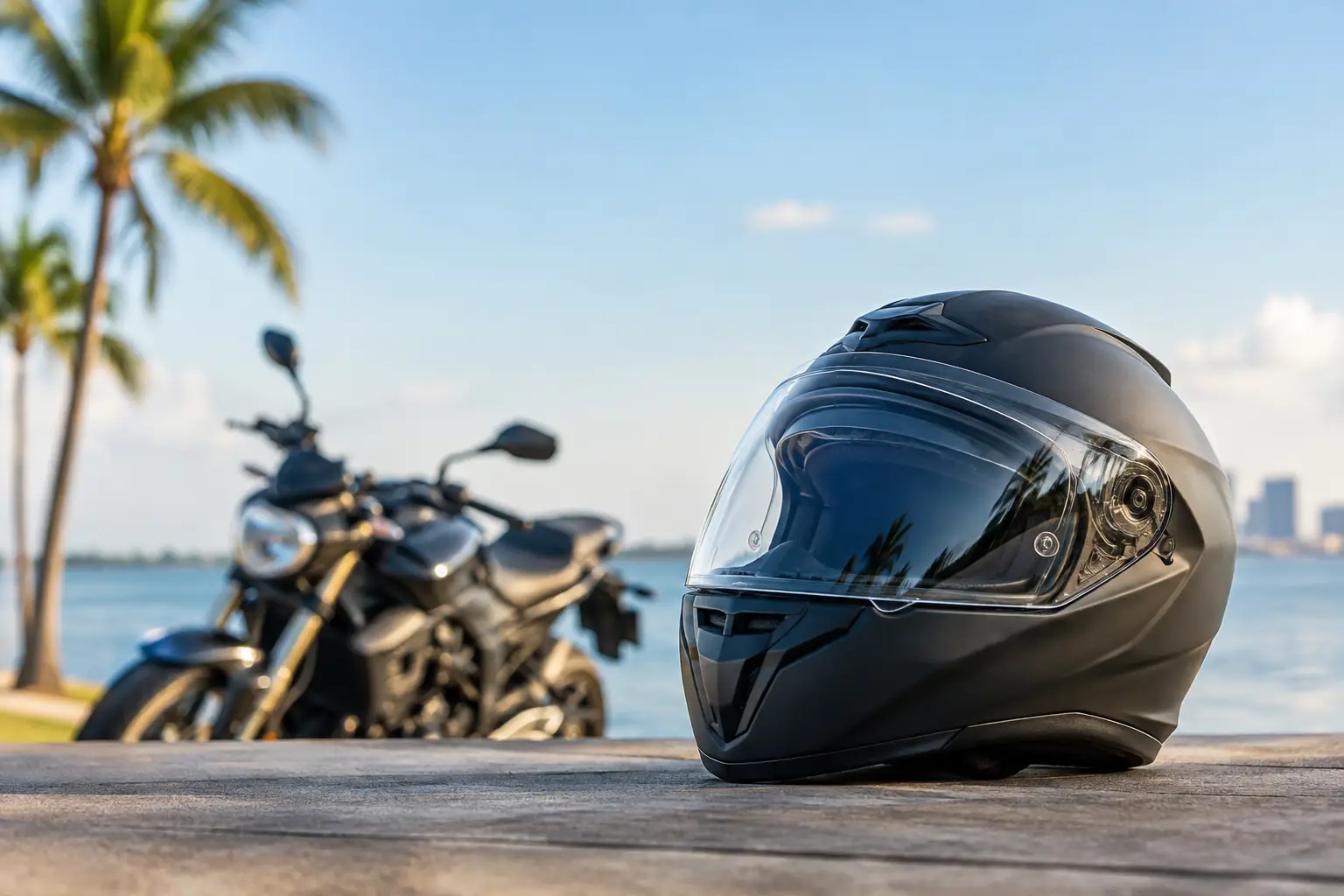
A motorcycle wreck can turn a routine ride along the Gulf Coast into a medical and financial crisis in seconds. Understanding Florida motorcycle crash helmet laws matters, but it does not answer the question injured riders ask most often: Can I still recover compensation if I was not wearing a helmet? In many cases, yes. The facts of the crash, the severity of the injuries, and the conduct of every driver involved all matter.
Florida gives some adult riders a choice about wearing a helmet. That choice should never be confused with a free pass for careless drivers or insurance companies. If another motorist cuts off a rider, runs a red light, follows too closely, or fails to check a blind spot, that driver may still be responsible for the harm they caused.
What Are Florida’s Motorcycle Crash Helmet Laws?
Florida law generally requires motorcycle riders and passengers under age 21 to wear a helmet. The helmet must meet applicable federal safety standards.
Riders age 21 and older may legally ride without a helmet only if they carry at least $10,000 in medical insurance coverage for injuries caused by a motorcycle crash. This is not the same as ordinary health coverage in every situation. Riders should review their policy carefully and confirm that it meets the legal requirement before deciding to ride helmet-free.
Florida also requires riders to use eye protection unless the motorcycle has a windshield. Eye protection can include approved goggles, glasses, or a face shield designed to protect the rider’s eyes from wind, debris, insects, and road hazards.
These rules apply to passengers as well as operators. A passenger under 21 must wear a compliant helmet, while a passenger 21 or older may ride without one if the required medical coverage is in place.
A Legal Choice Can Still Carry Serious Risks
The law allows certain adults to ride without a helmet, but severe head injuries remain one of the most devastating outcomes of a motorcycle collision. A helmet cannot prevent every injury. It can, however, reduce the risk of catastrophic trauma in many crashes.
That distinction becomes painful after a wreck. Traumatic brain injuries may require emergency care, surgeries, rehabilitation, home modifications, long-term therapy, and time away from work. Families can find themselves making difficult medical decisions while bills arrive faster than answers.
Riding without a helmet may be legal for an adult who meets Florida’s insurance requirement. It may still give an insurance adjuster an argument about whether the rider’s injuries were made worse by the lack of a helmet. That is not the same as saying the rider caused the crash.
A driver who turns left into an oncoming motorcycle, drifts into a motorcycle’s lane, or pulls out from a parking lot without yielding cannot avoid responsibility simply because the injured rider was not wearing a helmet. The central question remains: Who caused the collision, and what injuries flowed from that conduct?
Does Not Wearing a Helmet Ruin a Motorcycle Injury Claim?
No. Florida follows a modified comparative negligence system. An injured person can generally seek compensation when another party was at fault, but their recovery may be reduced by their percentage of responsibility. A person found more than 50 percent responsible for an accident is generally barred from recovering damages from other at-fault parties, subject to limited exceptions.
In a helmet case, the defense may argue that the rider failed to reduce the extent of their injuries. This argument is often called the helmet defense. It is usually most relevant when the rider suffered head, face, or brain injuries that medical experts believe a helmet might have prevented or reduced.
The defense does not automatically apply to every injury. If a rider suffered a broken leg, spinal injury, road rash, or internal injuries, the absence of a helmet may have little or nothing to do with those damages. Even where head trauma is involved, insurers must still prove their argument with credible evidence. They cannot simply point to an unhelmeted rider and deny the claim.
This is why the evidence matters. Medical records, accident reconstruction, helmet standards, witness statements, crash footage, and expert opinions can all affect how an insurer or jury evaluates the claim.
An Example of How Fault May Be Evaluated
Imagine a driver in Pensacola makes a left turn across a motorcyclist’s path. The rider has the right of way but is not wearing a helmet. The collision throws the rider from the bike, causing a fractured pelvis, a broken arm, and a traumatic brain injury.
The driver may be clearly at fault for causing the collision. The insurer may still argue that a helmet would have reduced the brain injury. That argument, if supported by evidence, could affect the portion of damages tied to the head injury. It should not erase compensation for the pelvic fracture, arm injury, lost income, pain and suffering, or other losses caused by the driver’s negligence.
Every case depends on its facts. A lawyer should evaluate the full record before accepting an insurer’s attempt to shift blame.
Insurance Issues That Catch Florida Riders Off Guard
Motorcyclists face insurance problems that many car drivers do not expect. Florida’s no-fault Personal Injury Protection system generally does not cover motorcycle operators in the same way it covers people riding in passenger vehicles. After a motorcycle crash, injured riders often must look first to the at-fault driver’s bodily injury coverage, their own uninsured or underinsured motorist coverage, health insurance, or other available policies.
That can make early investigation critical. The at-fault driver may have only minimal coverage, no coverage, or an insurance company eager to settle before the true extent of the injuries is known. A serious motorcycle injury can exceed policy limits quickly, especially where surgery, brain trauma, permanent disability, or lost earning capacity is involved.
Do not assume an adjuster is protecting your interests because they sound sympathetic on the phone. Their job is to limit what the insurance company pays. They may ask for a recorded statement, push a quick settlement, or frame questions about helmet use in a way that puts blame on you before all the evidence is available.
What to Do After a Motorcycle Crash
Your health comes first. Get medical care immediately, even if you believe your injuries are minor. Adrenaline can mask symptoms, and delayed treatment can make both recovery and the insurance process harder.
If possible, preserve what may become important evidence. Keep the motorcycle, helmet, riding gear, photographs, damaged property, medical paperwork, and the names of witnesses. Do not repair, discard, or alter a helmet after a crash without first speaking with counsel, particularly if head injuries are part of the claim.
Be careful about discussing fault at the scene or on social media. A short apology can be misinterpreted, and a casual post can be used by an insurer to challenge the seriousness of your injuries. Report the crash, cooperate with law enforcement, and give your doctor an honest account of every symptom you are experiencing.
Most importantly, do not accept a settlement just because medical bills are piling up. Once you sign a release, you may give up the right to seek more compensation later, even if your condition worsens.
When a Motorcycle Crash Lawyer Can Help
Motorcycle cases are often treated unfairly from the start. Some insurers rely on tired assumptions that riders are reckless, speeding, or somehow responsible simply because they chose to ride. That bias has no place in a careful investigation.
A strong legal team can gather the evidence, identify all possible insurance coverage, calculate current and future losses, and challenge efforts to misuse helmet laws against an injured rider. At The Law Office of J.J. Talbott, we fight for injured people and families across Northwest Florida with the personal attention they deserve.
If you or someone you love was hurt in a motorcycle crash, do not let uncertainty about a helmet keep you from asking for help. The law is more nuanced than an insurance adjuster may want you to believe, and the right guidance can protect your ability to move forward.